

Your ancestor left Utrecht for somewhere far away. Perhaps it was New Amsterdam in the 1630s. Perhaps it was the Dutch East Indies a century later. Perhaps it was South Africa during the Boer era. Whatever the story, the records are still there — waiting for you in the heart of the Netherlands.
Utrecht province sits at the geographic centre of the Netherlands. It is a small province, but a rich one. Its archives hold centuries of births, deaths, marriages, and church registers. Its streets have changed less than you might expect. If your family name comes from here, you can still walk the same stones your great-grandparents walked.
Why Utrecht for Heritage Research?
Utrecht is one of the oldest cities in the Netherlands. The Romans built a fort here in 47 AD. By the Middle Ages, it was the religious capital of the Low Countries. The Dom Tower still marks the skyline — the tallest church tower in the Netherlands.
The province draws a wide mix of heritage visitors. Dutch-Americans often trace lines back to Utrecht, because it sat on the main route from inland towns to the port of Amsterdam. From Amsterdam, ships left for New Amsterdam — what is now New York. If your ancestors arrived in America before 1700, there is a real chance they passed through or came from Utrecht province.
Afrikaner families also have Utrecht connections. Many Boer families carry surnames with roots in Utrecht province. The archive records go back far enough to make these connections visible. For a full guide to tracing Boer ancestry, read our article on tracing your Boer roots in the Netherlands.
Starting Your Research Before You Travel
Good heritage research starts at home. The more you know before you arrive, the more useful your archive visits will be.
Begin with WieWasWie.nl. This free portal collects Dutch civil records from across the country. You can search for births, marriages, and deaths from 1811 onwards. Civil registration began across the Netherlands in 1811 under Napoleon. Before that, records were kept by churches — and those records survive too.
For pre-1811 records, the main source is Het Utrechts Archief. This is the provincial archive for Utrecht. It holds church registers going back to the 1500s in many parishes. Reformed church records (Nederduits Gereformeerd) are the most common. Catholic and Mennonite records also survive for many towns.
Read our full guide on how to trace your Dutch ancestry step by step before planning your trip. It will help you understand which records exist and how to read them.
Key Records for Utrecht Ancestry
Utrecht province has excellent archival coverage. Here is what you can expect to find:
- Civil registration (1811 onwards): Births, marriages, and deaths for every gemeente (municipality). Held at Het Utrechts Archief and searchable via WieWasWie.nl.
- Reformed church registers (DTB records): Baptisms, marriages, and burials from the late 1500s onwards. Many are digitised.
- Catholic parish records: Older in some areas. Utrecht had a large Catholic population despite being officially Reformed.
- Bevolkingsregisters (population registers): From around 1850. These list every person living at an address, with ages and birthplaces. Very useful for tracing family movements.
- Notarial records: Wills, property deeds, and contracts from the 1600s onwards. Often name family members and reveal occupations.
- VOC service records: If your ancestor worked for the Dutch East India Company, his contract may survive. See our guide to the VOC trail and Dutch ancestors.
For surnames common to Utrecht province, read our companion article on Dutch surnames of Utrecht: origins and meanings. It will help you understand what your family name reveals about where your ancestors lived and worked.
🇳🇱 Enjoying this? Netherlands lovers get stories like this every week — heritage, history, and hidden places. Subscribe free →
Visiting Het Utrechts Archief
Het Utrechts Archief is in the centre of Utrecht city, close to the Dom Tower. You can visit in person to view original records. Most staff speak English. No appointment is needed for the reading room, though it is worth emailing ahead if you have specific records you want to view.
The archive also holds a large collection of photographs, maps, and printed materials. If you know your ancestor’s town, you can often find old maps that show exactly where they lived.
Bring what you already know: names, dates, the gemeente your family came from if you have it. The more specific you can be, the more the archivists can help. For a full guide to planning a heritage research visit, read how to plan a Dutch heritage trip to your ancestral town.
Heritage Destinations in Utrecht Province
Once your research gives you a location, the real journey begins. Utrecht province is compact — most towns are within an hour of the city. Here are the key places to visit.
Utrecht City and the Dom Quarter
The Dom Tower is the starting point for any heritage visit. Built between 1321 and 1382, it stood at the centre of religious life for centuries. The area around it — the Dom Quarter — contains the old church buildings, cloisters, and squares where Utrecht families were baptised and married for generations.
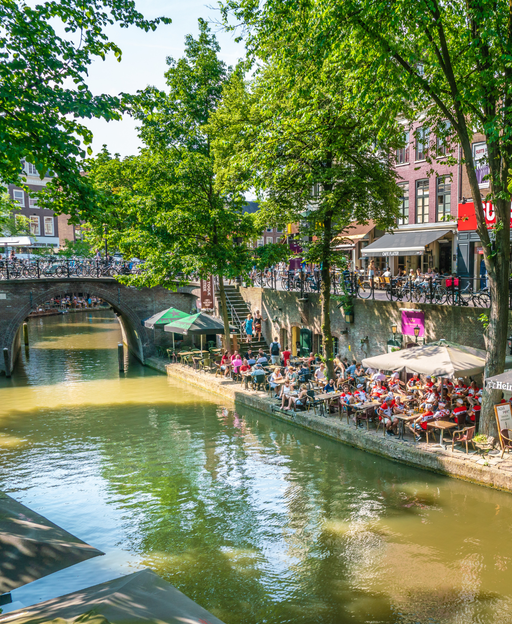
The Oudegracht canal runs through the city centre. Walk its length and you walk past buildings that have stood since the 1600s. The lower wharves and cellars along the canal are unique to Utrecht. They were used for trade and storage. Some of your ancestors almost certainly worked here.
Amersfoort: The Medieval Walled City
Amersfoort is the second city of Utrecht province. Its medieval walls and towers survive largely intact. The Onze-Lieve-Vrouwetoren — the tower of Our Lady — dominates the skyline. The city centre is a maze of narrow streets and historic canal houses.
Amersfoort was an important centre for trade and religion. If your ancestors came from the eastern part of Utrecht province, there is a good chance they had connections here. The Sint-Joriskerkhof holds some of the oldest surviving grave markers in the province.
Wijk bij Duurstede: A River Town with Deep Roots
Wijk bij Duurstede stands on the Rhine where it splits into the Lek. It was one of the most important trading towns in the medieval Netherlands. The castle ruins of Duurstede Castle overlook the river crossing that has been here since Roman times.
For families with roots in the southeastern corner of Utrecht province, this is worth a visit. The local church archives here date from the 1500s.
Rhenen and the River Landscape
Rhenen sits on the Rhine near the provincial border with Gelderland. Its church — the Cunerakerk — has stood since the Middle Ages. The town is less visited than Utrecht and Amersfoort, which means the heritage atmosphere is quieter and more genuine.
The landscape around Rhenen helps you understand why families settled where they did. The Rhine gave access to trade. The higher ground gave shelter. Some families stayed for centuries. Others used the river as the first stage of a longer journey.
How Utrecht Families Left the Netherlands
Utrecht province sits between Amsterdam and the southern provinces. It was a natural gathering point for people moving towards the coast — and from there, to the wider world.
In the 1620s and 1630s, the Dutch West India Company recruited settlers for New Amsterdam. Many came from inland provinces, including Utrecht. If your Dutch-American ancestors arrived before 1665, their departure point was likely Amsterdam — but their origins may lie in Utrecht. Read our guide to the Dutch-American homecoming for more on tracing this journey.
Later, in the 18th and 19th centuries, families left for the Dutch East Indies through VOC and later colonial service. Utrecht records often show the contracts and registrations of men who signed up for this work.
Afrikaner and Boer families with Utrecht roots tend to have ancestors who left via the Cape Colony from the 1650s onwards. The VOC records, held in The Hague and Amsterdam, can trace these journeys in detail.
Planning Your Utrecht Heritage Visit
Utrecht is easy to reach. It sits at the centre of the Dutch rail network. Most international visitors arrive in Amsterdam and take the train — the journey takes under 30 minutes.
For a heritage-focused visit, three to five days in Utrecht is ideal. Spend one day at the archive. Allow a second day for the city itself. Use the remaining days for Amersfoort and the smaller towns of the province.
The best seasons for heritage research are spring and autumn. Summer brings more tourists to the Dom Tower and Oudegracht, but the archive is quieter and the towns are pleasant regardless.
If your trip covers more than Utrecht, consider our 5-day Dutch heritage itinerary, which shows how to combine multiple provinces in one trip.
Connecting With Other Heritage Travellers
The CBG (Centrum voor Familiegeschiedenis) in The Hague is the national genealogy centre of the Netherlands. It holds records from across the country, including Utrecht. It is also a good place to connect with Dutch genealogists who can help you work through older records in Dutch.
The NGV (Nederlandse Genealogische Vereniging) has a Utrecht branch. Members can often point you towards local specialists and lesser-known sources. If you write to them before your visit, you may find someone willing to help you on the ground.
Heritage tourism is growing across the Netherlands. You are not alone in this journey. Other travellers in the archive reading room are often doing exactly what you are doing — following names and dates back through the centuries, trying to touch the world their family came from.
You Might Also Enjoy
- Tracing Your Family in Gelderland: A Heritage Travel Plan
- Tracing Your Family in North Brabant: A Heritage Travel Plan
- Tracing Your Family in Friesland: A Heritage Travel Plan
Frequently Asked Questions
Where are Dutch heritage records held for Utrecht province?
Most Utrecht records are held at Het Utrechts Archief in Utrecht city. Civil registration records from 1811 are also searchable online via WieWasWie.nl. The CBG in The Hague holds additional national collections.
Do I need to speak Dutch to use the Utrecht archive?
No. Most staff at Het Utrechts Archief speak English. Older records are written in Dutch or Latin, but the archivists can guide you. Bringing a prepared list of surnames and dates helps them assist you faster.
How far back do Utrecht parish records go?
Many Reformed church registers in Utrecht province begin in the late 1500s, around 1580 to 1600. Catholic parish records often go back further in some towns. There are gaps — particularly from periods of war — but coverage is generally strong for a province of this age.
Can I find out if my ancestor left Utrecht for New Amsterdam?
Yes, in many cases. VOC and WIC records survive and are well indexed. If your ancestor sailed before 1700, the Dutch National Archives in The Hague hold ship manifests and passenger records. WieWasWie.nl also indexes many early emigrant records. A combination of Utrecht birth records and Amsterdam departure records can often confirm the journey.
What is the best time of year to visit Utrecht for heritage research?
Spring (April to June) and autumn (September to October) are the best times. The archive is open year-round, but the city is at its most pleasant outside of peak summer. July and August bring the most tourists to Utrecht’s centre, which affects accommodation prices and the quiet of the archive reading room.
Join Netherlands Lovers
Every week, discover the Netherlands beyond the tourist trail — hidden villages, local recipes, cycling routes, and travel insights you won’t find in any guidebook.
Subscribe free — enter your email:
Already subscribed? Explore our archives for more hidden Dutch gems.
Love more? Join 64,000 Ireland lovers → · Join 43,000 Scotland lovers → · Join 30,000 Italy lovers →
Free forever · One email per week · Unsubscribe anytime
Planning a trip to the Netherlands? Start with our complete guide to the best places to visit, hidden gems to discover, and heritage routes worth following.
Tours & experiences you might love


Powered by Viator. Some links are affiliate links — we may earn a small commission at no extra cost to you.