Apr 26, 2026
|
The Dutch Art Movement That Shaped Every Room You’ve Ever Sat In
The Dutch art movement that changed modern design forever — from Amsterdam to Ikea
|
|
Love Netherlands
|
|
Dear Netherlands,
Every Dutch village has a bell tower, a market square, a brown café, and a bakery older than the country it sits in. The magic of the Netherlands isn’t Amsterdam. It’s the 400 other places that don’t need to try. Places like Thorn, where every house is painted white. Places like Giethoorn, where nobody has ever driven to the shop.
|
|
If the daily newsletter brings you closer to the Netherlands, our Sunday Premium Edition takes you deeper into it. Every Sunday you’ll receive travel deep dives, curated itineraries, regional stories, and hidden gems you won’t find anywhere else.
Upgrade for less than the price of a pint and see the Netherlands in a completely new way.
|
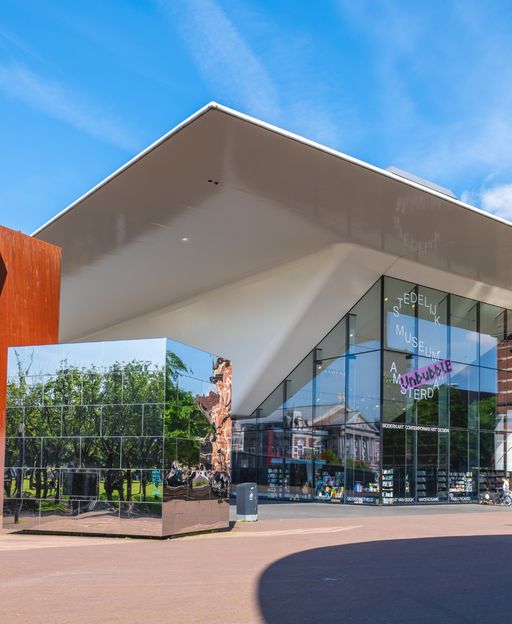
Image: Shutterstock
|
In today’s email:
- The Dutch Art Movement That Shaped Every Room You’ve Ever Sat In
- At The Café — Café Olivier — The Church That Became Utrecht’s Favourite Bar
- Around The Web — Five Days Along the IJssel and more
- From Love Netherlands — The Dutch Drinking Ritual That Has No English Word — And No Equal
- Dutch Food You Will Love — Stroopwafel — The Dutch Biscuit That Became a Ritual
|
The Dutch Art Movement That Shaped Every Room You’ve Ever Sat In
👉 Read the full story
You’ve seen the painting. Red. Yellow. Blue. Black grid lines. You probably own it on a tote bag, a mug, or a cushion somewhere. But Mondrian didn’t just paint pictures. He was part of a Dutch revolution — one that changed almost every object you have ever touched. A Movement Born from War and Tired Eyes De Stijl (say duh style , meaning “The Style”) started in 1917 in the Netherlands. The First World War tore across Europe.
Dutch artists felt that old painting — curving lines, dramatic shadows, emotional scenes — had run out of honest things to say. A small group of painters, architects, and designers launched a journal. The rules were strict: use only primary colours (red, yellow, blue) and neutral ones (black, white, grey). Use only straight lines. No curves. No decoration. No excess. Their central figure was Piet Mondrian, born in Amersfoort in 1872. His grid paintings look…
👉 Read the full story
Have you been there? Do you have a memory of this corner of the Netherlands? Hit reply and tell us — we’d love to hear your story.
|
|
“Want deep dives into the Netherlands every Sunday? Our Premium readers already have their next edition waiting.”
|
At The Café
Café Olivier — The Church That Became Utrecht’s Favourite Bar
Café Olivier in Utrecht is a working Belgian bar inside a deconsecrated 19th-century church. The pulpit is still there. The stained glass is still there. The pews have been replaced with long wooden tables where students, workers, and retired professors all somehow end up sharing a Trappist beer. It’s the kind of place that makes you understand why the Dutch are so comfortable with the quiet strangeness of their country — nothing here is trying to impress you, but everything is worth looking at twice.
👉 Visit the café
|
Around The Web
Love Netherlands
Five Days Along the IJssel
Five Days Along the IJssel — Love Netherlands body { font-family: Georgia, serif; max-width: 720px; margin: 0 auto; padding: 32px 24px; line-height: 1.65; color: #222; background:…
👉 Read the full story
|
From Love Netherlands
At five o’clock on a Friday in Amsterdam, offices empty fast. Groups appear at the nearest brown café. Someone orders bitterballen. Someone gets the Jenever. And the working week, officially, is over. The Dutch call this borrelen. There is no direct English translation. What Exactly Is Borrelen? Borrelen (pronounced “borr-uhl-en”) is the Dutch ritual of sharing drinks and snacks with friends or colleagues. Calling it “happy hour” misses…
👉 Read the full story
|
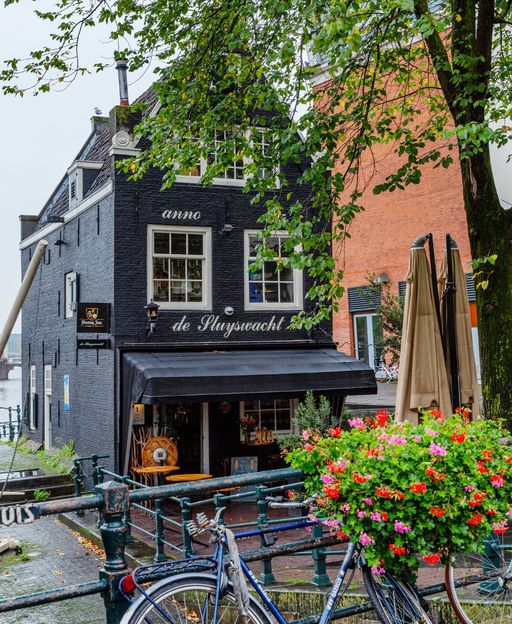
Image: Shutterstock
|
Dutch Food You Will Love
Stroopwafel — The Dutch Biscuit That Became a Ritual
A stroopwafel is two thin waffle layers, bound together with warm caramel syrup, served on top of your coffee cup so the rising steam softens the middle. It was born in 19th-century Gouda, where a local baker used up the day’s leftover dough and the last of the syrup barrel. The result is the small daily joy of every Dutch café — placed on your saucer without asking, warm against your fingers, gone in three bites. A real stroopwafel should be slightly chewy in the middle, not hard like the ones in supermarket bags. The best ones are still sold fresh at market stalls in Gouda on Wednesdays.
👉 Read the full story
|
|
Know Someone Who Loves the Netherlands?
If you’re enjoying this letter, the best thing you could do is forward it to one friend who’d love the Netherlands too. This newsletter grows by word of mouth alone — every single subscriber came from someone sending it to someone else. Thank you for being one of the first.
|
|
Our daily newsletter is free and always will be. But for less than the price of a pint, you can upgrade to our Sunday Premium Edition, which gives you access to our travel deep dives, curated itineraries, and regional stories. Consider buying us a stroopwafel — it’s the Dutch way to say thank you.
|
Also From Our Family
Love Ireland too? Over 65,000 readers wake up each morning to the Love Ireland newsletter — loveireland.substack.com
Or Scotland? Join 43,000 Scotland lovers — lovescotland.substack.com
|
|
You’re reading Love Netherlands — a free letter about canal towns, hidden villages, and Dutch stories, delivered Monday to Friday.
inlovewithnetherlands.com ·
Unsubscribe
© 2026 Love Netherlands · Part of the Love To Visit LLC family
|
|