

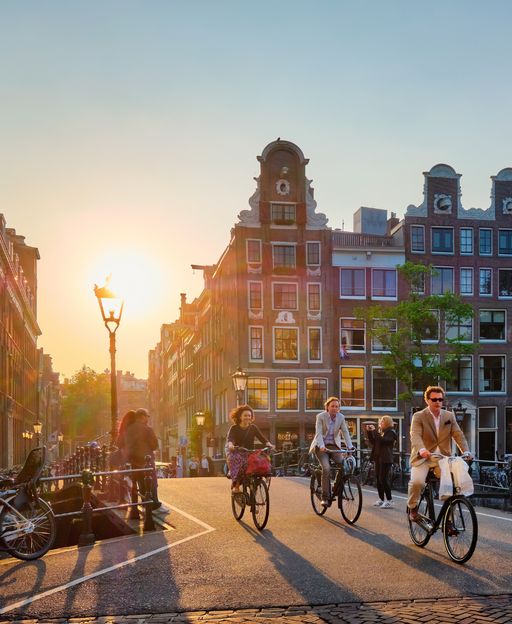
Every day, Dutch people cycle to work, school, the market, and the doctor. More than any nation on earth. The flat landscape usually gets the credit. But the real story started in the 1970s — and it has almost nothing to do with geography.
The Movement That Changed Dutch Streets
In October 1973, an oil embargo hit Western Europe. The Dutch government banned car travel on Sundays. Streets that normally roared with traffic fell quiet. Children played in the road. People walked in places they had never been able to walk before.
But something else was already stirring. Thousands of Dutch children had died in road accidents across the previous decade. Parents were furious. They formed a movement called Stop de Kindermoord — Stop the Child Murder. They blocked roads. They marched. They occupied intersections with their children.
Politicians listened. Over the next two decades, the Netherlands built the world’s first modern cycling network. Protected lanes appeared on city streets. Traffic lights added dedicated cyclist phases. Road design changed fundamentally. Cycling became, simply, the easiest way to get around.
What 35,000 Kilometres of Bike Lane Looks Like
The Netherlands now has more than 35,000 kilometres of dedicated cycle lanes. That is roughly the circumference of the earth. In many cities, bikes have right of way over cars on what the Dutch call fietsstraten — cycle streets. Traffic signals are timed so a cyclist at a steady pace hits green lights one after another.
Amsterdam’s Central Station has underground parking for thousands of bicycles. Groningen — a university city in the north — handles more than half its daily trips by bike. It consistently ranks as one of the most cycling-friendly cities in the world.
The infrastructure is so thorough that cycling is genuinely the fastest option for most short journeys. Not the fastest in good conditions. The fastest, always.
A Fiets Is Not a Hobby
In the Netherlands, a bike is not a sports accessory. Dutch people cycle to work in suits. They cycle in rain, wind, and cold. Families carry children and groceries on the same bike without a second thought.
The Dutch word for bicycle — fiets — is not glamorous. It describes something ordinary. Something essential. Most families have bikes that are fifteen or twenty years old. Repaired and used, not discarded when a new model appears.
This is part of what makes the Netherlands feel different from anywhere else. You can read more about that distinct feeling in the piece about the Dutch word that explains what separates the Netherlands. And for a deeper look at Amsterdam, the story of why the Jordaan neighbourhood was built for the poor adds a layer most visitors never find on their own.
Enjoying this? Get stories like this every week from Love Netherlands — Subscribe free →
What Visitors Need to Know
Renting a bike in the Netherlands is easy. Every city has rental shops near the main train station. Prices typically run from €10 to €15 per day. Choose an omafiets — the classic upright Dutch-style bike — rather than a racing model. You sit high, move at a steady pace, and immediately look less like a tourist.
A few unwritten rules apply. Stay to the right side of the cycle lane. Pass on the left. Use your bell once to let someone know you are approaching — not aggressively, just as a signal. Do not stop suddenly in a busy lane. Never cycle while looking at your phone. Amsterdam cyclists will not be sympathetic about any of these.
The Best Places to Cycle in the Netherlands
Amsterdam is the busiest and most intimidating city for newcomers. But once you feel the rhythm of the traffic, it transforms the experience entirely. Rent a bike and follow the Amstel river south to escape the tourist centre within minutes.
Haarlem suits first-time visitors better. It is quieter, beautifully historic, and in spring it sits close to the tulip fields of the Bollenstreek. Cycling between rows of tulips in April is one of the most vivid things you can do in the Netherlands.
Groningen gives the purest Dutch cycling experience. It is compact, built entirely around the bike, and the infrastructure makes riding feel effortless. If you are still planning your visit, the Start Here guide is the best place to build your itinerary.
Is it safe to cycle in Amsterdam as a tourist?
Yes, if you stay alert. Use the dedicated cycle lanes, follow the flow of traffic, and avoid stopping suddenly. Amsterdam cyclists and drivers know how to share space. Move predictably, stay off the tram tracks, and you will manage fine.
Can I rent a bike in the Netherlands without booking ahead?
Yes. Rental shops are easy to find near most train stations and in city centres. You do not need to book in advance outside peak summer weekends. Bring a card for payment and check the brakes before riding off. Always lock your bike to a fixed object — theft is common throughout the country.
What is the best time to cycle in the Netherlands?
April to October offers the best conditions. May and June are particularly pleasant — long daylight hours, mild temperatures, and the flower season still running. Cycling through the Bollenstreek tulip fields in April is especially rewarding. Winter cycling is possible and the Dutch do it without complaint, but it is a different experience altogether.
How is cycling in the Netherlands different from other countries?
Dutch cyclists are direct and expect you to know the basic rules. There is less signalling and less hesitation than in most countries. Watch the flow for a few minutes before joining. Once you find the rhythm, it feels completely natural — and you quickly understand why the Dutch would not have it any other way.
The first time you join a stream of Dutch cyclists at a green light, something shifts. You stop watching the Netherlands from the outside. For a moment — pedalling down a canal street with morning light on the water — you are part of it.
Love Netherlands — Free Every Week
Canal towns, hidden villages, Dutch stories. A free letter about the Netherlands — written slowly, delivered weekly.
Love more? Join 64,000 Ireland lovers → · Join 43,000 Scotland lovers → · Join 30,000 Italy lovers →
Free forever · One email per week · Unsubscribe anytime
Frequently Asked Questions
Why do the Dutch cycle everywhere?
The Dutch built an extensive protected cycling network starting in the 1970s after a movement of parents fighting for safer streets, making bikes the fastest and easiest way to get around for most journeys. The infrastructure is so thorough—with dedicated lanes, synchronized traffic lights for cyclists, and traffic-free routes—that cycling is genuinely practical, not just a lifestyle choice.
How many bike lanes does the Netherlands have?
The Netherlands has over 35,000 kilometres of dedicated cycle lanes, roughly the circumference of the earth, woven throughout cities and countryside.
Is cycling really the fastest way to get around?
Yes, for most short journeys in Dutch cities, cycling is the fastest option consistently, because traffic signals are timed so cyclists at a steady pace hit green lights one after another and routes are designed with cyclists in mind.
Which Dutch cities are best for cycling?
Groningen, a university city in the north, handles more than half its daily trips by bike and ranks among the world's most cycling-friendly cities, while Amsterdam's Central Station has underground parking for thousands of bicycles for longer stays.
Tours & experiences you might love


Powered by Viator. Some links are affiliate links — we may earn a small commission at no extra cost to you.