
Does your family belong to a Mennonite church? Do you carry a name like Friesen, Klassen or Janzen? Then your Dutch Mennonite roots may run deeper than you think. The story starts in the Netherlands, and the records still survive.
Want Dutch heritage stories every week? Subscribe free →
Dutch Mennonites call themselves doopsgezind, which means “baptism-minded”. They built a faith, a culture and a long paper trail. This guide shows you where to find that trail, how to read it and where to visit.
Who Were the Dutch Mennonites?
Anabaptism began in Zurich in 1525. Its followers baptised adults who chose faith for themselves. Most churches of the time baptised babies. The new idea spread fast and reached the Low Countries in the 1530s.
Menno Simons gave the movement its name. He was a Catholic priest born around 1496 in Witmarsum, Friesland. He left the Catholic Church in 1536. He then spent years writing, teaching and moving from place to place. His followers became known as Mennonites.
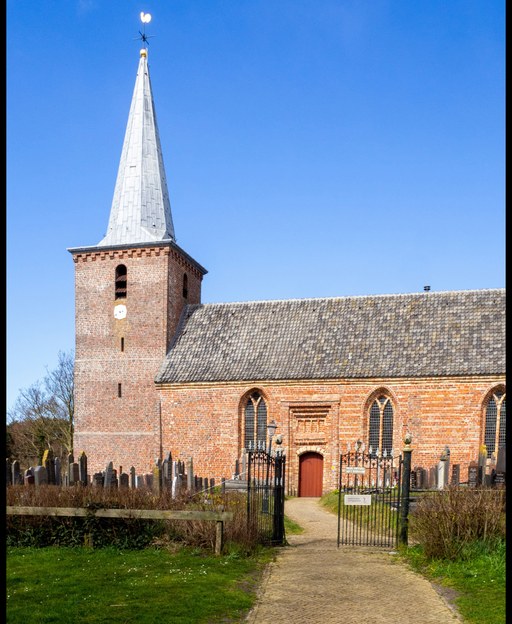
Life was hard at first. Authorities arrested and executed many Anabaptists in the 1500s. Over time, the Dutch Republic eased its stance. Mennonites could worship quietly, as long as they kept their meeting houses out of public view. Many met in plain buildings called vermaningen.
Dutch Mennonites then settled into trade, farming, shipbuilding and banking. Many grew wealthy in Amsterdam and the Zaan region. Others stayed on the farms of Friesland and Groningen.
Four Groups You May Meet in the Records
The Dutch Mennonites never formed one single church. They split into several groups, and the labels matter when you search. You will often see these four:
- Waterlanders: a more open group, strong in North Holland.
- Flemish: a stricter group, with roots among refugees from Flanders.
- Frisians: a strict group, based in Friesland.
- High Germans: newcomers from German lands who joined Dutch congregations.
Your ancestors’ group tells you which congregation kept their records. It also hints at where they lived. If your family was Waterlander, start with the North Holland heritage guide.
Why Mennonite Records Look Different
Mennonites baptise adults. So a Mennonite church may not have a baby baptism book at all. Instead, many congregations kept a membership list. The Dutch call it a ledenregister. Some churches also noted births, marriages and burials.
This matters for your search. You may find an ancestor’s adult baptism, not a birth. The entry usually gives a name, a date and sometimes a place. Later lists add the person’s move to another congregation, which helps you track a family across towns.
Before 1811, the Netherlands had no civil registration. Church books were the main record. After 1811, the state recorded births, marriages and deaths for everyone. Use the civil records for the later years and the church books for the earlier ones. Our step-by-step guide to tracing your Dutch ancestry explains both systems.
🇳🇱 Enjoying this? Netherlands lovers get stories like this every week. Subscribe free →
Where to Find Dutch Mennonite Records
Most of your searching will happen online. Start with these sources.
WieWasWie and Open Archives
WieWasWie.nl and OpenArch.nl index many doopsgezind records. Search by surname, then filter by the church type. Try spelling variants. A name like Claesen may also appear as Claassen, Klaasen or Klassen.
Regional archives
Congregation books usually sit in the archive of the province or city. For Frisian families, Tresoar in Leeuwarden holds the main collections. For Amsterdam families, try the Amsterdam City Archives. For families in the east, see our Overijssel roots guide.
The Mennonite library in Amsterdam
The General Mennonite Society, known as the ADS, formed in 1811. Its historic library and papers now sit in the Special Collections of the University of Amsterdam. Researchers use it for church histories, membership lists and rare printed works.
Global Mennonite sources
The Global Anabaptist Mennonite Encyclopedia Online, called GAMEO, offers free articles on congregations, families and places. The GRANDMA database lists Mennonite family trees, and many branches link back to Dutch origins. Treat each tree as a lead. Always check the source yourself.
Surnames That Point to Dutch Mennonite Roots
No surname proves your family was Mennonite. Many Mennonite families shared names with their Catholic and Reformed neighbours. Still, some names show a clear Dutch or Frisian path. These examples often appear in Mennonite family trees:
- Friesen: means “the Frisian”. It marks a family from Friesland.
- Klassen: comes from Claes, a short form of Nicolaas.
- Janzen: means “son of Jan”.
- Dyck: means “dyke”. It points to a family from a low-lying area.
- Penner, Wiebe and Enns: found in many Mennonite lines. Their exact origins vary by family.
Treat names as clues, not proof. Always confirm with a church or civil record.
Following the Trail Out of the Netherlands
Many Dutch Mennonites did not stay. From the 1500s, some moved east to the Vistula delta in Prussia. They drained marshland there and farmed it. Their children kept Dutch names and a Dutch church life for generations.
In 1789, a group moved on to the Russian Empire. In the 1870s, thousands left Russia for Manitoba, Kansas and Nebraska. Today, Mennonite communities in Canada, the United States, Mexico and South America often share this long route.
Not every Mennonite family came this way. Many Pennsylvania Mennonites trace their roots to Switzerland and Germany. The Amish also split from Swiss Mennonites, in 1693. Neither group follows a Dutch line. Check your family’s route before you search in Dutch archives.
If your family moved on to North America, our Dutch-Canadian roots guide and Holland, Michigan roots guide show the next steps. If your ancestors sailed to the East Indies instead, read the VOC trail.
Visiting Dutch Mennonite Places
A trip can turn paper names into real places. These stops suit a Mennonite heritage visit:
- Witmarsum, Friesland: Menno Simons’ birthplace. A monument to him stands in the village.
- Amsterdam: the Singelkerk on the Singel canal still serves a Mennonite congregation.
- The Zaan region: several historic meeting houses show how merchant families worshipped.
- Frisian towns: Leeuwarden, Sneek and Joure all have Mennonite congregations.
Write to the church or archive before you travel. Many open only on set days. Our guide to planning a Dutch heritage trip walks you through the whole visit. For Frisian roots, you may also enjoy Things to Do in Leeuwarden, Netherlands: A Visitor’s Guide to Friesland’s Capital.
A Simple Five-Step Plan
- Write down what you know. Collect names, places and dates from your family.
- Find the last Dutch ancestor. Use ship lists, church books and civil records.
- Search WieWasWie and OpenArch for doopsgezind entries.
- Contact the regional archive for congregation books that are not online.
- Read GAMEO to learn the history of your ancestors’ church.
Frequently Asked Questions
What does doopsgezind mean?
It means “baptism-minded”. It is the Dutch word for Mennonite. Dutch churches use it in their names, and archives use it to label records.
Are all Mennonites of Dutch origin?
No. Many Mennonites have Swiss or German roots. Others come from the Dutch line that moved through Prussia and Russia. Your documents show which route your family took.
Did Mennonites keep baptism records for babies?
Not usually. They baptised adults. Look for membership lists, adult baptism entries and birth notes in some congregation books. Civil records cover births after 1811.
Can I search Mennonite records for free?
Yes. WieWasWie, OpenArch and GAMEO all offer free searches. Some regional archives charge for scans of original books, but indexes are free.
Where did Menno Simons come from?
He came from Witmarsum, a village in Friesland. He lived from about 1496 to 1561. A monument in Witmarsum honours him.
Your Roots Are Waiting
Your Mennonite ancestors left names, books and buildings. Start with one surname and one church. Each record you find brings you closer to the family who chose a quiet, stubborn faith. Your opa’s world still stands in the Netherlands. It is time to go back.
New to Dutch research? Visit our Start Here page to plan your first steps. For Jewish family lines, read our Dutch Jewish ancestry guide.
You Might Also Enjoy
- Tracing Your Dutch Jewish Ancestry: Records, Archives and Memorials
- How to Plan a Dutch Heritage Trip to Your Ancestral Town
- The VOC Trail: Following Your Dutch Ancestors to the East
Plan Your Netherlands Trip
Ready to see the places for yourself? Our Start Here page gathers our best planning guides in one place. Pick your province and build your route.
Join Netherlands Lovers
Every week, discover the Netherlands beyond the tourist trail — hidden villages, local recipes, cycling routes, and travel insights you won’t find in any guidebook.
Subscribe free — enter your email:
Already subscribed? Explore our archives for more hidden Dutch gems.
Love more? Join 64,000 Ireland lovers → · Join 43,000 Scotland lovers → · Join 30,000 Italy lovers →
Free forever · One email per week · Unsubscribe anytime
Tours & experiences you might love


Powered by Viator. Some links are affiliate links — we may earn a small commission at no extra cost to you.