
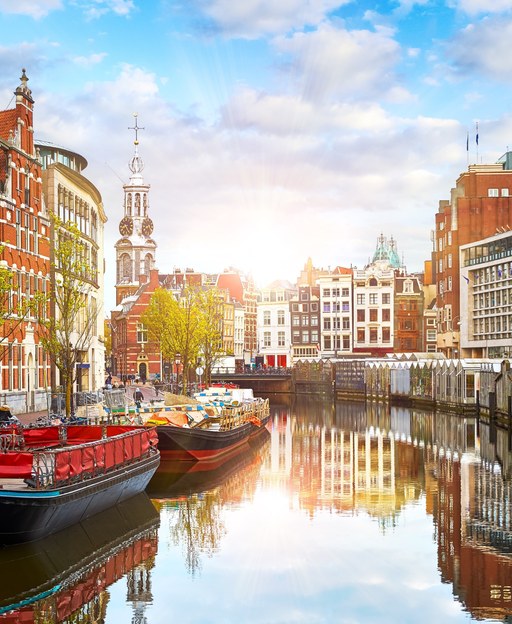
Your grandmother mentioned a Dutch family name. An old photograph shows a canal house in Amsterdam. Many people begin their search for Dutch Jewish ancestry with small clues like these. This guide shows you where to look next.
Jewish families have lived in the Netherlands for more than 400 years. Their records are rich and detailed. Their story also includes deep loss. This guide covers both with care, and it gives you a clear path to follow.
Where Does Dutch Jewish Ancestry Begin?
Jews came to the Dutch Republic in growing numbers from the late 1500s. The first large group were Sephardic Jews from Portugal and Spain. Most settled in Amsterdam. Ashkenazi Jews from Germany and Eastern Europe followed in the 1600s and later.
The Portuguese Synagogue in Amsterdam opened in 1675. It still stands today. Many trades stayed closed to Jews until 1796. That year, the Batavian Republic gave Jews equal civil rights.
Before the Second World War, around 140,000 Jews lived in the Netherlands. About three in four of them died in the Holocaust. Many families lost almost everyone. This is why records matter so much. One document may be the last trace of a whole family.
Start With What Your Family Knows
Begin at home. Ask older relatives for names, dates and places. Look through old letters, prayer books, passports and photographs. Write down every spelling you find.
Spelling can change a lot. Cohen may appear as Kohen or Cohn. Levie may appear as Levy or Levi. Search for every version, or you may miss your own family.
Note any Hebrew names too. Dutch records usually list the civil name, but Jewish community records often add the Hebrew one.
Understand Dutch Jewish Surnames
Before 1811, many Dutch Jews used a patronymic. That means they took their father’s name, such as Isaac son of Abraham. Napoleon’s government ended that habit. Every family had to choose a fixed surname. Our guide to the 1811 naming law explains how this worked.
Some surnames give clues. Da Costa, Pereira and Mendes point to Portuguese roots. Cohen and Levie point to priestly and Levite lines. Hartog was a common Dutch Jewish name too. A name alone never proves your background, but it can guide your search.
🇳🇱 Enjoying this? Netherlands lovers get stories like this every week. Subscribe free →
Key Records for Dutch Jewish Research
Civil records from 1811
Civil registration began in 1811, under French rule. Officials recorded every birth, marriage and death. These records treat all families alike, so Jewish families appear in the same books as their neighbours. Search them on WieWasWie.nl and Open Archives. Both sites are free. Our step-by-step guide to Dutch ancestry shows you how to use them.
Population registers from about 1850
Dutch towns kept population registers from around 1850. These list each household, its address and the birthplace of each person. They often note religion as well. That detail helps you tell families with the same name apart.
Jewish community records before 1811
The Portuguese and Ashkenazi communities kept their own registers. Many of these survive at the Amsterdam City Archives (Stadsarchief Amsterdam). The archive also holds marriage banns for Amsterdam from the 1500s to 1811. If your family lived in Amsterdam, start there.
Smaller towns and provinces
Not every Jewish family lived in Amsterdam. Communities also grew in Groningen, Friesland, Overijssel, Drenthe and Gelderland. Regional archives hold their local records. Our guides to Groningen and Drenthe point you to those archives.
Find Out What Happened in the War
Many researchers want to learn what happened to a relative between 1940 and 1945. Several free sources can help.
- Joods Monument is an online memorial. It gives a page to each Dutch Jewish victim. Pages often show birth date, address, and place and date of death.
- Oorlogsbronnen.nl brings together war records from many Dutch archives in one search.
- Arolsen Archives in Germany holds millions of documents on Nazi persecution. You can search its collections online.
- The Yad Vashem names database also lists Holocaust victims from the Netherlands.
These searches can be hard to read. Take your time. Take breaks. Many families find that a name on a memorial page brings both grief and comfort.
Places to Visit on a Heritage Journey
A visit turns paper records into real places. Plan your route with our guide to a Dutch heritage trip. Then add these Jewish heritage stops.
- Amsterdam’s Jewish Cultural Quarter. It includes the Portuguese Synagogue, the Jewish Museum and the Hollandsche Schouwburg. The Schouwburg was a theatre that the occupiers used to gather Jews before deportation. It is now a memorial.
- Beth Haim in Ouderkerk aan de Amstel. This Sephardic cemetery dates from 1614. Families still use it today.
- Camp Westerbork in Drenthe. Most Dutch Jews who faced deportation passed through this transit camp. A memorial centre now tells their story. Our Drenthe heritage travel plan helps you plan the trip.
- Local synagogues and cemeteries. Many Dutch towns still have a former synagogue or a Jewish burial ground. Ask the local archive or town hall where to find them.
Dutch Jewish Roots Beyond the Netherlands
Dutch Jewish families travelled widely. In 1654, a small group of Jews arrived in New Amsterdam, now New York. Read more in our guide to New Netherland roots. Other families settled in Suriname and Curaçao. Some followed Dutch trade routes, like those in our VOC trail guide. Many more moved to Britain, the United States and South Africa in the 1800s and 1900s.
If your family left the Netherlands, check passenger lists and naturalisation papers in your new country. Then connect the dots back to the Dutch records.
Frequently Asked Questions
Where can I search Dutch Jewish records for free?
WieWasWie.nl and Open Archives cover civil records for the whole country. Joods Monument and Oorlogsbronnen.nl cover the war years. Stadsarchief Amsterdam has a free online index for many Amsterdam records.
Do Dutch records show a person’s religion?
Civil birth, marriage and death records do not usually state religion. Population registers often do. Jewish community registers and synagogue records also confirm Jewish identity.
How do I find out what happened to a relative in the Holocaust?
Start with Joods Monument and search the surname. Then check Oorlogsbronnen.nl and the Arolsen Archives. Each source adds details such as addresses, transport dates and camps.
Do I need to read Dutch to research my family?
It helps, but you can manage without it. Most archive sites offer English menus. Translation tools handle printed text well. Old handwriting is harder, so ask a volunteer researcher for help.
What if I do not know the town my family came from?
Search Amsterdam first, because so many Jewish families lived there. Then try a nationwide search on WieWasWie.nl. Use a rare surname, a birth year and any known spouse names to narrow the results.
Carry the Story Forward
Every record in this search belongs to a real person. Each name you find keeps a family’s memory alive. Start with one name today. Write it down. Search for it. The Netherlands holds more of your story than you may expect.
You Might Also Enjoy
Continue your Dutch heritage journey with these related guides:
- How to Trace Your Dutch Ancestry – Step-by-Step Guide (2026) — the full research roadmap for Dutch genealogy
- Tracing Your North Holland Heritage — archives, records and ancestral towns around Amsterdam
- Why Your Dutch Ancestors Chose Their Surname in 1811 — the story behind your family name
Join Netherlands Lovers
Every week, discover the Netherlands beyond the tourist trail — hidden villages, local recipes, cycling routes, and travel insights you won’t find in any guidebook.
Subscribe free — enter your email:
Already subscribed? Explore our archives for more hidden Dutch gems.
Love more? Join 64,000 Ireland lovers → · Join 43,000 Scotland lovers → · Join 30,000 Italy lovers →
Free forever · One email per week · Unsubscribe anytime
Plan your Netherlands trip → Our start-here guide covers everything you need for your first visit — or your most meaningful one yet.
Tours & experiences you might love


Powered by Viator. Some links are affiliate links — we may earn a small commission at no extra cost to you.