
Your family name might be Dutch. Your great-grandmother might have told stories about a province full of festivals, spires, and farmland. If that thread leads you south — past the rivers and into the country’s Catholic heartland — it leads you to North Brabant.
North Brabant sits at the southern edge of the Netherlands, pressing against the Belgian border. It has always been different from the rest of the country. The province is Catholic in a Protestant nation. It has a Burgundian spirit — generous, festive, warm. Locals call themselves Brabanders, not just Dutchmen, and they mean it. If your family came from here, you carry that spirit too.
Why North Brabant Feels Different
The province covers more than 5,000 square kilometres. Around 2.6 million people live there. The capital is Den Bosch — officially called ‘s-Hertogenbosch, which means “the Duke’s forest.” Breda, Eindhoven, and Tilburg are the other big cities.
North Brabant was part of the Duchy of Brabant for centuries. The Duchy included what is now northern Belgium. When the Dutch Republic formed in the late 16th century, Brabant stayed outside it for a long time. Calvinism swept the north. Brabant stayed Catholic. That religious difference shaped everything — the churches, the records, the calendar, even the food.
Carnaval is the most visible sign of this. Every year before Lent, the province erupts into days of parades, costumes, and celebration. Den Bosch becomes Oeteldonk. Breda becomes Kielegat. Tilburg becomes Kruikenstad. These are the carnival names — old, affectionate, deeply local. If your Brabant ancestors celebrated carnaval, they passed down a tradition that goes back 500 years.
For genealogists, the Catholic identity matters enormously. Catholic parishes kept detailed records of baptisms, marriages, and burials long before the state required it. Many North Brabant records survive from the 1600s and 1700s. That depth of documentation makes Brabant one of the best provinces in the Netherlands for tracing deep roots.
North Brabant’s Diaspora Communities
Dutch emigrants left Brabant in several waves. Each wave landed in different places and built different communities.
The earliest wave came during the Eighty Years’ War (1568–1648). Religious and political upheaval pushed families north and east. Some crossed the Atlantic with the Dutch West India Company and planted roots in New Amsterdam — what became New York.
The 19th century brought larger emigration waves. Dutch families, including many from Brabant, settled the American Midwest. Grand Rapids and Holland in Michigan hold large Dutch-heritage communities. So do Pella and Orange City in Iowa. If your family name shows up in these towns, the trail may lead back to a Brabant parish register.
South Africa also received Brabant emigrants. The Dutch East India Company (VOC) recruited settlers for the Cape Colony from the 17th century onwards. Some Boer families carried surnames that appear in North Brabant church records. The VOC trail connects the Netherlands to South Africa through these early colonial records.
Australian and Canadian Dutch communities also include Brabant families, particularly from the post-World War II migration wave of the late 1940s and 1950s. The Netherlands lost 200,000 people to emigration in those years. Many left from the south.
🇳🇱 Enjoying this? Netherlands lovers get stories like this every week. Subscribe free →
Famous Brabanders You May Not Have Realised
Vincent van Gogh grew up in North Brabant. He was born in Zundert in 1853. His father was a Dutch Reformed pastor — unusual for the region — but Van Gogh spent his formative years surrounded by Brabant farmland, light, and people. His early paintings show flat fields, dark churches, and potato farmers. The land shaped him before Paris changed him.
Hieronymus Bosch came from Den Bosch in the 15th century. His real name was Jheronimus van Aken. He took his city’s name as his professional name. His bizarre, detailed paintings of heaven and hell hang in the Prado in Madrid and in a dedicated museum in Den Bosch today. His family stayed in Den Bosch for generations.
If your family carried the name Bosch, Van Gogh, or Van Aken, a Brabant parish register might tell you more than you expect.
Common Surnames from North Brabant
North Brabant surnames reflect the province’s history. Many names point to landscape, religion, or occupation. Catholic saint names appear often in family names from this region.
Van den Berg — from the hill or mountain. Common across the south.
Janssen / Jansen — son of Jan. The Catholic South often used the double-s spelling. If your family spelled it Janssen rather than Jansen, the trail may run south.
Peters / Pietersen — son of Pieter or Petrus. A deeply Catholic name, common near the feast of Saint Peter.
Van Hout — from the woods. North Brabant once had vast oak forests. The name points to a forested home.
Bogaerts — from the orchard or garden. A distinctly southern Dutch surname, common in the Brabant and Flemish area.
Van den Heuvel — from the hill. Brabant has gentle ridges in its east and south. Families took the landscape as their name.
Verhoeven — from the high land. Another landscape name from the province’s higher ground.
Swinkels — a Brabant-specific surname, common around Eindhoven and the Kempen region. If you carry this name, North Brabant is almost certainly in your story.
You can learn more about how surnames spread across the whole country by reading our heritage travel plan for North Brabant, which covers the key archive locations in more detail.
How to Trace Your North Brabant Ancestry
The key to Brabant genealogy is the Catholic parish record. The French introduced civil registration across the Netherlands in 1811, but Catholic churches in Brabant kept baptism, marriage, and burial registers long before that. Some survive from the early 1600s.
Before you start, read our complete guide to tracing Dutch ancestry. It covers the national systems and terminology you need before diving into the provincial records.
Start with WieWasWie.nl
WieWasWie.nl means “Who Was Who.” It indexes millions of Dutch records. You can search by name, date, and location. North Brabant civil records from 1811 onwards appear here, as do many church records that archives have digitised. Search your surname and a town name together. Note every result — even apparent dead ends often contain clues.
Use the BHIC — Brabants Historisch Informatie Centrum
The BHIC is North Brabant’s main archive. It holds church records, civil registration, notarial records, and much more. Its headquarters is in Den Bosch. The BHIC has digitised a large portion of its collection. You can search it for free at bhic.nl. Many Catholic parish registers from the 1600s and 1700s are available online through their portal.
The BHIC also holds the records of the Regionaal Archief Tilburg and contributes to the regional memory of the province. If your town records are not online, you can contact the BHIC to request a search or plan a research visit to Den Bosch.
Look for Latin in the Parish Registers
Catholic parish records in Brabant often used Latin for key terms. “Baptizatus” means baptised. “Copulati sunt” means “they were joined” — the marriage entry. “Sepultus” means buried. The priest’s handwriting matters too — 17th and 18th century Dutch script takes practice to read.
The Meertens Institute in Amsterdam offers courses and guides on reading old Dutch script. Online communities of Dutch genealogists will often help you transcribe a difficult passage.
Search Delpher for Brabant Newspapers
Delpher.nl holds digitised Dutch newspapers, books, and magazines. Searching your family name in old Brabant newspapers can produce obituaries, birth announcements, and social mentions. Newspapers from Den Bosch, Eindhoven, Breda, and Tilburg all appear in the Delpher archive.
Key Archives for North Brabant Research
These are the main repositories for Brabant family history:
- BHIC (Brabants Historisch Informatie Centrum) — bhic.nl — the provincial archive in Den Bosch
- Stadsarchief Breda — the city archive for Breda and surrounding area
- Regionaal Archief Tilburg — now merged into BHIC but has its own research access
- WieWasWie.nl — national index of Dutch civil and church records
- FamilySearch Netherlands — free access to many digitised Brabant records
- Delpher.nl — digitised newspapers, including regional Brabant titles
For guidance on visiting archives and making the most of your research trip, see our guide to planning a Dutch heritage trip to your ancestral town.
Planning Your Heritage Visit to North Brabant
Den Bosch makes an excellent base for a Brabant heritage trip. The city sits in the centre of the province. The BHIC is within walking distance of the medieval city centre. The Sint-Janskathedraal — one of the finest Gothic churches in the Netherlands — stands a short walk from the archive. Hieronymus Bosch’s story fills an entire museum just off the main square.
You can read our full guide to Den Bosch and its cathedral before you go. The city rewards slow exploration.
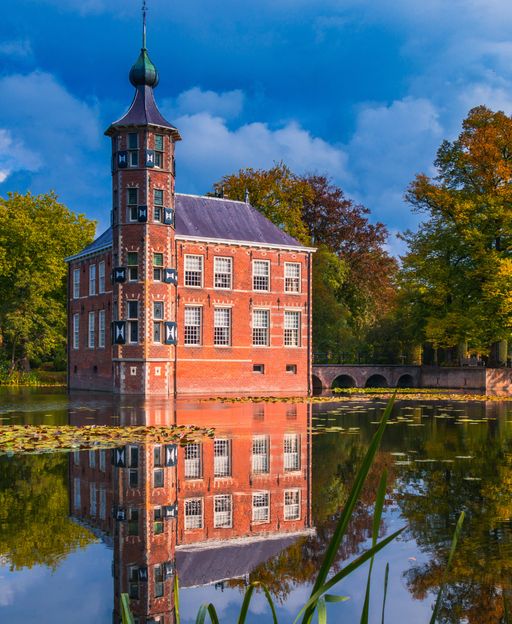
Breda is another good choice. It has its own city archive and a striking castle — Bouvigne Castle — that dates from the 17th century. The centre of Breda is compact and easy on foot. The complete Breda visitor guide covers transport, accommodation, and places to eat.
If your family came from the eastern part of the province — the Kempen or Peel regions — Eindhoven gives you good access to that area. The Eindhoven area held Van Gogh’s father’s parish in Nuenen. That church still stands, and it runs tours connected to the painter’s early life.
For more province comparisons, see our guide to discovering Gelderland roots, a neighbouring province with its own rich genealogy trail.
Frequently Asked Questions
Where do I find North Brabant church records?
The BHIC (Brabants Historisch Informatie Centrum) holds most North Brabant Catholic parish records. Many are digitised and available at bhic.nl. WieWasWie.nl also indexes Brabant church records. For pre-1811 records, search by gemeente (municipality) and parish name. Records survive from the early 1600s in many towns.
Why are North Brabant records different from other Dutch provinces?
North Brabant was a Catholic province in a predominantly Protestant country. Catholic parishes kept their own baptism, marriage, and burial registers using Latin terminology. This creates a different record structure compared to northern provinces. The depth of surviving Catholic records in Brabant is exceptional — many parishes have continuous records from the 1620s or 1630s.
Did many North Brabant families emigrate to America?
Yes. Dutch emigration to the United States peaked in the 19th century. Michigan, Iowa, and Illinois received many Dutch families. Communities like Grand Rapids, Holland (Michigan), Pella, and Orange City (Iowa) still maintain strong Dutch heritage. The surnames common in these towns often appear in Brabant and Zeeland records. The First Reformed and Christian Reformed church denominations in America connected emigrants to their Dutch roots.
What famous people came from North Brabant?
Vincent van Gogh was born in Zundert, North Brabant, in 1853. He spent his early adult years in Nuenen, where his father served as a pastor. Hieronymus Bosch — the 15th-century painter of surreal religious imagery — came from Den Bosch and took the city’s name. The province also produced Antonie van Leeuwenhoek’s contemporaries, several early Dutch colonial administrators, and many industrial pioneers from Eindhoven’s Philips era.
What does “Burgundian” mean when people describe North Brabant?
Burgundian refers to the cultural character of the southern Netherlands — festive, sociable, fond of good food and long tables. The Duchy of Burgundy controlled this region in the 15th century and left a cultural legacy that the north, shaped by Calvinism, did not share. Today “Burgundian” means a generous, warm, celebration-loving way of living. North Brabant’s carnaval tradition is the most visible expression of it.
You Might Also Enjoy
Continue your Dutch heritage research with these related guides:
- Tracing Your Family in North Brabant: A Heritage Travel Plan
- Discover Your Gelderland Roots: Heritage, Diaspora, and Family History
- How to Trace Your Dutch Ancestry: A Step-by-Step Guide
Join Netherlands Lovers
Every week, discover the Netherlands beyond the tourist trail — hidden villages, local recipes, cycling routes, and travel insights you won’t find in any guidebook.
Subscribe free — enter your email:
Already subscribed? Explore our archives for more hidden Dutch gems.
Love more? Join 64,000 Ireland lovers → · Join 43,000 Scotland lovers → · Join 30,000 Italy lovers →
Free forever · One email per week · Unsubscribe anytime
Plan Your Netherlands Trip — ready to visit? Our start here page guides you through the best ways to experience the Netherlands, including heritage travel and ancestral town visits.
Tours & experiences you might love


Powered by Viator. Some links are affiliate links — we may earn a small commission at no extra cost to you.