
North Holland is the province that shaped the world. For two centuries, merchants from Amsterdam, Hoorn, Enkhuizen, and Alkmaar sailed to every corner of the globe. They built the Dutch East India Company. They founded New Amsterdam on the tip of Manhattan. They settled the Cape Colony in South Africa. Their descendants now live in America, Australia, Indonesia, and South Africa. If North Holland ancestry runs in your family, you are connected to one of the most extraordinary chapters in world history.
This guide is for anyone tracing their Dutch roots to North Holland. Whether your family left for America in the 1800s, sailed to the East Indies with the VOC, or joined the first settlers at the Cape of Good Hope, North Holland is likely part of your story. You will find the key surnames, the diaspora history, the best archives, and a clear path forward.
What Makes North Holland Different
North Holland is not a farming province. It never was. The land is low and wet. The coast is long and exposed. The people here turned to the sea. They built ships, fished the North Sea, and traded across oceans. That maritime character shapes every part of the province’s history — and every family tree that grows from it.
Amsterdam sits at the heart of the province. But the older towns matter just as much for ancestry. Hoorn sent its merchants to Asia and America. Enkhuizen was a herring fishing capital that launched some of the VOC’s earliest expeditions. Alkmaar is the market city where farmers from across the province brought their goods. Each town has its own archive, its own character, and its own contribution to the Dutch diaspora.
The coastal villages are a world apart. Volendam, Marken, and Monnickendam were fishing communities with centuries of unbroken tradition. Families here kept their customs, their dress, and their surnames intact for generations. Many had surnames tied directly to the sea: Visser (fisherman), Schipper (skipper), Molenaar (miller).
The Zaan region north of Amsterdam was the industrial heartland. Windmills processed grain, timber, oil, and paper. The Zaan was the world’s first industrial area, centuries before Britain’s factories. Families here worked in trades. Their surnames reflect it: Bakker (baker), Smit (smith), Timmerman (carpenter).
🇳🇱 Enjoying this? Netherlands lovers get stories like this every week. Subscribe free →
The North Holland Diaspora: Where Families Went
New Amsterdam and the Dutch-American Connection
In 1626, the Dutch West India Company bought the island of Manhattan from the Lenape people for sixty guilders’ worth of trade goods. The colony they built was called New Amsterdam. Most of its founders and merchants came from North Holland and the surrounding provinces.
When the British took New Amsterdam in 1664 and renamed it New York, the Dutch families stayed. They kept their names. They kept their land. Families like the Roosevelts (originally Rosenvelt, from Oud-Vossemeer), the Van Cortlandts, and the Stuyvesants are part of American history. But there are thousands of less famous families with the same roots.
Dutch emigration to America continued in waves through the 1800s. Many North Holland families left during the hungry 1840s, when potato blight and economic hardship hit hard. They built new communities in Michigan, Iowa, and New Jersey. If your Dutch-American family arrived before 1900, there is a good chance the ship they boarded sailed from one of North Holland’s ports.
For a detailed guide to tracing the journey from the Netherlands to America, read The Dutch-American Homecoming: From New York to Old Holland. It maps the emigration routes and shows where to find records on both sides of the Atlantic.
The VOC Merchants and the Indonesian Connection
The Dutch East India Company — the VOC — was founded in Amsterdam in 1602. Its headquarters were in the city. Its warehouses lined the waterfront at Oostenburg. Its ships were built in the Zaan shipyards and in Hoorn. For nearly two hundred years, the VOC sent Dutch merchants, soldiers, and administrators to Asia.
Many stayed. They married locally. Their descendants became the Indo-Dutch community, known in the Netherlands as Indische Nederlanders. When Indonesia gained independence in 1949, around three hundred thousand Indo-Dutch people moved to the Netherlands. Many more went to Australia and the United States.
If you have Dutch-Indonesian heritage, your family history likely passes through North Holland. The VOC records are among the best preserved in the world. They list sailors, soldiers, merchants, and officials by name, home town, and date of departure. Many of these records are now digitised and searchable online.
Read The VOC Trail: Following Your Dutch Ancestors to the East for a full guide to tracing VOC ancestors through Dutch and Indonesian archives.
The Cape Colony and the Afrikaner Roots
The VOC sent its first settlers to the Cape of Good Hope in 1652. Jan van Riebeeck, who commanded the expedition, was born in Culemborg but worked from Amsterdam. Many of the first settlers and subsequent arrivals were recruited in Amsterdam and the North Holland ports. Their descendants became the Afrikaner people of South Africa.
If your South African surname traces back to an early VOC settler, North Holland archives may hold records of your family’s departure. The same VOC record systems that document Asia-bound sailors also record Cape-bound expeditions. For a full guide to this research path, see From Table Mountain to Amsterdam: Tracing Your Boer Roots in the Netherlands.
Key North Holland Surnames and What They Mean
North Holland produced a distinctive set of surnames. Many reflect the seafaring and trading life of the province. Others are patronymic — meaning they are based on a father’s first name. The Napoleonic registration of 1811 made permanent surnames compulsory. Before that, most Dutch families used patronymics, changing with each generation.
Common North Holland surnames include De Boer (the farmer), Visser (fisherman), Bakker (baker), Smit (smith), De Wit (the white-haired one), Molenaar (miller), Schipper (skipper or captain), and Van der Berg (from the mountain, often a geographic reference). Many families also carry “van” names tied to specific towns: Van Hoorn, Van Alkmaar, Van Haarlem.
Hoorn itself produced a famous name in world history. Abel Tasman, who mapped Tasmania and New Zealand, was born near Hoorn. Jan Pieterszoon Coen, the brutal but effective VOC governor-general, was born in Hoorn too. Their surnames do not carry regional markers, but their birthplace tells the story.
For a complete list of North Holland surnames with etymologies and regional variations, read Dutch Surnames of North Holland: Origins and Meanings. It covers over thirty surnames with their historical roots and diaspora connections.
How to Research Your North Holland Ancestors
Noord-Hollands Archief (North Holland Provincial Archive)
The main archive for North Holland is the Noord-Hollands Archief in Haarlem. It holds civil registration records from 1811 onwards, church records going back to the 1600s, and a vast collection of notarial records, land deeds, and estate inventories. Many of these records are digitised and can be accessed online at noordhollandsarchief.nl.
If your family came from Amsterdam specifically, the Stadsarchief Amsterdam (Amsterdam City Archive) is a separate and equally important resource. It holds Amsterdam’s own civil and church records, VOC employment records, and the famous Deeds Register, which documents property transactions going back to the medieval period. You can access much of it free online at archief.amsterdam.
WieWasWie: The National Dutch Genealogy Portal
WieWasWie.nl is the starting point for any Dutch genealogy search. It aggregates civil registration records from across the Netherlands, including North Holland, into a single searchable database. You can search for births, marriages, and deaths from 1811 to around 1950. The site is free and straightforward to use.
For older records, the Dutch Genealogical Society (the NGV — Nederlands Genealogisch Genootschap) maintains an extensive library in Amsterdam. Their specialists can help you navigate pre-1811 church records, which are the essential sources for tracing ancestors before civil registration began.
VOC Records for Merchant and Sailor Ancestors
The VOC employment records (the VOC-opvarenden database) are available free at gahetna.nl. This database lists over 775,000 individuals who sailed for the VOC between 1602 and 1795. Each entry shows the person’s name, home town, date of departure, ship, and destination. If your ancestor sailed to Asia, there is a strong chance they appear here.
The National Archives in The Hague (Nationaal Archief) holds the physical VOC records. Many are digitised. Their staff can help you navigate the collections. For researchers connecting Dutch and Indonesian family histories, this archive is indispensable.
Planning Your Heritage Visit to North Holland
A North Holland heritage trip rewards anyone willing to look beyond Amsterdam. The province’s smaller towns hold the clearest connection to your ancestors’ daily lives. Here is where to begin.
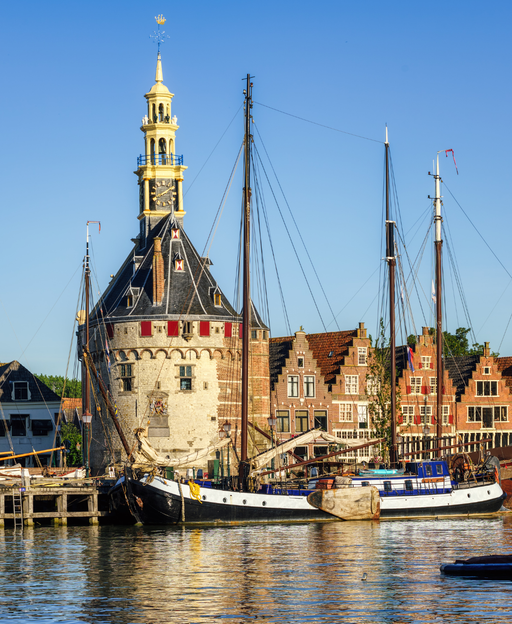
Hoorn is the single most important town for heritage visitors. Its historic harbour, the Hoofdtoren tower, and the VOC Oost-Indisch Huis (the old East India Company warehouse) are all preserved. The Westfries Museum holds collections related to the town’s VOC history and the families who made their fortunes here. Hoorn is an hour by train from Amsterdam Centraal.
Enkhuizen sits at the tip of a peninsula jutting into the IJsselmeer. It was once one of the busiest ports in northern Europe. Today it is a quiet town with a well-preserved historic centre. The Zuiderzee Museum recreates life in the old fishing communities of the region. If your ancestors lived in the coastal villages of North Holland, this museum brings their world to life.
Alkmaar is the market town of North Holland. It is famous for its cheese market, but its archive and old city centre hold far more for heritage visitors. The Regional Archive of Alkmaar (Regionaal Archief Alkmaar) covers the northern part of the province. Its staff are experienced in helping international researchers trace their Dutch roots.
Haarlem holds the Noord-Hollands Archief and is an easy base for research. It is also one of the most beautiful cities in the Netherlands, with a golden-age city centre that rivals any in Europe. For more on the city, see Haarlem: The Golden Age City That Glitters on Amsterdam’s Doorstep.
For a full heritage travel itinerary, the Tracing Your Family in North Holland: A Heritage Travel Plan gives a day-by-day guide to visiting the key archives, towns, and heritage sites across the province.
Where to Begin Your Search
If you have never traced your Dutch roots before, the best starting point is to gather what your family already knows. Write down every name, date, and place you have heard mentioned. Even approximate information is useful. Then begin your formal search with How to Trace Your Dutch Ancestry: A Step-by-Step Guide. It walks you through every stage of the process, from finding the right archive to interpreting old Dutch records.
Once you have located your ancestral town or municipality, the How to Plan a Dutch Heritage Trip to Your Ancestral Town guide will help you visit in person. Meeting the archivist, walking the streets your great-grandparents knew, and standing in the church where they were married — nothing replaces that experience.
North Holland is waiting. Its archives are well organised. Its towns are well preserved. Its people are accustomed to welcoming visitors who have come home after a long time away.
Frequently Asked Questions
Where are North Holland’s genealogy records held?
Most North Holland records are at the Noord-Hollands Archief in Haarlem, covering civil registration from 1811 and church records from the 1600s. Amsterdam records are at the Stadsarchief Amsterdam. The Regionaal Archief Alkmaar covers the northern part of the province. All three offer online access to digitised collections.
How do I find a North Holland ancestor who sailed with the VOC?
Start with the VOC-opvarenden database at gahetna.nl. It is free and searchable by name. If you find your ancestor, the record will show their home town, the ship they sailed on, and their destination. From there, you can trace them through Dutch and Indonesian archives.
What are the most common North Holland surnames?
The most common North Holland surnames include De Boer, Visser, Bakker, Smit, De Wit, Molenaar, Schipper, and Van der Berg. Many families also carry “van” names tied to specific towns, such as Van Hoorn or Van Alkmaar. Patronymic surnames adopted in 1811 are also common across the province.
Did North Holland families emigrate to the United States?
Yes. North Holland families emigrated to the United States in large numbers during the 1600s (as founders of New Amsterdam) and again during the 1840s to 1920s. Many settled in New York, Michigan, Iowa, and New Jersey. If your Dutch-American family came through New York or the Midwest, North Holland is a strong place to begin your search.
Can I visit North Holland’s archives in person?
Yes. The Noord-Hollands Archief in Haarlem, the Stadsarchief Amsterdam, and the Regionaal Archief Alkmaar all welcome researchers. Most require you to book a visit in advance. Staff at these archives are experienced in helping international visitors trace their Dutch roots and can assist in interpreting old Dutch-language records.
You Might Also Enjoy
- Dutch Surnames of North Holland: Origins and Meanings
- Tracing Your Family in North Holland: A Heritage Travel Plan
- The Dutch-American Homecoming: From New York to Old Holland
Join Netherlands Lovers
Every week, discover the Netherlands beyond the tourist trail — hidden villages, local recipes, cycling routes, and travel insights you won’t find in any guidebook.
Subscribe free — enter your email:
Already subscribed? Explore our archives for more hidden Dutch gems.
Love more? Join 64,000 Ireland lovers → · Join 43,000 Scotland lovers → · Join 30,000 Italy lovers →
Free forever · One email per week · Unsubscribe anytime
Plan your Netherlands trip — our Start Here page has everything you need to begin exploring the Netherlands, from heritage towns to hidden cycling routes.
Tours & experiences you might love


Powered by Viator. Some links are affiliate links — we may earn a small commission at no extra cost to you.