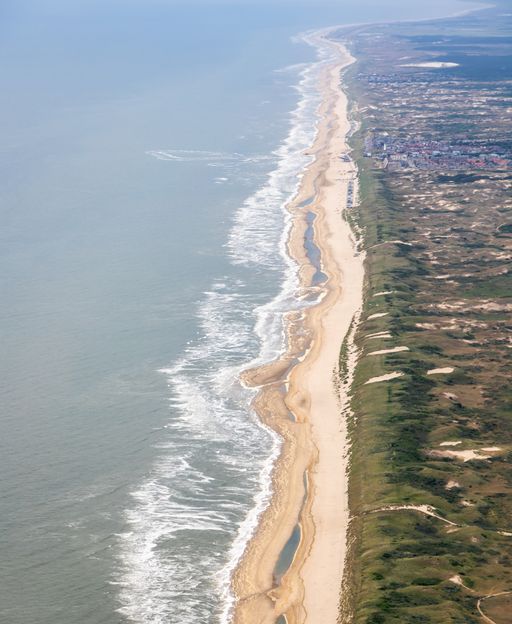
The first thing you notice when you arrive in the Netherlands is how much of it is water. The second thing is how comfortable the Dutch are with it. They cycle past canals, they eat herring leaning over the side of a railing, they build cities below sea level and make them look effortless. It’s the quiet confidence of a country that knows exactly what it is.
If the daily newsletter brings you closer to the Netherlands, our Sunday Premium Edition takes you deeper into it. Every Sunday you’ll receive travel deep dives, curated itineraries, regional stories, and lesser-known places you won’t find anywhere else.
There is a Dutch word with no direct English translation. It means to walk outside into a strong wind — deliberately. Not to get somewhere. Just to feel it. Uitwaaien (pronounced roughly out-vai-en ) describes something the Dutch do without thinking about it. When the sky turns grey and the wind picks up off the North Sea, they lace up their shoes and head outside. It is not a wellness trend. It is not a fitness plan. It is something older and more practical — a habit built into daily life in a country where wind is simply part of the weather. What Uitwaaien Actually Means The word breaks into two parts. “Uit” means out, and “waaien” means to blow in the wind. Together, they name an act that most cultures perform but almost none have named. Uitwaaien is walking into open air and into wind, with no destination and no plan, until your head feels clear again. It is not a hike. It carries…
In de Wildeman — Amsterdam’s Quietest Beer Cathedral
In de Wildeman is hidden down an alley off the Nieuwendijk, a former 18th-century distillery turned proeflokaal — a tasting room. The room is dark wood, low ceilings, brass taps, and a wall lined with hundreds of glass bottles. There’s no music. No televisions. The menu has more than 250 beers including 18 on tap, and the staff genuinely know which one to put in your hand based on what you’ve eaten that day. Order a Trappist, take a stool at the back bar, and listen to a city you thought you couldn’t escape.
Every February, something strange happens to Maastricht. The cobblestones fill with costumed strangers. The pubs open at 9am. The mayor hands over the city keys to a man in a…
In the winter of 1636, a Dutch sailor delivered news that still haunts collectors to this day. He had spotted an unusual onion on a wealthy merchant’s kitchen counter and eaten it…
Most visitors to the Netherlands go to Amsterdam. That is understandable. But the city that actually governs the country — and hosts some of the world’s most powerful legal…
There is a province in the Netherlands that Dutch people drive to every summer and barely mention to anyone else. Zeeland sits at the bottom of the country, divided into islands…
Every Dutch family has one. A specific pannenkoekenhuis they have visited for years. It might sit beside a canal, overlook a polder, or fill the ground floor of a working…
The Netherlands has an unwritten rule about pea soup. Nobody voted on it. Nobody wrote it down. Every Dutch person simply knows: you make erwtensoep when it is cold enough to skate on the canals. Not a little chilly. Not November mild. Properly cold. Canal-freezing cold. That is the rule. What Is Snert? Dutch people do not call it erwtensoep at home. They call it snert . The name is blunt and plain, which suits the soup perfectly. Snert starts…
Pannenkoeken — The Dutch Pancake That Eats Like a Meal
A Dutch pannenkoek is the size of a dinner plate, thinner than an American pancake but thicker than a French crêpe, and it’s served as a full meal — savoury or sweet, never both. The classic order is a pannenkoek met spek (with bacon) drizzled in stroop. Children get them with apple and cinnamon. The pannenkoekenhuis tradition runs in old farmhouses and converted mills across the countryside, where you can sit at long tables and order a pancake the size of your face for the price of a sandwich. It’s the Sunday family lunch you’ll wish your grandmother had known about.
If you’re enjoying this letter, the best thing you could do is forward it to one friend who’d love the Netherlands too. This newsletter grows by word of mouth alone — every single subscriber came from someone sending it to someone else. Thank you for being one of the first.
Our daily newsletter is free and always will be. But for less than the price of a pint, you can upgrade to our Sunday Premium Edition, which gives you access to our travel deep dives, curated itineraries, and regional stories. Consider buying us a stroopwafel — it’s the Dutch way to say thank you.
Also From Our Family
Love Ireland too? Over 65,000 readers wake up each morning to the Love Ireland newsletter — loveireland.substack.com
Powered by Viator. Some links are affiliate links — we may earn a small commission at no extra cost to you.
Other newsletters you might like
Scottish Rugby Fans
The best Scottish rugby updates, straight to your inbox — Six Nations, the Nations Championship, Glasgow and Edinburgh. Only when there's something worth reading.
A newsletter for Londoners who want to rediscover their own city. Travellers planning their first or fifth visit. Anglophiles who fell in love with London through literature, film, or a rainy afternoon on the South Bank.