

Every visitor to the Netherlands goes to Amsterdam. A smaller group makes it to Delft or Rotterdam. Almost nobody visits Utrecht — and that is exactly what makes it worth going.
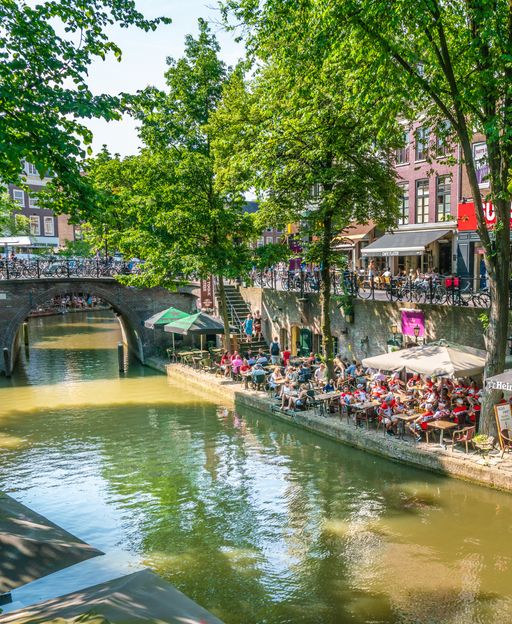
Utrecht has a canal system unlike any other in the world. Two levels. Street level above, where cyclists and pedestrians pass. And below — the wharf — where the water sits several metres down, and the real city breathes.
What Makes Utrecht’s Canals Different
Amsterdam’s canal houses rise straight from the water’s edge. In Utrecht, the canal sits below street level. Between the water and the road there is a wide stone terrace — a wharf — with vaulted cellars cut into the wall beneath the houses above.
These are the werfkelders. Wharf cellars.
Builders dug them in the 13th century. The Oudegracht — Old Canal — was a trading artery then. Boats from the Rhine brought cloth, spices, wine, and grain. The cool, dry cellars held it all while merchants negotiated upstairs.
Amsterdam later borrowed the canal idea. It never borrowed the wharves.
What the Werfkelders Became
Today the werfkelders hold cafés, bars, restaurants, and independent shops. On a warm afternoon, every table on the lower wharf fills up. People sit a full storey below the cyclists and pedestrians overhead, close enough to the water to hear it move.
The Dutch call this feeling gezellig — warm, cosy, enclosed in the best possible way. Utrecht’s wharves may be the purest physical expression of it anywhere in the country.
Nothing in Amsterdam feels quite like eating lunch at the water’s edge with the street above your head and the canal running past your table.
Walking the Oudegracht
The Oudegracht runs about 1.5 kilometres through the centre of Utrecht. Two parallel streets line it above — one on each bank. Between them, interrupted by old stone bridges, the lower wharf winds along the water.
Walk it slowly. Start at Bakkerbrug in the north and head south towards Ledig Erf. Every 50 metres or so, worn stone steps lead from street level down to the wharf. Many visitors walk the full length of the Oudegracht without noticing the lower level exists.
Stop at Café Ledig Erf at the southern end. It has one of the best terrace spots on the lower wharf. Order coffee and watch small tour boats drift past at eye level.
Enjoying this? Get stories like this every week from Love Netherlands — Subscribe free →
The History Beneath Your Feet
Utrecht is older than Amsterdam. The Romans built a fort here — Traiectum — in 47 AD. The city grew through the medieval period into one of the most powerful in the region, a centre of church authority and trade.
The Domtoren — the cathedral tower — still dominates the skyline. Builders completed it in 1382. At 112 metres tall, it was the tallest church tower in the Netherlands for centuries.
A storm destroyed the nave of the cathedral in 1674. Nobody ever rebuilt it. The tower and the remaining choir now stand apart — an open square of sky between them where the cathedral once was. Walk through that gap. The absence of something enormous is still there.
Utrecht Without the Crowds
Amsterdam draws 20 million tourists a year. Utrecht, thirty minutes away by direct train, draws a fraction of that. The medieval core is equally beautiful. The architecture is equally old. The crowds are not there.
Utrecht’s large student population — Utrecht University is the largest in the Netherlands — keeps the city alive year-round. The streets between the Oudegracht and the Neude square hum with bookshops, coffee bars, and second-hand record shops.
The Dutch love Utrecht. It consistently ranks among the happiest cities in the country. People cycle everywhere — as they do across the Netherlands, but in Utrecht cycling shapes the entire feel of the city.
If you are planning your first trip to the Netherlands, the Love Netherlands start here guide will help you build an itinerary that goes beyond Amsterdam.
Is Utrecht worth visiting as a day trip from Amsterdam?
Yes. The train takes 30 minutes and runs every 15 minutes throughout the day. A half-day gives you time to walk the Oudegracht, explore the wharves, and climb the Domtoren. An overnight stay lets you experience the city after the day visitors leave.
What are the werfkelders in Utrecht?
The werfkelders are the vaulted medieval cellars built into the canal walls of the Oudegracht. Merchants used them for storage from the 13th century, loading goods directly from boats below street level. Today most hold cafés, restaurants, and bars at the water’s edge.
What is the best time to visit Utrecht?
April to September works well. The outdoor wharf terraces fill when the weather turns warm. May is especially good — comfortable temperatures, fewer tourists than summer, and the city in full bloom. The Oudegracht is beautiful in every season.
How do you get to Utrecht from Amsterdam?
Take a direct Intercity train from Amsterdam Centraal. The journey takes about 30 minutes and trains run every 15 minutes. Utrecht Centraal station is a 10-minute walk from the Oudegracht. Buy tickets at the station or via the NS app.
Utrecht gives you something most famous Dutch cities cannot: the feeling of discovering a place yourself. The lower wharf on a quiet Tuesday, with rain spotting the canal and the smell of coffee drifting from a vaulted cellar — it feels like a secret the city has not yet decided to share. Go before it changes its mind.
Love Netherlands — Free Every Week
Canal towns, hidden villages, Dutch stories. A free letter about the Netherlands — written slowly, delivered weekly.
Love more? Join 64,000 Ireland lovers → · Join 43,000 Scotland lovers → · Join 30,000 Italy lovers →
Free forever · One email per week · Unsubscribe anytime
Tours & experiences you might love


Powered by Viator. Some links are affiliate links — we may earn a small commission at no extra cost to you.