

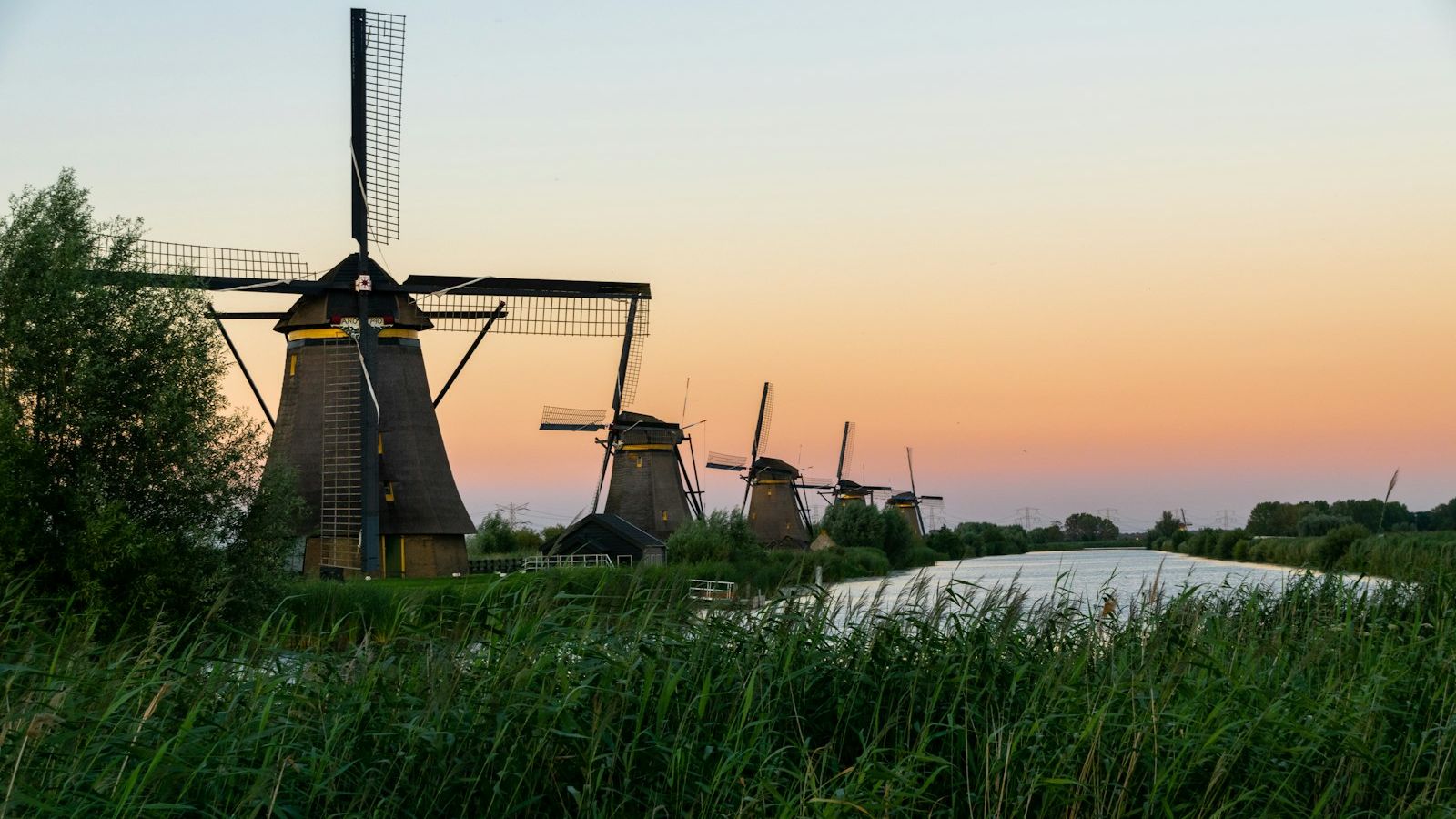
There is a Dutch word with no direct English translation. It means to walk outside into a strong wind — deliberately. Not to get somewhere. Just to feel it.
Uitwaaien (pronounced roughly out-vai-en) describes something the Dutch do without thinking about it. When the sky turns grey and the wind picks up off the North Sea, they lace up their shoes and head outside.
It is not a wellness trend. It is not a fitness plan. It is something older and more practical — a habit built into daily life in a country where wind is simply part of the weather.
What Uitwaaien Actually Means
The word breaks into two parts. “Uit” means out, and “waaien” means to blow in the wind. Together, they name an act that most cultures perform but almost none have named.
Uitwaaien is walking into open air and into wind, with no destination and no plan, until your head feels clear again. It is not a hike. It carries no goal beyond the feeling of coming back different from when you left.
Dutch people often do it alone. Sometimes with a dog. Occasionally with a friend, mostly in comfortable silence. The point is the wind, not the company.
Why the Netherlands Has a Word for This
The Netherlands is flat. The wind arrives from the North Sea with nothing to stop it. In much of the country, you can see for kilometres in every direction. There are no hills. No forests thick enough to block what comes from the west.
The Dutch did not invent uitwaaien as a concept. They invented the word because the experience was always there. Walking into the wind was simply what you did when the walls felt too close.
The country has 451 kilometres of North Sea coastline and vast stretches of open polder landscape — flat fields reclaimed from the sea, exposed to sky on all sides. Even a short walk in these places feels like something has been removed from you. Pressure, mostly.
Where the Dutch Go to Uitwaaien
The best places for uitwaaien are the coastal dunes. Long ridges of sand run along most of the western coast, separating the North Sea from the flat interior. These are not beaches in the resort sense. They are wide, windswept, and often empty.
Scheveningen in The Hague has long been a favourite. The dune paths behind the beach fill on rough days with people walking into the weather with no particular destination. If you have not visited, our guide to Scheveningen covers what to expect and why it rewards the trip.
Texel — the largest of the Wadden Islands — offers something more remote. The western beach on Texel runs for kilometres without a building in sight. Wind, sand, and gulls. Nothing else. The island itself has a character unlike anywhere else in the Netherlands.
De Hoge Veluwe National Park, inland near Arnhem, offers heathland and forest walks. It is different from the coast but equally effective on a blustery afternoon — and one of the few places in the country where the landscape actually changes around you as you walk.
Enjoying this? Get stories like this every week from Love Netherlands — Subscribe free →
The Dutch Relationship With Bad Weather
Most cultures treat bad weather as a reason to stay inside. The Dutch treat it as a reason to go out.
This is not stubbornness. It reflects something older — a people who have always lived alongside water, wind, and weather as daily companions. The idea of waiting for good weather before going outside strikes many Dutch people as a puzzling approach to life.
Uitwaaien sits neatly alongside other Dutch outdoor habits. The country has more bicycles than people, and Dutch cyclists do not stop because it rains. The same practical acceptance of weather runs through walking culture too.
Want to understand more Dutch words that reveal how people actually live here? The collection of untranslatable Dutch expressions goes deeper — uitwaaien is one of many concepts the language holds that English simply cannot.
How to Try It on Your Next Visit
You do not need special equipment. Wear something windproof. Walk toward open space — a beach, a dune path, a wide polder road with sky in every direction.
Walk into the wind, not with it. That part matters. The point is the resistance — the feeling of moving through something rather than being carried along by it.
Stay out for at least twenty minutes. Leave your phone in your pocket. Let the wind do what it does.
The Dutch say you return from uitwaaien feeling “leeggeblazen” — blown empty. Your mind quieter. Your body more awake. Most visitors to the Netherlands never experience it. They stay in the cities, visit the museums, eat the stroopwafels. All of that is worth doing. But the country’s best offering — wide windy sky, flat open land, clean coastal air — waits just outside the city limits.
What does uitwaaien mean in Dutch?
Uitwaaien translates loosely as “to walk out in the wind.” Dutch people use it to describe going outside deliberately in breezy or windy conditions to clear the mind. There is no direct English equivalent for this specific, intentional act.
Where is the best place to try uitwaaien in the Netherlands?
The North Sea dunes along the western coast — near Scheveningen, Zandvoort, or Texel — are ideal. These open stretches of beach and dune path give full exposure to the sea wind with easy access on foot or by bicycle.
What time of year is best for uitwaaien?
Autumn and winter bring the strongest winds and fewest crowds. The Dutch practise uitwaaien year-round, but the coast in October or November — grey sky, empty beach, strong steady wind — is considered the classic experience by many who grew up doing it.
Is uitwaaien a formal Dutch tradition?
Uitwaaien is an informal cultural habit rather than a named festival or ceremony. Most Dutch people grow up doing it without naming it as anything special. The concept gained wider international attention when Dutch wellness ideas began appearing in European lifestyle writing around 2018–2020.
There is something honest about a country that names the act of walking into the wind. No promise of sunshine. No guaranteed outcome. Just open land, cold air, and the quiet understanding that sometimes you need something large to blow through you.
New to the Netherlands? Our start here guide covers everything you need to begin exploring.
Love Netherlands — Free Every Week
Canal towns, hidden villages, Dutch stories. A free letter about the Netherlands — written slowly, delivered weekly.
Love more? Join 64,000 Ireland lovers → · Join 43,000 Scotland lovers → · Join 30,000 Italy lovers →
Free forever · One email per week · Unsubscribe anytime
Tours & experiences you might love


Powered by Viator. Some links are affiliate links — we may earn a small commission at no extra cost to you.