Apr 20, 2026
|
Why Groningen Has More Cyclists Than Cars
and More Character Than You’d Expect
|
|
Love Netherlands
|
|
Dear Netherlands,
There’s a version of the Netherlands that tourists rarely find. It’s in Jordaan on a Saturday morning, where the Noordermarkt smells of fresh bread and old cheese. It’s in Utrecht, where canal-level wharfs have become the most beautiful cafés in Europe. It’s in Delft, where Vermeer’s light still falls across the same brick walls.
|
|
If the daily newsletter brings you closer to the Netherlands, our Sunday Premium Edition takes you deeper into it. Every Sunday you’ll receive travel deep dives, curated itineraries, regional stories, and hidden gems you won’t find anywhere else.
Upgrade for less than the price of a pint and see the Netherlands in a completely new way.
|
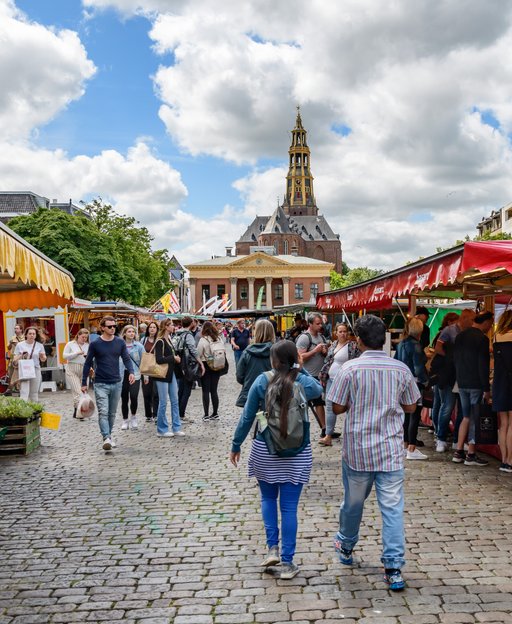
Image: Shutterstock
|
In today’s email:
- Why Groningen Has More Cyclists Than Cars — and More Character Than You’d Expect
- At The Café — Café Olivier — The Church That Became Utrecht’s Favourite Bar
- Around The Web — The Dutch Village 15 Minutes From Amsterdam That Stopped in Time and more
- From Love Netherlands — Why Scheveningen Is the Dutch Seaside Town You Didn’t Know You Needed
- Dutch Food You Will Love — Bitterballen — The Small, Dangerous Joy of the Dutch Evening
|
Why Groningen Has More Cyclists Than Cars — and More Character Than You’d Expect
👉 Read the full story
Groningen sits in the far north of the Netherlands, a two-hour train ride from Amsterdam. Most visitors to the country never make it this far. That is their loss. A City Built Around the Bicycle Groningen has one of the highest cycling rates of any city on earth. On a busy morning, the Vismarkt square fills with hundreds of bikes locked to every available fence and railing. Students, shopkeepers, professors, and grandparents all ride. Nobody asks why. It simply is how life works here. The city began redesigning its streets for cyclists and pedestrians in the 1970s, decades before the rest of the world discussed it. The main shopping streets are car-free. Groningen did not do this reluctantly — the city embraced it. If you want to understand why the Dutch cycle everywhere , Groningen is where that story reaches its most complete form. On a dry spring day, the canal paths fill with…
👉 Read the full story
Have you been there? Do you have a memory of this corner of the Netherlands? Hit reply and tell us — we’d love to hear your story.
|
|
“Want deep dives into the Netherlands every Sunday? Our Premium readers already have their next edition waiting.”
|
At The Café
Café Olivier — The Church That Became Utrecht’s Favourite Bar
Café Olivier in Utrecht is a working Belgian bar inside a deconsecrated 19th-century church. The pulpit is still there. The stained glass is still there. The pews have been replaced with long wooden tables where students, workers, and retired professors all somehow end up sharing a Trappist beer. It’s the kind of place that makes you understand why the Dutch are so comfortable with the quiet strangeness of their country — nothing here is trying to impress you, but everything is worth looking at twice.
|
Around The Web
|
From Love Netherlands
During the Second World War, the Dutch resistance used a single word to unmask German spies: “Scheveningen.” No German agent could pronounce it correctly. The soft G, the rolling syllables, the impossible rhythm — Dutch tongues learned it in childhood. Spies failed the test every time. Resistance members used it at checkpoints across occupied Netherlands to identify infiltrators. Today, that same word belongs to one of Europe’s most underrated…
👉 Read the full story
|
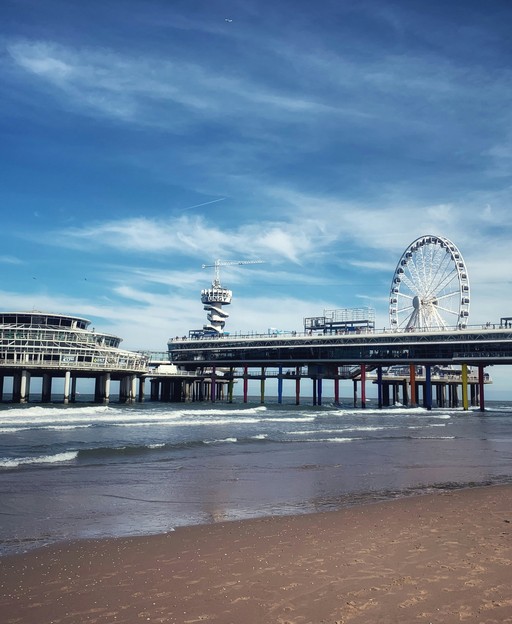
Image: Shutterstock
|
Dutch Food You Will Love
Bitterballen — The Small, Dangerous Joy of the Dutch Evening
A bitterbal is a small, crumb-coated sphere of slow-cooked beef ragout, deep-fried until crisp and served burning hot with a dish of sharp Dutch mustard. Walk into any brown café on a weekday evening and you’ll see them on half the tables. The rules are: wait two minutes so you don’t burn your mouth, bite off the top to let the steam escape, dip in mustard, eat in two bites, and order another round. Their name has nothing to do with being bitter — it’s from the old Dutch word bittertje, an aperitif served at pre-dinner hour. The name stuck long after jenever stopped being the drink of choice.
👉 Read the full story
|
|
Know Someone Who Loves the Netherlands?
If you’re enjoying this letter, the best thing you could do is forward it to one friend who’d love the Netherlands too. This newsletter grows by word of mouth alone — every single subscriber came from someone sending it to someone else. Thank you for being one of the first.
|
|
Our daily newsletter is free and always will be. But for less than the price of a pint, you can upgrade to our Sunday Premium Edition, which gives you access to our travel deep dives, curated itineraries, and regional stories. Consider buying us a stroopwafel — it’s the Dutch way to say thank you.
|
Also From Our Family
Love Ireland too? Over 65,000 readers wake up each morning to the Love Ireland newsletter — loveireland.substack.com
Or Scotland? Join 43,000 Scotland lovers — lovescotland.substack.com
|
|
You’re reading Love Netherlands — a free letter about canal towns, hidden villages, and Dutch stories, delivered Monday to Friday.
inlovewithnetherlands.com ·
Unsubscribe
© 2026 Love Netherlands · Part of the Love To Visit LLC family
|