

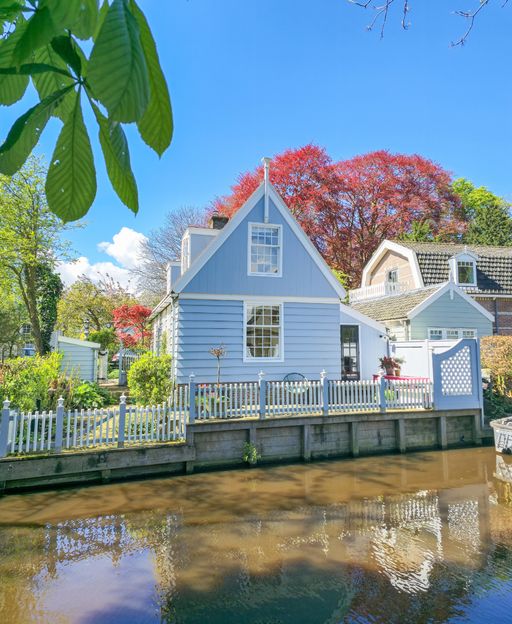
Most people who visit Amsterdam never leave the canals. A pity. Just 8 kilometres north lies a village so perfectly preserved it looks like a 17th-century oil painting. Broek in Waterland sits quietly while the tourists stream past on their way to Edam or the Zaanse Schans. That is exactly what makes it worth finding.
The Village That Amsterdam’s Wealthy Built
During the Dutch Golden Age, Amsterdam merchants needed somewhere to breathe. The city was loud, crowded, and always smelling of the harbour. So the wealthiest families built their summer retreats along the waterways north of the city.
Broek in Waterland became one of the most coveted addresses among that merchant class. The houses they built still stand today. Wooden, painted in muted shades of green, grey, and pale blue, they line the village’s narrow paths and quiet canals.
Walk slowly enough through the centre and you feel the quiet pride of a place that knows exactly what it is. Nothing here is trying to impress you. It already did that three centuries ago.
The Colour That Became an Identity
Ask someone what they remember about Broek in Waterland and they will say the colour. The houses here carry a palette you do not see elsewhere in the Netherlands. Pale greens. Soft blues. Silvery greys. Not a bright red or stark white in sight — just tones that seem to belong to the landscape.
This was never accidental. Over generations, the village developed its own aesthetic tradition. Residents kept their homes to a high standard. Facades were maintained carefully. Cleanliness became a point of local pride, and the distinctive paintwork was central to that identity.
The story goes that when Napoleon Bonaparte visited in 1811, the village’s tidiness struck him so deeply that he offered to build a road connecting it to Amsterdam. The villagers reportedly declined. They preferred the distance.
A Village With No Car Problem
Enjoying this? Get stories like this every week from Love Netherlands — Subscribe free →
The centre of Broek in Waterland is pedestrian territory. Narrow paths wind between the houses, crossing small drawbridges and passing the old Reformed church with its beautifully preserved wooden interior. You will not find tour buses here, or souvenir racks, or queues for anything.
Most visitors arrive by bicycle from Amsterdam — the journey takes about 30 minutes along quiet cycling paths through the Waterland polder. That ride is part of the experience. Flat green fields stretch out on either side. Small dykes divide the landscape. Cattle graze close to the path. This is the Netherlands at its most elemental.
If you are planning a visit, the Love Netherlands Start Here guide is a good place to build your first itinerary for exploring the country beyond the obvious stops.
Beyond the Village
From Broek in Waterland, you can cycle on to Monnickendam — a small harbour town on the Markermeer where fishing boats still come in and the restaurant menus lean towards smoked eel and herring. Together, the two stops make a full day without needing a bus schedule or a parking spot.
The wider Waterland region is one of the Netherlands’ quietest surprises. It sits on Amsterdam’s doorstep but feels completely separate. The landscape dates back a thousand years, shaped by centuries of peat cutting and water management. You can read more about another North Holland town that helped define the region’s Golden Age character at Dordrecht — the Dutch city that was here before Amsterdam.
The Alkmaar cheese market is also within reach — a living tradition that the Golden Age merchants of Broek in Waterland would have known well. Find out more in our guide to the Dutch market town where cheese is still weighed like it’s 1622.
How do I get to Broek in Waterland from Amsterdam?
You can cycle directly from central Amsterdam in about 30 to 35 minutes using the well-marked cycling paths through the Waterland polder. Bus 316 also runs from Amsterdam Centraal station and reaches the village in around 20 minutes.
What is Broek in Waterland famous for?
The village is famous for its 17th and 18th-century wooden houses, painted in distinctive shades of green, grey, and pale blue. It served as a summer retreat for wealthy Amsterdam merchants during the Dutch Golden Age and has kept much of that character ever since.
Is Broek in Waterland worth a visit?
Yes — especially if you want to step away from Amsterdam’s tourist crowds. The village takes about 90 minutes to explore at a relaxed pace and pairs perfectly with a cycling route through Waterland to Monnickendam. It costs nothing to enter and has no queues.
What is the best time of year to visit Broek in Waterland?
Spring and early summer (April to June) offer the most pleasant cycling weather and the Waterland landscape at its greenest. The village is also quieter than Amsterdam year-round, so even autumn and winter visits have their own appeal — morning mist over the canals is something to see.
The Netherlands has bigger sights and louder celebrations. But Broek in Waterland offers something harder to find — a place that chose stillness and kept it. Come for an afternoon. Stay longer than you planned.
Love Netherlands — Free Every Week
Canal towns, hidden villages, Dutch stories. A free letter about the Netherlands — written slowly, delivered weekly.
Love more? Join 64,000 Ireland lovers → · Join 43,000 Scotland lovers → · Join 30,000 Italy lovers →
Free forever · One email per week · Unsubscribe anytime
Tours & experiences you might love


Powered by Viator. Some links are affiliate links — we may earn a small commission at no extra cost to you.