
Your family has been in South Africa for three hundred years. But before the Karoo farms, before the Great Trek, before Jan van Riebeeck dropped anchor in Table Bay — your ancestors lived in a Dutch village. They worked Dutch fields, worshipped in Dutch Reformed churches, and spoke a language that would eventually become Afrikaans.
If your surname is Van der Merwe, Du Toit, Botha, or Joubert, that Dutch origin is part of who you are. This guide shows you how to find it.
Who Were the Cape Dutch?
In 1652, the Dutch East India Company — the VOC, or Vereenigde Oost-Indische Compagnie — sent Jan van Riebeeck to the southern tip of Africa. His job was to build a refreshment station to supply passing VOC ships with fresh water, vegetables, and meat. Within five years, the VOC released some of its employees as free settlers — vrije burgers — to farm the land around what is now Cape Town.
These settlers came mostly from the Netherlands, with a smaller number from Germany. In 1688, roughly 200 French Huguenot refugees joined them. They fled religious persecution in France and brought their surnames, their Protestant faith, and their vineyard skills. By the early 1700s, the Cape had a small but growing community of European settlers. Their descendants formed the foundation of Afrikaner culture.
The term “Cape Dutch” describes the architectural and cultural heritage of this community. You see it in the white-gabled homesteads of Stellenbosch and Franschhoek. But it also describes a genealogical identity — one that connects families in South Africa directly to specific towns and provinces in the Netherlands.
The Dutch Provinces Where Your Ancestors Came From
The VOC drew its sailors and settlers from across the Netherlands. Research into passenger lists and baptismal records shows that the provinces of South Holland, Zeeland, North Holland, and Utrecht produced the greatest number of Cape settlers. Zeeland sent especially large numbers — its ports at Middelburg and Flushing (Vlissingen) served as major VOC departure points.
Germany also contributed significantly. Many settlers listed in Cape records as “from Germany” came from the Rhine region, Saxony, and Württemberg. The Huguenots arrived mainly from Poitou, Normandy, and other parts of southern France.
Understanding these provincial origins helps you target the right archives. Common Cape Dutch surnames carry regional clues:
- Van der Merwe traces to the Merwede river area in South Holland
- Van Rensburg links to the Zeeland coast or the Rhine region
- De Wet connects to families near the North Sea coast or Weert in Limburg
- Van Niekerk descends from families near a Nieuwe Kerk (New Church) in North Holland
- Botha likely comes from a Low German or Dutch place name
Our guide to Discover Your South Holland Roots covers one of the main provinces that sent settlers to the Cape. Discover Your Zeeland Roots explores another key source province in depth.
Starting Your Search: South African Records First
Before you search Dutch archives, you need a firm South African foundation. Start with what South Africa holds.
Western Cape Archives and Records Service (WCARS)
The Cape Archives in Cape Town hold the oldest genealogical records in South Africa. They include Dutch Reformed Church (NGK) baptismal, marriage, and burial registers dating back to the 1660s. They also hold opgaafrolle (census records listing family members and ages), court records, estate inventories, and land grants. You can search the catalogue online through the Western Cape Government website, and staff can assist with remote research requests.
FamilySearch South Africa
FamilySearch (familysearch.org) has digitised many South African records and makes them freely available. Search for “South Africa” collections and filter by province and date. Many early Cape NGK church registers are available here without charge.
The Genealogical Society of South Africa (GSSA)
The GSSA is the premier genealogical society in South Africa. It maintains one of the most comprehensive research databases for Cape Dutch families. Membership gives you access to surname files, research libraries, and assistance from experienced genealogists. The GSSA also publishes Familia, South Africa’s leading genealogy journal.
The Stamouers Database: Your Most Valuable Tool
The single most useful resource for Cape Dutch genealogy is the Stamouers database. Stamouers means “stem ancestors” in Afrikaans — and this database lists all known original settlers who arrived at the Cape before 1840 and whose South African descendants historians have traced.
For each stammouer, the database shows the full name, birth year, place of birth (often listed as a Dutch province or German territory), date of arrival at the Cape, marriage records, and descendants.
If your family has Cape Dutch roots, your earliest traceable ancestor very likely appears in this database. Once you have that name and birthplace, you have the link you need to begin searching Dutch archives.
🇳🇱 Enjoying this? Netherlands lovers get stories like this every week. Subscribe free →
VOC Records: The Bridge Between South Africa and the Netherlands
Many Cape settlers arrived as VOC employees before they became free burghers. Their employment records serve as one of the most important bridges between South African and Dutch genealogy.
The Nationaal Archief in The Hague holds the complete VOC records, and the VOC Opvarenden database makes many of them searchable online. Each record shows the name and origin of the employee, the date and place where they signed their contract, their role on the ship (sailor, soldier, carpenter, or merchant), and their departure date and destination.
If your ancestor arrived at the Cape as a VOC employee, this database can tell you exactly where he signed his contract — and that location is almost always close to where he was born. Contract signing locations cluster around the major Dutch port cities: Amsterdam, Rotterdam, Middelburg, and Hoorn.
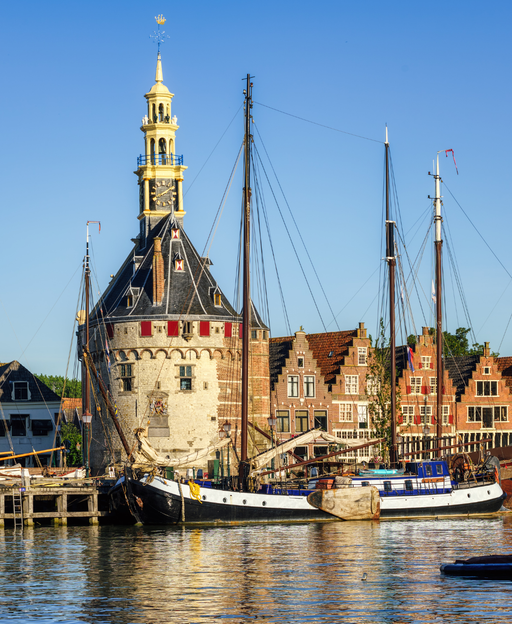
Hoorn stands out in particular. This North Holland town was a founding city of the VOC, and many of its residents sailed south in the 17th century. If your ancestor listed Hoorn or another North Holland town as his origin, Discover Your North Holland Roots can help you understand that heritage.
Our full guide to The VOC Trail: Following Your Dutch Ancestors to the East covers VOC research in detail.
Key Dutch Archives for Cape Dutch Research
Once you have a Dutch birthplace from the Stamouers database or VOC records, these archives are your next step.
Nationaal Archief, The Hague
The national archive holds VOC records, States-General documents, and colonial administration files. For Cape Dutch research, the VOC archives are the primary target. Many records are digitised and searchable online at nationaalarchief.nl. The archive also holds Dutch colonial records from after 1814, when the Netherlands briefly reclaimed the Cape before Britain made it permanent.
WieWasWie
WieWasWie (wiewaswie.nl) is a free portal that combines civil registration records (Burgerlijke Stand, from 1811 in most of the Netherlands) with earlier church records. If your Dutch ancestor was born before the 19th century, WieWasWie often has transcribed church registers. Start here for any Dutch name research.
Municipal Archives (Gemeentearchieven)
Each Dutch municipality maintains its own archive. If you know your ancestor’s birthplace — even at province level — the relevant Gemeentearchief holds baptismal records, marriage records, and burial registers going back to the 17th century or earlier.
Key archives for the most common Cape settler provinces:
- South Holland: Stadsarchief Rotterdam, Regionaal Archief Leiden
- Zeeland: Zeeuws Archief in Middelburg
- North Holland: Noord-Hollands Archief in Haarlem, Stadsarchief Amsterdam
- Utrecht: Het Utrechts Archief
Our complete guide to How to Trace Your Dutch Ancestry – Step-by-Step Guide walks you through each of these resources.
Common Cape Dutch Surnames and Their Origins
Your surname can point your research in the right direction. Here are some of the most common Cape Dutch surnames and where they came from.
Dutch-Origin Surnames
- Van der Merwe — from the Merwede river area in South Holland
- Botha — Low German or Dutch, possibly from a river-crossing or farmstead name
- Nel — from a Dutch coastal place name
- De Beer — “the bear,” widely used in Holland as a house or inn sign
- Van den Berg — “from the mountain,” a topographic name from inland Holland
- Venter — from Latin venator (hunter), adopted into Dutch occupational surnames
French Huguenot Surnames (1688 Settlers)
- Du Toit — from a hamlet in France; the Cape line descends from François du Toit
- Du Plessis — from a common French toponym meaning “the thorn hedge estate”
- De Villiers — a French noble family name, prominent at the Cape for three centuries
- Joubert — widespread in Normandy and Poitou; several Joubert families arrived in 1688
- Le Roux — “the red one” in French, a colour-based descriptive name
German-Origin Surnames (Many VOC Employees Were German)
- Engelbrecht — from Middle High German, meaning “angel bright”
- Muller — “miller,” one of the most common German surnames
- Brandt — from German brand, meaning fire, often linked to land-clearing
If your surname is of French Huguenot origin, your family’s Dutch records may lie in the Walloon churches of the Netherlands — congregations where French-speaking Protestant refugees worshipped before they sailed south.
Planning Your Cape Dutch Heritage Trip
Many descendants of Cape Dutch families feel a pull to visit the Netherlands — to walk the cobbled streets their ancestors walked before they sailed south. If you plan such a journey, our guide From Table Mountain to Amsterdam: Tracing Your Boer Roots shows how to connect the two worlds emotionally as well as genealogically.
Once you have a Dutch birthplace, How to Plan a Dutch Heritage Trip to Your Ancestral Town gives you a practical framework for visiting the right archives, churches, and cemeteries.
Start with the VOC departure ports — Hoorn, Middelburg, Rotterdam, or Amsterdam. Then follow your specific surname to the province and town where your family lived before they sailed south.
Frequently Asked Questions
How do I find out which Dutch province my Cape Dutch ancestors came from?
Start with the Stamouers database, which lists each original Cape settler’s birthplace. If your ancestor arrived as a VOC employee, the VOC Opvarenden database — held at the Nationaal Archief in The Hague — often shows where they signed their employment contract, which is usually close to their hometown.
Are Cape Dutch and Afrikaner the same thing?
Not exactly. “Cape Dutch” is a historical term for the early European settler community at the Cape and their descendants up to around 1800. “Afrikaner” is a broader identity that developed in the 19th century, covering Cape Dutch families as well as Huguenot and German settler descendants who had adopted Dutch as their language. All Afrikaners have Cape Dutch roots, but not all Cape Dutch descendants identify as Afrikaner today.
Where are the oldest Cape Dutch records held?
The oldest surviving Cape Dutch records are at the Western Cape Archives and Records Service (WCARS) in Cape Town. Dutch Reformed Church registers begin in the 1660s. Many records are also available through FamilySearch and the GSSA research library.
Can I research Cape Dutch genealogy from outside South Africa?
Yes. FamilySearch and the South African National Archives both offer online access to many records. The GSSA offers remote research support and can connect you with specialist researchers. For Dutch records, WieWasWie and the Nationaal Archief are fully accessible online from anywhere in the world.
Did any Cape Dutch ancestors return to the Netherlands?
Some did, particularly VOC administrators who completed their service contracts. However, the majority of Cape Dutch families became permanent South African residents. After 1795, when Britain began to control the Cape, the link to the Netherlands weakened. By the 19th century, the Cape Dutch community had developed its own distinct language — Afrikaans — and a cultural identity entirely separate from the Netherlands.
You Might Also Enjoy
- From Table Mountain to Amsterdam: Tracing Your Boer Roots
- How to Trace Your Dutch Ancestry – Step-by-Step Guide (2026)
- The VOC Trail: Following Your Dutch Ancestors to the East
Join Netherlands Lovers
Every week, discover the Netherlands beyond the tourist trail — hidden villages, local recipes, cycling routes, and travel insights you won’t find in any guidebook.
Subscribe free — enter your email:
Already subscribed? Explore our archives for more hidden Dutch gems.
Love more? Join 64,000 Ireland lovers → · Join 43,000 Scotland lovers → · Join 30,000 Italy lovers →
Free forever · One email per week · Unsubscribe anytime
Ready to plan your trip? Visit our Netherlands travel guide for everything you need to start exploring.
Tours & experiences you might love


Powered by Viator. Some links are affiliate links — we may earn a small commission at no extra cost to you.