
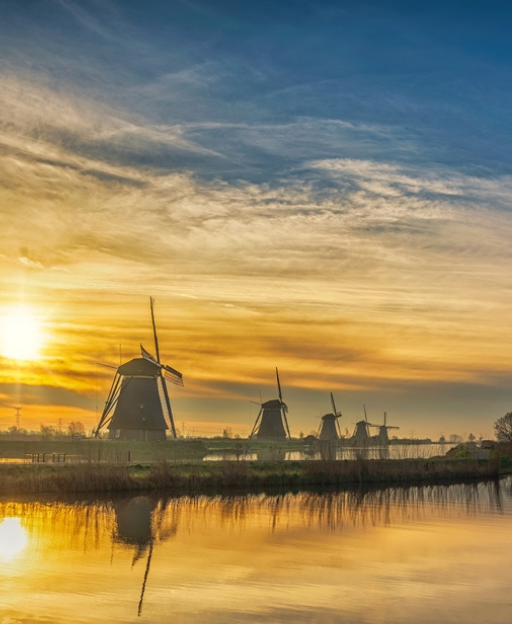
You land at Schiphol and something strange happens. The flat landscape outside the window looks familiar. The windmill on the horizon matches the painting your grandparents kept in their hallway. You know this place. Your family left it 150 years ago, but you know it.
Around 4.5 million Americans claim Dutch ancestry. Most know their family came from the Netherlands. Far fewer have ever stood in the town their great-great-grandparents left behind. This guide is for the ones who want to change that. It is a homecoming itinerary — part history, part travel plan, part family quest.
America’s Dutch Foundations
The Dutch did not just visit America. They built its first city. In 1626, Peter Minuit of the Dutch West India Company purchased Manhattan Island from the Lenape people. The settlement became New Amsterdam. It sat at the southern tip of what is now Manhattan. Wall Street follows the route of the original defensive wall the Dutch built around the settlement. Broadway ran along a Lenape trail the Dutch widened into a road.
New Amsterdam thrived as a trading hub for 38 years. Then, in 1664, the English took control without a fight. They renamed it New York after the Duke of York. But the Dutch families stayed. The Roosevelts, the Stuyvesants, the Van Cortlandts — Dutch names ran deep into the founding fabric of American life.
Martin Van Buren became the eighth President of the United States in 1837. He was the first president of entirely non-British descent — his family spoke Dutch at home in Kinderhook, New York. Theodore Roosevelt had Dutch ancestry on both sides of his family. Franklin Delano Roosevelt’s family traced back to Dutch settlers in the Hudson Valley. The Netherlands left fingerprints all over American history.
The Great Wave — When Dutch Families Left for America
The real Dutch-American story begins in the 1840s. That decade sent tens of thousands of Dutch families across the Atlantic. Two forces drove them out: religion and poverty.
The Dutch Reformed Church had split. A movement called the Afscheiding — the Separation — broke away from the state church in 1834. The Dutch government fined and jailed the Seceders. Many decided to leave the Netherlands entirely and build a new community in America.
In 1847, Reverend Albertus Van Raalte led a group of Dutch Calvinist families to Michigan. They settled on the Black River near Lake Michigan. He called the settlement Holland. Today, Holland, Michigan hosts the annual Tulip Time Festival and carries Dutch architecture, Dutch surnames, and Dutch pride into the twenty-first century.
That same year, Reverend Hendrik Peter Scholte brought roughly 800 Dutch Seceders to Iowa. They named their town Pella — the biblical city of refuge. In 1870, a second wave of Dutch immigrants left Pella for open farmland further north. They founded Orange City, named in honour of the Dutch royal House of Orange. Today, Orange City’s downtown looks like a piece of the Netherlands transplanted into the Iowa prairie.
Economic hardship also played a role. Crop failures, potato blight, and rural poverty pushed families out of Zeeland, Friesland, Groningen, and Gelderland throughout the 1840s and 1850s. Many landed first in New York, then moved inland to Michigan, Wisconsin, Minnesota, and Iowa. They packed their church records and family bibles into wooden chests. Those chests hold the clues you need today.
Before you book your flight, read our complete guide to tracing your Dutch ancestry. It walks you through every archive and database available, including WieWasWie.nl, the free Dutch genealogy portal that holds millions of records.
🇳🇱 Enjoying this? Netherlands lovers get stories like this every week. Subscribe free →
Finding Your Ancestral Province
Most Dutch-Americans trace back to one of six provinces. Knowing your province changes everything about your trip. It tells you which archive to visit, which church records to search, and which towns to walk through.
Zeeland sent more emigrants to Michigan than any other Dutch province. The city of Zeeland, Michigan bears the name of the homeland. If your family came to Michigan in the 1840s or 1850s, Zeeland province is your starting point. Read our guide to tracing your Zeeland roots before your visit.
Friesland produced a distinct stream of emigrants. The Frisians are fiercely proud of their own language and culture. If you carry a Frisian surname — Dijkstra, Hoekstra, Wiersma, Boersma — your roots almost certainly lie in the north. Our Friesland roots guide covers the archives and ancestral towns in detail.
South Holland includes Rotterdam, Leiden, and Delft. Rotterdam was the main departure port for emigrants heading to America. Many families who “left from Rotterdam” actually originated in the surrounding provinces. Our South Holland roots guide shows you how to trace families through Rotterdam port records.
North Holland covers Amsterdam and the area north of it — Haarlem, Alkmaar, Volendam, and Hoorn. Many New Amsterdam families came from this region. If your ancestors arrived in America before 1664, North Holland is worth investigating first.
Gelderland sent significant numbers to the American Midwest from the 1870s onward. The province sits in the east, bordering Germany. Gelderland families often ended up in Wisconsin, Minnesota, and western Michigan.
Groningen produced waves of emigrants in the late nineteenth century. If your family arrived in America between 1880 and 1910, Groningen is a strong possibility. Read our guide to Groningen heritage and diaspora for a head start.
Your Dutch-American Homecoming — A 5-Day Itinerary
This itinerary covers Amsterdam, the provinces most associated with Dutch-American migration, and the archives that hold your family’s story. It works as a standalone trip or as a starting point for a longer journey. Our full Dutch heritage trip planning guide covers logistics in detail.
Day 1: Amsterdam — Where Dutch History Begins
Start in Amsterdam. The city sits where your ancestral story intersects with American history. Walk to the Westerkerk on the Prinsengracht. Dutch families were baptised here for centuries. The church register holds names going back to the 1620s. Step inside and let the scale of the place settle.
From Westerkerk, walk south to the Dam Square. The Dutch East India Company headquarters stood a short distance from here. The Golden Age that funded New Amsterdam’s founding was built in these streets. The canal houses lining every waterway reflect the prosperity of that era. Read more about the Amsterdam canal houses — they tell the story of seventeenth-century Dutch wealth in brick and mortar.
Visit the Stadsarchief Amsterdam in the afternoon. This is the city archive. It holds baptism, marriage, and burial records for Amsterdam going back to the 1560s. Many records are available online, but being there in person opens access to finding aids and staff expertise that no website replicates. Bring your family’s known names and dates.
Day 2: Zeeland — The Province That Built Dutch Michigan
Take the train from Amsterdam to Goes or Middelburg in Zeeland. The journey takes about two hours. Middelburg is the provincial capital. It survived the Second World War’s destruction in 1940 through careful rebuilding. The Zeeuws Archief holds the province’s baptism and marriage records.
The town of Goes was a major departure point for emigrants leaving for America in the 1840s and 1850s. Stand in its market square and consider: thousands of families left from here. They crossed the North Sea to Rotterdam or Rotterdam directly, then boarded ships for Baltimore, Philadelphia, or New York. Many ended up in Zeeland, Michigan — named for this exact province.
The Zeeuws Archief on Hofplein in Middelburg is open on weekdays. Staff speak good English. Bring your ancestor’s name, approximate birth year, and the village or town they came from. The records pre-1811 are in church registers. After 1811, civil registration began and records became more detailed and easier to search.
Day 3: Utrecht — Archives and Ancestral Churches
Utrecht sits in the centre of the Netherlands. The city served as the religious heart of Dutch Calvinism. Many Seceder families who left in 1847 came from villages in Utrecht province and the surrounding area.
Visit the Regionaal Historisch Centrum Utrecht in the morning. The archive holds records for Utrecht city and much of the province. The Dom Tower, visible from across the city, gives you a physical landmark your ancestors would have known. The church at its base was the seat of Dutch Catholic authority before the Reformation. After 1580, it became Reformed.
In the afternoon, take a local bus or hire a bicycle and visit the smaller villages south of Utrecht. The Vijfheerenlanden district — the area around Vianen and Leerdam — sent significant numbers of emigrants to the American Midwest. The village churches here hold records in their local archives or in the provincial archive in Utrecht.
Day 4: Friesland — For Dutch-Americans with Northern Roots
Friesland is unlike any other Dutch province. The Frisian language sounds like nothing else in the Netherlands. The landscape of wide flatlands, dykes, and narrow canals has barely changed in 300 years. If you carry a surname ending in -ma, -stra, -inga, or -sma, you likely have Frisian blood.
Take the train to Leeuwarden, the provincial capital. The Tresoar archive on Boterhoek holds Friesland’s genealogical records — baptisms, marriages, burials, and civil registration records from 1811 onward. Tresoar is one of the best-equipped provincial archives in the Netherlands for genealogical research.
Walk the old centre of Leeuwarden in the afternoon. The leaning Oldehove tower has stood here since the 1530s. Frisian families attended churches nearby for centuries. The Frisian Museum tells the story of the region’s culture and history. It gives good context for understanding what your Frisian ancestors left behind when they emigrated.
Day 5: North Holland — The Gateway to New Amsterdam
End in North Holland. The province that launched New Amsterdam feels like the natural close to a Dutch-American homecoming. Take the train to Haarlem. The Frans Hals Museum here holds some of the finest Dutch Golden Age portraits in the world. Haarlem’s Saint Bavo Church would have been familiar to Dutch settlers in New Amsterdam — they built their own Saint Nicholas Church in Manhattan following the same architectural language.
From Haarlem, take a short trip to Volendam on the IJmeer. This fishing village maintained traditional Dutch dress into the twentieth century. The wooden houses along the waterfront look almost unchanged from old photographs. Families from this region fished the Zuiderzee for generations. Some of their descendants now fish the Great Lakes.
Return to Amsterdam for your final evening. Walk the Nieuwmarkt district, where the VOC warehouses once stored goods from around the world. Order an Indonesian rijsttafel at a restaurant in the Jordaan — the Dutch colonial legacy runs into dinner here. Raise a glass of jenever to your ancestors. They built something remarkable on both sides of the Atlantic.
The Records That Will Tell Your Story
Every Dutch municipality maintained records. Civil registration began across the Netherlands in 1811 under French rule. From that year forward, births, marriages, and deaths were recorded by the state. These records name parents, witnesses, and ages. They give you direct links back through generations.
Before 1811, churches kept the records. Reformed congregations held baptism and marriage registers from the late 1500s in most towns. Catholic parishes maintained separate records in areas with large Catholic populations — parts of North Brabant, Limburg, and some pockets of other provinces.
WieWasWie.nl is your first stop. This free online portal indexes millions of Dutch genealogical records across all provinces. Search for your ancestor’s surname and birthplace. The results link directly to scanned original documents. Many researchers find five or six generations without leaving their desk.
Delpher.nl provides digitised Dutch newspapers going back to the 1600s. Emigration notices, farewell announcements, and arrival reports appeared regularly in provincial papers. A search for your family’s surname sometimes turns up a brief notice: “The Van der Berg family of Middelburg has departed for America.”
Gemeentearchief — the municipal archive — operates in every major Dutch city. Each one holds records specific to that municipality: notarial records, land registrations, school enrolments, and municipal correspondence. Finding your ancestor’s exact village opens access to its local archive.
CBG — Centrum voor Familiegeschiedenis in The Hague holds one of the largest collections of Dutch family history materials in the world. Their library is open to researchers. The staff can point you toward family-specific collections and surname studies.
Also explore our complete guide to planning a Dutch heritage trip, which covers logistics for visiting municipal archives across all provinces. And when you return home, our 7-day Dutch heritage itinerary gives you an expanded version of this journey for those with more time.
Before You Go — What to Bring
Arrive prepared and you will find far more than you expect. Gather whatever your family already holds. Old photographs sometimes carry studio names and town names on the reverse. Family bibles often list births, marriages, and deaths in Dutch handwriting. Immigration papers sometimes name the ship and the port of departure.
Write down everything you know before you travel. Your ancestor’s full name. Their approximate birth year. Their spouse’s name. The American city or state where they first settled. The church they attended — Reformed, Christian Reformed, and Dutch Reformed records in America often state the emigrant’s Dutch hometown.
Contact the archive in your ancestor’s likely province before your trip. Many Dutch archives accept email inquiries in English. They can confirm what records they hold and whether your family appears in them. Some offer paid research services. A letter or email sent six weeks before your journey can save hours of searching once you arrive.
The Dutch are direct and efficient. If you walk into an archive with a clear name, approximate date, and probable location, researchers will help you find what you need. They take genealogical work seriously. Hundreds of Dutch-Americans make this journey every year. You will not be the first — or the last.
Frequently Asked Questions
Where did most Dutch immigrants settle in the United States?
Michigan, Iowa, New Jersey, New York, Wisconsin, and Minnesota hold the largest Dutch-American communities. Holland and Zeeland in Michigan are the most distinctly Dutch towns in the country. Pella and Orange City in Iowa maintain strong Dutch cultural identities. The original Dutch families of New Amsterdam settled in the Hudson Valley region of New York.
How do I find Dutch records for my American ancestor?
Start with WieWasWie.nl, the free Dutch genealogy portal. It holds indexed records from all Dutch provinces. If you know your ancestor’s approximate birthplace, contact the relevant gemeentearchief (municipal archive) or provincial archive directly. Civil registration records from 1811 onward are detailed and widely available. Church records cover earlier periods.
Which Dutch province did most Dutch-American families come from?
Zeeland sent the highest number of emigrants to Michigan in the 1840s–1860s. Friesland, Groningen, North Holland, South Holland, and Gelderland also contributed large numbers throughout the nineteenth century. The province depends greatly on when your family emigrated and where they settled in America.
How long does a Dutch heritage research trip take?
Five to seven days covers the main provinces and allows time for archive visits. If you already know your ancestral province, a focused three-day trip to that province and Amsterdam can be highly productive. We recommend at least one full day at your main archive and one day to explore the ancestral town itself on foot.
Can I visit the actual house my Dutch ancestors lived in?
Often, yes. Dutch villages and towns preserve their historic buildings carefully. If you identify your ancestor’s exact address from civil records, there is a reasonable chance the building still stands. Municipal archives often hold maps showing street layouts from the nineteenth century. Researchers who know their great-grandmother’s exact street address have stood at the very door.
You Might Also Enjoy
- How to Trace Your Dutch Ancestry – Step-by-Step Guide (2026)
- 7-Day Dutch Heritage Itinerary: Trace Your Roots Across the Netherlands
- Dutch-Australian Heritage Trip: How to Plan Your Homecoming
Join Netherlands Lovers
Every week, discover the Netherlands beyond the tourist trail — hidden villages, local recipes, cycling routes, and travel insights you won’t find in any guidebook.
Subscribe free — enter your email:
Already subscribed? Explore our archives for more hidden Dutch gems.
Love more? Join 64,000 Ireland lovers → · Join 43,000 Scotland lovers → · Join 30,000 Italy lovers →
Free forever · One email per week · Unsubscribe anytime
Plan Your Netherlands Trip: If you’re ready to visit your ancestral homeland, start with our Netherlands travel guide. It covers the essentials — when to go, how to get around, and which provinces to prioritise for a heritage trip.
Tours & experiences you might love


Powered by Viator. Some links are affiliate links — we may earn a small commission at no extra cost to you.