

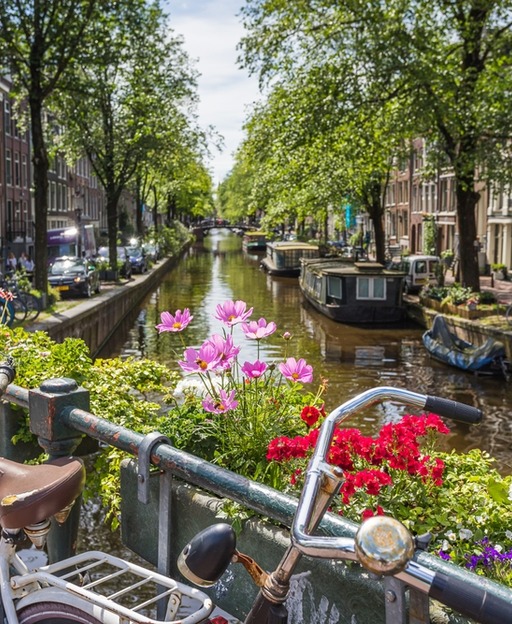
The Jordaan is Amsterdam’s most beloved neighbourhood — a tangle of narrow canals, leaning gabled houses, and cobblestone lanes that rewards slow exploration above any other part of the city. Whether you plan to spend a full day here or arrive for a single afternoon, the Jordaan Amsterdam experience is one you will carry home long after the trams have faded into memory. This guide covers everything you need to know: the best sights, the finest places to eat, the hidden hofjes, and how to make the most of every hour in this extraordinary corner of the Dutch capital.
Love the Netherlands? Join our free newsletter for hidden Dutch gems → inlovewithnetherlands.com/subscribe
What Makes the Jordaan Special?
A Working-Class District Turned Cultural Gem
The Jordaan’s story spans four centuries. City planners laid it out in the early 1600s as a working-class quarter, home to dyers, tanners, and craftsmen who kept Amsterdam’s Golden Age trade machine running. The streets took the names of flowers — Bloemgracht (Flower Canal), Rozenstraat (Rose Street), Anjeliersgracht (Carnation Canal) — because its first residents were French-speaking Huguenot refugees who called it the jardin, or garden.
By the 20th century, the Jordaan had become a neighbourhood of poor but tight-knit communities, famous for its smartlappen (Dutch folk ballads) and its stubborn local pride. Urban renewal in the 1970s brought gentrification, but the Jordaan kept its human scale. Today the streets hold boutique galleries, independent booksellers, candlelit bars, and family-run brown cafés — all within a 15-minute walk of Amsterdam Centraal.
The Canals That Define the Jordaan
Four main canals cut through the Jordaan from south to north: the Prinsengracht, the Bloemgracht, the Egelantiersgracht, and the Brouwersgracht. Each one has its own personality. The Prinsengracht — the easternmost border of the neighbourhood — carries tourist boats and the famous Anne Frank House on its banks. The Brouwersgracht at the northern end earns its reputation as one of Amsterdam’s most photographed canal streets, its double row of 17th-century warehouses mirrored in still water on calm mornings. Take time to walk them all. The Jordaan reveals itself in layers, and every canal adds another one.
The Jordaan’s Must-See Sights
The Anne Frank House
No visit to the Jordaan is complete without standing in front of the Anne Frank House on Prinsengracht 263. The museum preserves the secret annex where Anne Frank, her family, and four others hid from the Nazi occupation between 1942 and 1944. The experience inside is sobering and deeply moving. Book your tickets well in advance — often weeks ahead — as timed-entry slots sell out fast. Early morning visits (the museum opens at 09:00) give you a quieter atmosphere before the day crowds arrive.
Westerkerk
The Westerkerk rises above the Jordaan skyline with a crown-topped tower that stands 85 metres tall — the highest church tower in Amsterdam. The church dates from 1631 and architect Hendrick de Keyser designed it in the Dutch Renaissance style. Rembrandt van Rijn, who lived nearby on the Rozengracht during the last years of his life, is buried somewhere inside, though the precise location of his grave has never been confirmed. Climb the tower (guided tours run from April to October) for sweeping views across the rooftops and canals below.
The Noordermarkt
The Noordermarkt square holds two excellent weekly markets. On Mondays, the Antique and Vintage Market draws dealers and browsers searching for old silver, Dutch pottery, vintage clothing, and curiosities from Amsterdam’s past. On Saturdays, the Boerenmarkt (farmers’ market) fills the square with organic cheese, fresh bread, Surinamese spices, and seasonal vegetables. Arrive hungry — the food stalls alone justify the visit. The surrounding streets fill with conversation and the cheerful chaos that only a great market can produce.
Hidden Hofjes: Secret Courtyards
The Jordaan hides a collection of hofjes — walled almshouse gardens that open onto the street through unassuming doorways. Residents founded these courtyards in the 17th and 18th centuries as housing for elderly women, and several still function as residential communities today. The Karthuizerhof on Karthuizersstraat and the Sint-Andrieshofje on Egelantiersgracht are two of the most rewarding to seek out. Push open the heavy door quietly, step through, and you find yourself in a green courtyard of flower boxes and birdsong, utterly removed from the city beyond. For a deeper exploration of these hidden gardens, read our guide to the courtyards nobody finds.
De Negen Straatjes: The Nine Streets
Running perpendicular to the main canals, nine short streets form the Jordaan’s most fashionable shopping corridor. Collectively called De Negen Straatjes (The Nine Streets), these lanes run between the Prinsengracht and the Keizersgracht and hold a concentration of independent shops that has made the area famous across the Netherlands. You will find Dutch design studios, vintage boutiques, specialist cheese shops, perfumers, and galleries where the owners are often the artists themselves. Unlike the tourist-heavy streets around Dam Square, the Nine Streets feel genuinely local — the kind of place where shopkeepers know their customers by name and conversations start over shared appreciation for a well-made thing.
The three northern streets — Reestraat, Hartenstraat, and Gasthuismolensteeg — carry the most concentrated selection of independent retailers. The three middle streets — Berenstraat, Wolvenstraat, and Oude Spiegelstraat — mix fashion with homeware and specialty food. The three southernmost streets are quieter and good for browsing without the weekend crowds that the northern section attracts. Allow at least two hours to do the Nine Streets justice, and check individual shops on social media before you go — many smaller boutiques keep irregular hours.
Eating and Drinking in the Jordaan
Traditional Dutch Bites
The Jordaan offers some of the best traditional Dutch food in Amsterdam. A proper plate of stamppot — mashed potato with kale and a smoked sausage — appears on the menus of several brown cafés in the neighbourhood during autumn and winter. For a lighter option, look for broodje haring (raw herring on a soft roll with pickles and onion), which vendors sell from street stalls near the Noordermarkt on market days. The Jordaan also holds a handful of eetcafés — informal restaurants inside traditional brown bars — that serve honest Dutch food at prices that compare well with the tourist district. Our Amsterdam food guide covers the wider city, but the Jordaan remains the neighbourhood where Dutch cuisine feels most at home.
Café Culture and Brown Bars
The bruine kroeg — the brown café — is the Netherlands’ answer to the British pub, and the Jordaan holds some of the finest in Amsterdam. These dim, cosy bars take their name from the nicotine-stained walls of earlier centuries. The ambience is easy conversation over Dutch beer or jenever (Dutch gin) rather than background music and cocktail menus. Café ‘t Smalle on Egelantiersgracht opened in 1786 as a jenever distillery and still serves drinks on its canal-side terrace — one of the most pleasant outdoor seats in the city on a warm afternoon. Café de Pieper on Prinsengracht dates from 1665 and preserves its original interior almost intact.
Shopping in the Jordaan
Beyond the Nine Streets, the wider Jordaan holds an eclectic mix of antique dealers, art galleries, and specialist shops that reward unhurried exploration. The Looier Antiques Centre on Elandsgracht gathers dozens of dealers under one roof and provides shelter from the rain while you sift through old maps, vintage jewellery, and Dutch colonial-era objects. On Saturdays, the Lindenmarkt at Lindengracht fills the street with textiles, crafts, and second-hand goods from early morning until early afternoon.
The neighbourhood is also one of the better places in Amsterdam to buy Dutch design objects: locally made ceramics, screen-printed textiles, and handcrafted homeware that make far better souvenirs than the mass-produced tulip magnets of the tourist district. Shopping in the Jordaan means supporting the independent traders who give the neighbourhood its character — reason enough to spend your euros here rather than in the chain stores of the city centre.
How to Get to the Jordaan
The Jordaan sits directly west of Amsterdam’s historic centre, within easy walking distance of Amsterdam Centraal station. From the station, cross the IJ waterway on the pedestrian bridge and walk south along the canals for roughly 20 minutes to reach the heart of the neighbourhood. Alternatively, tram lines 13 and 17 run from Centraal station and stop at Westermarkt — directly beside Westerkerk — which places you at the eastern edge of the Jordaan with the Anne Frank House visible from the tram stop.
If you arrive by bicycle — which the Dutch strongly recommend — lock up on the Prinsengracht and walk from there. Cycling through the narrower Jordaan lanes works best at a walking pace, remaining alert for pedestrians who step into the cycle path without looking. Our cycling in the Netherlands guide gives you the rules of the road and tips for navigating Amsterdam by bike. The Jordaan has no dedicated car parking and the surrounding streets operate a strict residents-only permit system, so driving is not recommended.
When to Visit the Jordaan
The Jordaan rewards a visit in any season, but spring and early autumn stand out as the best times. April and May bring blossom to the canal-side trees and the most photogenic light on the brick facades of the gabled houses. The crowds are lighter than in July and August, when Amsterdam’s tourist season peaks and the narrower streets of the Jordaan can feel uncomfortably busy. October is an underrated month: the trees turn gold and red along the canals, the summer visitors have gone home, and the brown cafés feel more convivial than ever.
The Jordaan Festival in mid-September brings open-air concerts, street markets, and community performances to the neighbourhood for one long weekend each year — a moment when local residents reclaim the public spaces with an energy that shows you exactly what the Jordaan means to the people who live here. For a broader look at timing your trip, read our guide to the best time to visit Amsterdam.
Jordaan Practical Tips
The Jordaan works best on foot. Wear comfortable shoes because the cobblestones are uneven, particularly along the smaller side streets and around the hofje entrances. Most of the neighbourhood’s streets are too narrow for large wheeled suitcases, so plan to leave luggage at your accommodation before exploring. The area is extremely safe by day and evening, though standard city advice about pickpockets applies in the busiest spots near the Anne Frank House.
If you plan to spend a day or more in the Jordaan, consider staying in the neighbourhood itself. Several boutique hotels and well-reviewed canal-house apartments bring you within minutes of the sights and let you experience the neighbourhood at its quietest — early morning and after the evening tourist rush. Our guide to Amsterdam’s neighbourhoods explains the differences between the Jordaan and the other main areas where visitors tend to stay.
Frequently Asked Questions About the Jordaan, Amsterdam
What is the Jordaan in Amsterdam known for?
The Jordaan is Amsterdam’s most charming residential neighbourhood, famous for its 17th-century canal houses, independent galleries and boutiques, traditional brown cafés, and the hidden hofje courtyards that date from the Dutch Golden Age. It also sits directly alongside the Anne Frank House on the Prinsengracht.
How long does a visit to the Jordaan take?
A thorough visit to the Jordaan takes between three and five hours if you walk the canals, browse the Nine Streets, explore at least one hofje, and stop for lunch or coffee. Visitors combining the Jordaan with the Anne Frank House should allow a full day, as timed entry at the museum takes roughly 90 minutes.
Is the Jordaan worth visiting on a short Amsterdam trip?
Yes — the Jordaan ranks among the top priorities for any Amsterdam visit, including a short one. A half-day in the Jordaan gives you more of the authentic Dutch city than most of the major tourist attractions. Walk the canals, find a brown café, and pick up something from the Nine Streets, and you will understand why so many visitors say the Jordaan was the highlight of their trip.
Can you walk from Amsterdam Centraal station to the Jordaan?
Yes — the Jordaan is about 20 to 25 minutes on foot from Amsterdam Centraal station, following the main canal streets south and west. Trams 13 and 17 reduce that journey to around 10 minutes for those who prefer not to walk. Cycling is another easy option if you hire a bike near the station.
You Might Also Enjoy
- Amsterdam’s Museum Quarter: The Complete Visitor Guide — the Van Gogh Museum, Rijksmuseum, and Stedelijk side by side
- Amsterdam Canal Cruise Guide — how to choose the right boat and what to look out for along the way
- 3 Days in Amsterdam Itinerary — a practical plan that includes the Jordaan alongside the city’s other highlights
Plan Your Netherlands Trip
Ready to explore further? Our Start Here page brings together our best travel planning guides — from day trips out of Amsterdam to longer journeys through the Dutch provinces. Everything you need to build your ideal Netherlands itinerary in one place.
Join Netherlands Lovers
Every week, discover the Netherlands beyond the tourist trail — hidden villages, local recipes, cycling routes, and travel insights you won’t find in any guidebook.
Subscribe free — enter your email:
Love more? Join 64,000 Ireland lovers → · Join 43,000 Scotland lovers → · Join 30,000 Italy lovers →
Free forever · One email per week · Unsubscribe anytime
Tours & experiences you might love


Powered by Viator. Some links are affiliate links — we may earn a small commission at no extra cost to you.