
Cycling in the Netherlands is not just a way to get around — it is the single best way to experience the country as the Dutch themselves do. With more bicycles than people, 35,000 kilometres of dedicated cycle paths, and flat terrain that makes even long routes feel effortless, the Netherlands is the most cycle-friendly country on earth. Whether you are planning a few hours around Amsterdam’s canals or a multi-day route through tulip fields and windmill villages, this guide covers everything you need to know before you saddle up.
Love the Netherlands? Join our free newsletter for hidden Dutch gems → inlovewithnetherlands.com/subscribe
Why Cycling Is the Best Way to See the Netherlands
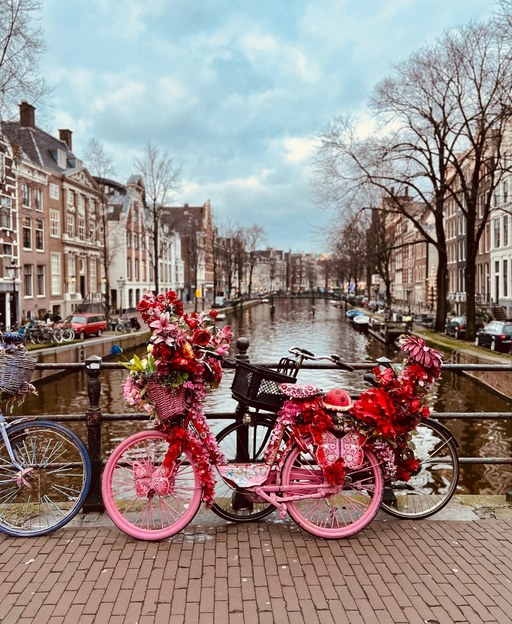
The Dutch built their cycling infrastructure over decades, and the result is a network so seamless that visitors can navigate the entire country almost entirely on two wheels. Dedicated fietspad (cycle paths) run alongside canals, through forests, and into the hearts of historic city centres. Traffic lights are timed for cyclists. Motorists legally give way to bikes at intersections. You will not find this level of cycling integration anywhere else in the world.
Beyond infrastructure, the pace of cycling matches the Netherlands perfectly. Villages arrive slowly, with time to stop and look. Canal boats drift past at eye level. Windmills become landmarks you navigate between, not sights you sprint between on a coach tour. If you want to understand why the Dutch love their country so much, get on a bike and see it at their speed. For more on the cultural story behind Dutch cycling, read our piece on the real reason the Dutch cycle everywhere.
Hiring a Bike in the Netherlands
Bike rental is available in every Dutch city, town, and tourist destination. You will never struggle to find one.
OV-Fiets — the national rental scheme
OV-Fiets is the Netherlands’ national bike-share programme, run by NS (Dutch Railways). For €3.85 per 24 hours, you can hire a sturdy, well-maintained bicycle at nearly every train station in the country. All you need is an OV-chipkaart (the Dutch transit card available at any station) and a Dutch bank account or payment card linked to it. OV-Fiets is ideal for day trips from Amsterdam — arrive at Haarlem, Leiden or Utrecht by train, rent a bike at the station, and explore the city properly.
Private hire shops
Most Dutch cities have several independent bike hire shops offering hourly and daily rates. Expect to pay €10–18 per day for a standard city bike, and slightly more for e-bikes, which have become enormously popular for covering longer distances without arriving sweaty. Amsterdam’s Vondelpark area has the highest concentration of hire shops, but virtually every town with tourism infrastructure has options.
E-bike rental
If you plan to cycle more than 20 kilometres in a day, seriously consider an e-bike. The Netherlands is flat, but head winds off the North Sea can sap energy on longer routes. E-bikes have transformed longer cycling itineraries from endurance events into pleasurable journeys. Most hire shops and OV-Fiets stations stock them, at a supplement of roughly €5–10 per day over standard rates.
Dutch Cycling Rules You Need to Know
The Netherlands takes cycling infrastructure seriously, and with that comes a set of rules visitors should follow before they ride.
- Use the cycle path. The red-surfaced fietspad is for cyclists. Do not cycle on the pavement (footpath) or in the road when a cycle path is available. Locals take this seriously.
- Signal your turns. Extend your arm horizontally in the direction you are turning. Dutch cyclists do this instinctively; visitors who don’t signal can cause near-misses at busy intersections.
- Give way to trams. In Amsterdam and other tram-equipped cities, trams always have priority. Watch for tram tracks — they can catch a wheel and cause a fall.
- Lock your bike properly. Use both a frame lock (built into most hire bikes) and a chain lock through a fixed object. Bike theft is common in Amsterdam. Hire shops provide locks; always use them.
- No cycling on the Dam or busy pedestrian zones. Many historic city centres have designated walking zones where cycling is prohibited. Signs are clear, and Dutch pedestrians will not hesitate to tell you.
- Lights are mandatory after dark. A front white light and rear red light are legally required at night. Most hire bikes include them.
The Best Places for Cycling in the Netherlands
Amsterdam and its surroundings
Amsterdam is the natural starting point for most visitors, and the city’s cycling infrastructure is genuinely impressive once you adjust to the pace. The most rewarding urban route runs from Centraal Station along the IJ waterfront, through the Jordaan neighbourhood, around the Vondelpark, and out to the Amstelpark — a gentle 14-kilometre loop that takes in canals, houseboats, and tree-lined streets without encountering significant traffic. For day trips by bike, the route south-east to Amstel villages or north across the IJ to Buiksloterweg and the NDSM shipyard district opens up Amsterdam beyond its tourist core.
The most popular cycling day trip from Amsterdam is Haarlem, 20 kilometres to the west via a dedicated cycle route that passes through open polder farmland. Haarlem’s compact historic centre is best explored on two wheels, and the route back along the Spaarne river is genuinely beautiful. Read our full Haarlem travel guide to plan the stop.
Hoge Veluwe National Park
Hoge Veluwe is the Netherlands’ largest national park and one of the most rewarding cycling destinations in the country. The park operates a free white-bicycle scheme — you pick up an unlocked white bike at any of the park entrances and ride the 42 kilometres of car-free paths through pine forests, sand dunes, and heathlands. Wild boar cross the paths. Red deer graze in clearings. The Kröller-Müller Museum, which holds the world’s second-largest Van Gogh collection, sits inside the park boundaries and makes a natural midpoint destination. Read more about what makes Hoge Veluwe so special for cyclists.
Kinderdijk and the windmill routes
The UNESCO-listed windmill village of Kinderdijk is 15 kilometres south-east of Rotterdam and best reached by ferry from Rotterdam’s Erasmusbrug. Once there, a 9-kilometre circular cycling route passes all 19 working windmills and continues along the Lek and Noord rivers. The landscape here — flat polders, distant windmill silhouettes, and quiet dike paths — looks exactly as it does in Dutch golden-age paintings. For context on what the windmills actually do and why they were built, see our piece on Kinderdijk’s 19 windmills.
Zeeland’s delta routes
Zeeland in the south-west is the Netherlands’ cycling secret. The Delta Works — the world’s most ambitious flood defence system — created a series of sea barriers and islands connected by bridges and dikes, many of which carry dedicated cycle paths. The LF1 coastal route runs the full length of Zeeland’s coastline, with North Sea beaches to one side and freshwater estuaries to the other. The terrain is flat, the infrastructure is excellent, and summer weekends fill with Dutch families cycling between coastal villages. Our full Zeeland travel guide covers the region in detail.
The tulip fields — Bollenstreek
From mid-March to mid-May, the Bollenstreek region between Leiden and Haarlem becomes one of the most spectacular cycling landscapes on earth. The LF3 bulb-field route runs 30 kilometres through geometric strips of colour — red, yellow, purple, and white — with Keukenhof Gardens as the centrepiece destination. Hire a bike in Leiden or Haarlem and follow the signposted LF3 route, which passes through flower auction towns, old estate lands, and the village of Lisse. The best time to ride is mid-April, when most varieties peak simultaneously.
Multi-Day Cycling Routes Across the Netherlands
The Netherlands’ LF (Landelijke Fietsroutes) network covers the entire country with long-distance signposted cycle routes. The most popular with visitors are:
- LF1 Noordzeeroute — 500 kilometres along the North Sea coast from Boulogne-sur-Mer in France to Den Helder, passing all major coastal cities. Manageable in 5–7 days for experienced cyclists.
- LF4 Midden-Nederland Route — crosses the country from Delft to the German border through Utrecht, Arnhem, and the Achterhoek region. Good for visiting cities with a genuine cross-country experience.
- LF7 Overijssel Route — loops through the quiet provinces of Overijssel and Gelderland, passing Zwolle, Deventer, and the Hanze cities of the east. Less crowded than western routes and scenically rewarding.
For a 7-day Netherlands itinerary that combines cycling with city stays, see our 7 days in the Netherlands guide.
Practical Tips for Cycling in the Netherlands
- Download the Routecheck app. The official Dutch cycling navigation app works offline and covers the full LF network with turn-by-turn directions and points of interest.
- Use knooppunten (junction numbers). The Dutch cycle network is navigated by numbered junctions, not route names. Plan a series of numbers — e.g., 12 → 45 → 67 — and follow the signs between them. It is a brilliantly simple system once you understand it.
- Carry a rain jacket. Dutch weather changes within the hour. Even in summer, a light waterproof packed in a handlebar bag can save a day trip.
- Book accommodation ahead on summer weekends. Popular cycling routes through the Bollenstreek and Zeeland fill up from May to August. Book canal-side guesthouses and cycling-friendly B&Bs well in advance.
- Panniers beat backpacks. On longer rides, luggage on your back will tire your arms and neck. Most hire shops rent pannier bags for a small supplement, and they transform the experience of carrying a day’s kit.
Frequently Asked Questions About Cycling in the Netherlands
Do I need to be a confident cyclist to ride in the Netherlands?
Most Dutch city cycling is accessible to anyone comfortable on a bike. Urban routes use dedicated cycle paths separated from traffic, and junctions are well-signposted. Rural routes are extremely flat and quiet. You do not need specialist cycling experience — just the ability to ride confidently for a few hours at a time.
Is cycling in Amsterdam safe for visitors?
Amsterdam’s cycling infrastructure is very safe, but the city moves fast. Give way to trams, signal your turns, stay on the fietspad, and be alert at junctions. Most incidents involve tourists cycling on pavements or failing to observe tram tracks. Follow local rules and you will have no problems.
When is the best time to go cycling in the Netherlands?
April to June and September are the best months for cycling. Spring brings tulip season and pleasant temperatures; September offers quieter routes, warm light, and the harvest season. July and August are peak summer and cycle routes are busier, though the weather is generally reliable. Winter cycling is possible — the Dutch do it — but head winds and rain make it challenging for visitors.
Can I take my hire bike on Dutch trains?
Standard hire bikes (including OV-Fiets) cannot be taken on Dutch trains during morning and evening rush hours (weekdays 06:30–09:00 and 16:00–18:30). Outside these windows, you can take a bike on the train with a dagkaart fiets (bicycle day pass), available at station ticket machines for around €7.50. This opens up point-to-point cycling without needing to return to your starting point.
You Might Also Enjoy
- Day Trips from Amsterdam — The Best One-Day Escapes by Train and Bike
- Keukenhof Gardens: The Complete Visitor Guide
- Zaanse Schans: The Complete Day Trip Guide from Amsterdam
Plan Your Netherlands Trip
Ready to start planning your Netherlands adventure? Visit our Start Here page for everything you need — recommended itineraries, travel tips, and guides to every Dutch city and region.
Join Netherlands Lovers
Every week, discover the Netherlands beyond the tourist trail — hidden villages, local recipes, cycling routes, and travel insights you won’t find in any guidebook.
Subscribe free — enter your email:
Love more? Join 64,000 Ireland lovers → · Join 43,000 Scotland lovers → · Join 30,000 Italy lovers →
Free forever · One email per week · Unsubscribe anytime
Tours & experiences you might love


Powered by Viator. Some links are affiliate links — we may earn a small commission at no extra cost to you.