

Your grandmother called it Limburg. She said the food was better there, the people warmer, and the churches older than anywhere else in the Netherlands. She was right about all three. Limburg is the southernmost province of the Netherlands — a narrow strip of land squeezed between Belgium and Germany, shaped by rivers, castles, and a culture that feels entirely its own. If your family came from Limburg, tracing them means stepping into one of the richest and most distinct heritage landscapes in the whole country.
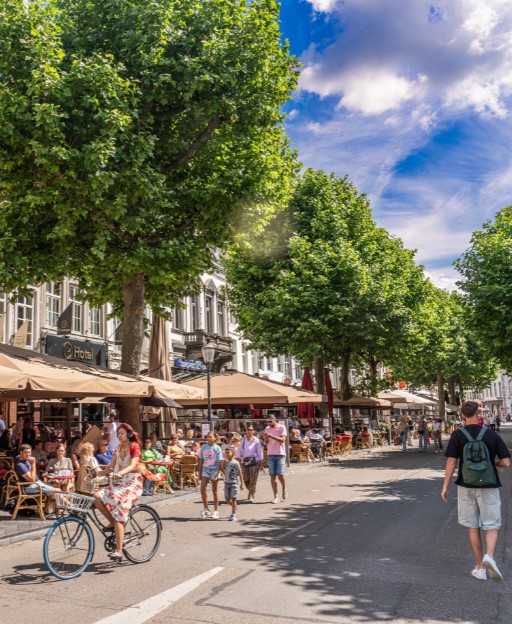
This guide is for anyone planning a heritage trip to Limburg — whether your ancestors came from Maastricht, Venlo, Heerlen, Roermond, or one of the province’s small farming villages along the River Maas. It covers where to find the records, which sites carry the deepest connection to the past, and how to structure four days that will bring your family history to life.
Why Limburg Is Unlike the Rest of the Netherlands
Most visitors to the Netherlands picture flat land, canals, and windmills. Limburg breaks every one of those expectations. The landscape here is hilly — genuinely hilly, with valleys, beech forests, and elevated farmland that looks more like the Belgian Ardennes than the Dutch polder. The Maas river winds through the province from south to north, shaping both the geography and the character of the people who settled along its banks.
The cultural difference runs deeper than the terrain. Limburg was historically Catholic at a time when the northern Netherlands turned Calvinist. The Spanish ruled here during the Eighty Years’ War. French culture seeped in from across the Belgian border. The local dialect — Limburgs — is so distinct that it is officially recognised as a regional language, not simply an accent. If you have Limburg heritage, your ancestors were part of a community with one of the most layered identities in northern Europe.
That layered identity left records. Detailed ones. And those records are accessible to you today.
What Makes Limburg Heritage Research Unique
Limburg’s Catholic tradition is a gift for heritage researchers. The Catholic Church kept careful records — baptisms, marriages, and burials — from the sixteenth century onwards. Many Limburg parishes maintained continuous registers that predate the Dutch civil registration system by two centuries or more. For anyone with Limburg ancestry, this means the research trail runs deeper and further back than in most Dutch provinces.
The province also saw significant industrial migration. When coal mining expanded across South Limburg in the late nineteenth and early twentieth centuries — particularly around Heerlen, Kerkrade, and Sittard — workers arrived from Belgium, Germany, Italy, and elsewhere in the Netherlands. If your family has mining surnames alongside Dutch ones, Limburg is where those threads cross. Your ancestor may have arrived from elsewhere but built their life — and their family — in the Dutch coalfields.
Understanding this history before you open the first archive file will help you read the records you find. A surname that looks German may have arrived with a miner’s great-grandfather. A Belgian place name in the margin of a marriage certificate may be the village your family left before coming to Limburg.
For a full introduction to researching Dutch records before you travel, read our step-by-step guide to tracing Dutch ancestry.
Where to Find Limburg Records
Regionaal Historisch Centrum Limburg (RHC Limburg)
The primary archive for Limburg heritage research is RHC Limburg. It has two locations: the main research centre in Maastricht and a branch in Roermond. Together they hold civil registration records from 1811, church registers from the sixteenth century, notarial records, property deeds, military records, and municipal archives from hundreds of Limburg communities.
The Maastricht centre is in a converted Franciscan church — a beautiful building that makes the experience of sitting with your family’s history feel appropriately significant. Appointments are not always required for the reading room, but booking ahead is wise, especially in summer. Staff speak English.
WieWasWie.nl
Before you book flights, start at WieWasWie.nl. This free Dutch genealogy portal holds digitised civil registration records for Limburg going back to 1810. Births, marriages, and deaths for most Limburg municipalities are searchable by name. Many Limburg church registers have also been digitised here. For the most common Limburg surnames — Jansen, Peters, Smeets, Claessens, Houben — results number in the thousands. Narrow your search by municipality and decade first.
Church Archives
Limburg’s parish churches hold records that long predate civil registration. The Diocese of Roermond maintains its own archive with parish registers, many dating to the 1600s. The Basilica of Saint Servatius in Maastricht — the oldest church in the Netherlands, built over a Roman site — has records of the oldest Maastricht families. If your family was Catholic and from Limburg, your ancestry runs through these buildings.
Municipal Archives
Each of Limburg’s major cities — Maastricht, Venlo, Roermond, Heerlen — has its own municipal archive (gemeentearchief). For families from smaller villages, records often went to the nearest city archive. The municipality of Horst aan de Maas, for example, holds records for several smaller surrounding communities. Contact the relevant gemeentearchief before your visit to confirm which collections are available on-site and which are held at RHC Limburg.
🇳🇱 Enjoying this? Netherlands lovers get stories like this every week. Subscribe free →
Heritage Sites to Visit in Limburg
Maastricht: The Oldest City in the Netherlands
Maastricht was already old when the Romans built a bridge over the Maas in the second century AD. The Roman ruins are still visible. Walking through the old city centre — past the Vrijthof square, along the Sint Bernardusstraat, through the medieval city gates — you are walking streets your Limburg ancestors walked. The city has been continuously inhabited for nearly two thousand years.
For heritage travellers, Maastricht rewards slow exploration. The Basilica of Saint Servatius is the oldest church building in the Netherlands and the heart of Maastricht’s Catholic identity. The Stadsarchief Maastricht, the city’s own archive, holds records for Maastricht families and is distinct from RHC Limburg. If your family is from the city itself, both archives are worth visiting.
Our complete Maastricht travel guide covers the city in detail, including the medieval streets and cultural landmarks your ancestors would have known.
Valkenburg aan de Geul
Valkenburg is the only hill town in the Netherlands — a fact that delights Dutch people who have spent their lives on flat ground. The ruined castle above the town dates to the twelfth century. Beneath the town, a network of tunnels cut through the marl rock has been used for storage, shelter, and religious purposes for centuries. For families from the rolling hills of South Limburg, Valkenburg is often the closest thing to a traditional ancestral landscape you will find anywhere in the country.
Hoensbroek Castle
Kasteel Hoensbroek is one of the largest and best-preserved castles in the Netherlands. Built in the fourteenth century by the Hoen family, it sits surrounded by a moat in what is now a mining district. The contrast between the medieval castle and the industrial landscape of the former coalfields around it tells you everything about Limburg’s layered history. For anyone with South Limburg mining-era ancestry, this is a powerful site to visit.
Venlo and the North Limburg River Towns
The northern part of Limburg, along the Maas from Venlo to Gennep, was farming country. Venlo itself was an important trading city — a Hanseatic town with long-established merchant families. The surnames of North Limburg often reflect this trading heritage: family names tied to occupations, waterways, and the movement of goods along the river. The Venlo city archive holds records for the north of the province. For families from this area, Venlo’s compact old town is a worthwhile starting point.
Where Your Limburg Ancestors Lived
Limburg divides naturally into three zones, each with its own heritage character.
South Limburg is hilly, Catholic, and historically the most culturally distinct part of the province. Maastricht, Valkenburg, Gulpen, Vaals, and the coal towns of Heerlen and Kerkrade are all here. This is where Roman, Spanish, French, and Dutch histories meet. Heritage from South Limburg tends to have the deepest documentary records and the strongest cultural identity.
Central Limburg runs along the Maas through Roermond and Sittard. Roermond is a historic cathedral city and the location of one of the two RHC Limburg archive centres. Central Limburg families were often connected to the church, to trade along the river, and to the textile industries that predated the coal era.
North Limburg stretches from Venlo towards Nijmegen, meeting the river Maas at the province’s northern tip. Farming dominated here — flat land, river crossings, and market towns. Families from North Limburg often have surnames tied to the land and to the Saxon and Frankish cultural influences of this borderland area.
To understand the surnames your Limburg ancestors carried, our guide to Dutch surnames of Limburg traces their origins, meanings, and regional patterns.
Planning Your Limburg Heritage Trip
Limburg is not Amsterdam. It does not need to be. Plan your trip as a slow exploration — two or three nights in Maastricht as your base, with day trips to the archives, the ancestral villages, and the heritage sites that matter to your specific family. Maastricht has excellent transport links by train and bus to the rest of the province.
Book archive appointments before you travel. RHC Limburg’s reading rooms are open to the public but space is limited. Contact them with the surnames and municipalities you are researching — staff can advise which collections are most relevant and whether specific records are available on-site or only accessible in digital form.
Bring your research as far as you can before you arrive. Know the names, the approximate dates, and the municipality you are looking for. The more specific your starting point, the more productive your archive visit will be. Our guide to planning a Dutch heritage trip to your ancestral town covers the preparation process in detail.
A Four-Day Limburg Heritage Itinerary
Day One: Arrive in Maastricht — Walk the Old City
Arrive in Maastricht by early afternoon and spend the rest of the day walking. The old city centre is compact and almost entirely preserved. Start at the Vrijthof — the main square your ancestors would have known as the heart of public life. Visit the Basilica of Saint Servatius. Walk along the Maas. Let the city settle around you before you open an archive box.
In the evening, eat at a traditional Limburg restaurant. The food here — vlaai (fruit tart), zuurvlees (sweet-sour beef stew), white asparagus in season — is part of the cultural identity your family carried.
Day Two: Stadsarchief Maastricht and RHC Limburg
Spend the morning at the Stadsarchief Maastricht if your family was from the city itself, or go directly to RHC Limburg (a short walk away on the Boschstraat). Work through the civil registration records and church registers for your family’s municipality. Photograph everything. Note every name in the margin — siblings, godparents, witnesses — because these are often relatives who help you push the research further back.
In the afternoon, walk to the Roman ruins at the Derlon Museum — a hotel whose cellar contains excavated Roman foundations. The city your ancestors knew was already ancient.
Day Three: South Limburg Heritage Day Trip
Take the bus or hire a car for a day in the hills. Visit Valkenburg for its castle ruins and the marl caves. If your ancestors were from the coal-mining area, drive through Heerlen and stop at Hoensbroek Castle. The landscape of South Limburg — valleys, orchards, sandstone churches — is unlike anywhere else in the Netherlands.
If you know your ancestral village, this is the day to find it. Stand at the church door. Read the old grave markers in the churchyard. Walk the lane your great-grandmother walked to school. These moments are why you came.
Day Four: Roermond or Venlo — Then Home
If your ancestors came from Central or North Limburg, use your final morning to visit Roermond (the cathedral city, the archive, the river) or Venlo (the trading town, the northern riverbank). Both cities are under an hour from Maastricht by train.
Return home with photographs, photocopies, and something harder to quantify — a sense of where your family is from. Limburg has a way of making that feeling very specific.
For a comparison with the neighbouring province to the north, our guide to tracing your family in North Brabant covers the heritage landscape of the province above Limburg. Together, the two guides span the entire southern Netherlands.
You can also compare the approach with our earlier heritage travel plans for other provinces, including tracing your family in Gelderland and the broader overview of what makes Limburg the most distinctive Dutch province.
Frequently Asked Questions About Limburg Heritage Research
Where are Limburg genealogy records kept?
Most Limburg records are held at RHC Limburg, with centres in Maastricht and Roermond. Civil registration records from 1811 onwards are available at WieWasWie.nl. Church records from earlier centuries are held at RHC Limburg, the Diocese of Roermond archive, and in some cases at individual parish churches. Municipal archives in Maastricht, Venlo, Heerlen, and Roermond hold city-specific collections.
How far back can I trace a Limburg family?
With Catholic parish records, many Limburg families can be traced to the 1600s. Civil registration begins in 1811. Some Maastricht families appear in records from the 1500s. The depth of your research depends on which municipality your family came from and whether early parish registers have survived. RHC Limburg staff can advise on the oldest available records for your specific area.
What language are Limburg records written in?
Records vary by period. Latin was used in most Catholic church registers until the late eighteenth century. After French rule (1795–1815), civil records were kept in French, then Dutch from 1811. Earlier local records may be in Dutch, Latin, or occasionally German near the border. RHC Limburg staff can assist with translation and interpretation.
Is Maastricht a good base for Limburg heritage research?
Yes. Maastricht is the province’s largest city and the location of the main RHC Limburg archive and the Stadsarchief Maastricht. It has excellent hotels, good rail connections to the rest of the province, and is itself one of the oldest and most historically significant cities in the Netherlands. For most Limburg heritage trips, Maastricht is the natural base.
Do Limburg archives speak English?
RHC Limburg staff are accustomed to international heritage visitors and speak English. It is worth emailing ahead with your research questions — Dutch genealogy archives are generally very helpful with overseas researchers tracing Dutch ancestry.
You Might Also Enjoy
- Dutch Surnames of Limburg: Origins and Meanings — discover what the most common Limburg family names reveal about your ancestors’ lives
- How to Trace Your Dutch Ancestry: A Step-by-Step Guide — the complete guide to Dutch genealogy research before you travel
- Maastricht Travel Guide — everything you need to explore Limburg’s extraordinary capital city
Join Netherlands Lovers
Every week, discover the Netherlands beyond the tourist trail — hidden villages, local recipes, cycling routes, and travel insights you won’t find in any guidebook.
Subscribe free — enter your email:
Already subscribed? Explore our archives for more hidden Dutch gems.
Love more? Join 64,000 Ireland lovers → · Join 43,000 Scotland lovers → · Join 30,000 Italy lovers →
Free forever · One email per week · Unsubscribe anytime
Tours & experiences you might love


Powered by Viator. Some links are affiliate links — we may earn a small commission at no extra cost to you.