
At exactly eight o’clock on the evening of the 4th of May, the Netherlands falls silent.
Trams stop mid-route. Cars pull over. Conversations end. Across the country, 17 million people pause what they are doing and stand still for two full minutes.
No other country in Western Europe does anything quite like it.
The Night That Comes Before Freedom
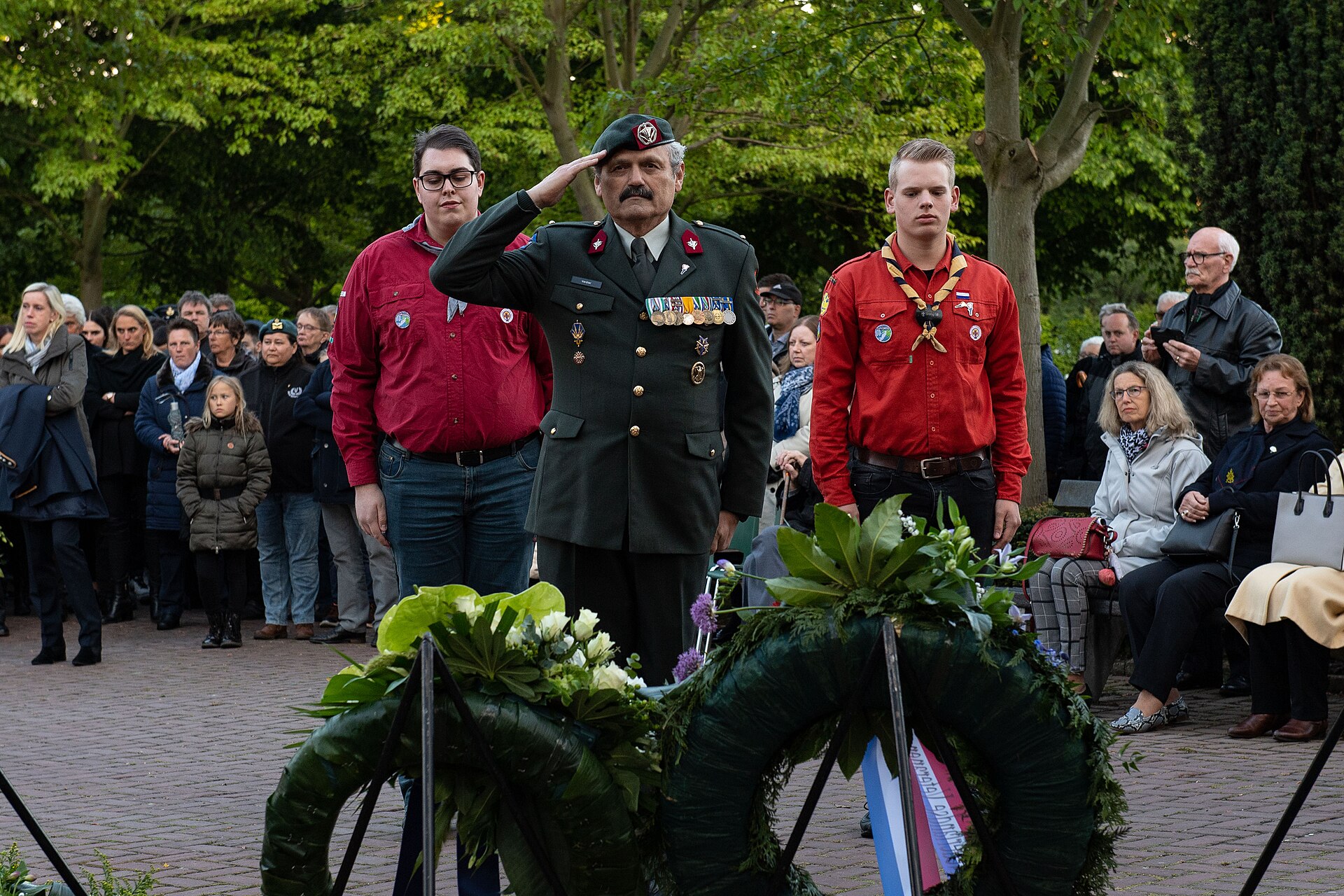
The 4th of May is Dodenherdenking — National Remembrance Day. The Dutch use it to honour everyone killed in the Second World War and in armed conflicts since.
At 8pm, the two-minute silence begins. Every television and radio channel broadcasts it live. In Amsterdam, tens of thousands gather at Dam Square for the national ceremony. The royal family attends. Wreaths are laid. A bugle sounds.
It is not grim in the way you might expect. It feels more like a collective breath — a shared moment before the celebration that follows.
What Liberation Actually Meant
The Netherlands endured five years of Nazi occupation. Germany invaded in May 1940. The country was not fully free until May 5, 1945.
Those five years cost an enormous amount. Around 102,000 Dutch Jews were murdered — the highest proportion of any occupied Western European country. People lived under curfews, food rationing, and constant fear.
In the winter of 1944–45, the situation reached a breaking point. The Hunger Winter killed more than 20,000 people in the cities of the western Netherlands. Families burned furniture to stay warm. Children ate tulip bulbs to survive.
Canadian and British troops entered the Netherlands in April 1945. On May 5, German forces surrendered. People flooded the streets. They threw flowers at soldiers. They wept openly in public.
The relief was total. The joy was physical.
How the Dutch Celebrate Bevrijdingsdag
May 5 — Bevrijdingsdag — is a national holiday. Fourteen Dutch cities host free Bevrijdingsfestival events, with live music, food stalls, and public gatherings from morning until late evening.
The cities include Amsterdam, Rotterdam, Utrecht, The Hague, Groningen, and Nijmegen. Every event is free to enter. The atmosphere is warm and distinctly Dutch — orange flags, good food, and that feeling of communal ease the Dutch call gezellig.
Cyclists and walkers can also follow the Liberation Route Europe. This heritage trail links key WWII sites across the Netherlands, Belgium, and Germany. Signposts, audio stories, and memorial plaques mark the landscape where the battles were fought.
Enjoying this? Get stories like this every week from Love Netherlands — Subscribe free →
Why This Still Matters
More than 80% of Dutch people alive today were born after the war ended. Yet the 4 and 5 May tradition remains one of the most widely observed in the country.
Dutch schools teach the occupation in depth. Children visit the Anne Frank House in Amsterdam. They read first-hand accounts. They meet survivors while survivors are still alive to speak.
The last people with a direct memory of liberation are now in their late eighties and nineties. Every year the ceremonies grow a little more poignant. The Dutch know they are approaching the moment when no living person will remember what it felt like to hear that the war was finally over.
That awareness gives both days their particular weight.
How to Experience 4 and 5 May
The Dam Square ceremony in Amsterdam is the most powerful way to mark the evening of the 4th. Arrive before 8pm — crowds gather from 6pm onwards. Stand still when the silence begins. It lasts exactly two minutes and feels much longer.
On May 5, head to a Bevrijdingsfestival in whichever city you are visiting. They are free, open to everyone, and very Dutch in character. Expect live music, large crowds, and a surprising amount of warmth from strangers.
If you have more time, explore the Liberation Route through Arnhem and Nijmegen. The area covers some of the most significant battle sites of 1944–45. In spring, the landscape is beautiful.
For a full guide to the Netherlands and where to start your visit, start here →
What is Dodenherdenking in the Netherlands?
Dodenherdenking is the Dutch National Remembrance Day, held every year on the 4th of May. At 8pm, the whole country observes a two-minute silence to honour those killed in the Second World War and in later conflicts.
What happens on Liberation Day in the Netherlands?
Bevrijdingsdag on 5 May marks the German surrender in 1945. It is a national public holiday. Fourteen Dutch cities host free outdoor festivals with live music, food, and public gatherings throughout the day.
Where is the best place to experience 4 and 5 May in the Netherlands?
Amsterdam’s Dam Square holds the largest national ceremony on the evening of 4 May. For Liberation Day on 5 May, Amsterdam, Utrecht, and The Hague all host large Bevrijdingsfestival events, each free to attend.
What is the Liberation Route in the Netherlands?
The Liberation Route Europe is a heritage trail linking key WWII battle sites across the Netherlands, Belgium, and Germany. The Dutch section runs through Nijmegen, Arnhem, and the Grebbe Line — ideal for cycling or walking in spring.
Love Netherlands — Free Every Week
Canal towns, hidden villages, Dutch stories. A free letter about the Netherlands — written slowly, delivered weekly.
Love more? Join 64,000 Ireland lovers → · Join 43,000 Scotland lovers → · Join 30,000 Italy lovers →
Free forever · One email per week · Unsubscribe anytime
The silence lifts at 8:02pm. By the morning of May 5, the music begins.
Both feel earned.
Tours & experiences you might love


Powered by Viator. Some links are affiliate links — we may earn a small commission at no extra cost to you.