

In the autumn of 1944, people in Amsterdam walked 50 kilometres into the countryside to beg for food. They came back carrying sugar beets, tulip bulbs, and bark. Many did not make it back at all.
This was the Hongerwinter — the Hunger Winter. Every Dutch person knows those two words. It is the darkest chapter in modern Dutch history, and it happened within living memory.
The Strike That Started It
The Hunger Winter began with an act of courage. In September 1944, Dutch railway workers went on strike to support the Allied advance. They wanted to help end the occupation faster.
The Germans responded with a food blockade. They cut supplies to the western provinces — Amsterdam, Rotterdam, The Hague, and the area around them. Around 4.5 million people lost normal food access overnight.
The timing was brutal. The winter of 1944 to 1945 was bitterly cold. The canals froze solid. Fuel vanished. And the food did not come.
What People Actually Ate
By February 1945, the official ration in Amsterdam was 400 calories a day. A healthy adult needs around 2,000.
People ate whatever they could find. Tulip bulbs became a staple — boiled, baked, or ground into flour. Sugar beets went into everything. Grass appeared in soups. Cats and dogs vanished from the streets.
Children went door to door begging. Families burned their floorboards for heat. Walk through the older streets of Amsterdam today and you can still spot gaps in buildings where window frames were pried out for firewood. The canal houses that Golden Age merchants built with such pride were stripped bare from the inside.
The Long Walk to the Country
One of the lasting images of the Hongerwinter is the hunger treks — the hongertochten. Thousands of city people walked out to farms in Friesland, Utrecht, and Drenthe, pulling prams and carts, hoping to trade whatever they had left.
Bicycles had no tyres. The Germans had seized most of the rubber. People walked on wooden wheels, or simply walked. Trips covered 60, 70, sometimes 100 kilometres each way.
Some farms turned people away. Others took them in. The Dutch still talk about those choices as a moral test — who helped, and who closed the door. The memory divides communities even today.
Enjoying this? Get stories like this every week from Love Netherlands — Subscribe free →
Twenty-Two Thousand Dead
Around 22,000 people died of starvation during the Hunger Winter. More than half were elderly. But the effects reached far beyond those who died.
Decades later, researchers found that babies born during the worst months carried lifelong health consequences. Children whose mothers were pregnant during the famine faced higher rates of diabetes, heart disease, and other conditions in adulthood.
The Dutch Famine Birth Cohort Study tracked these people for decades. It changed how scientists understand the link between early nutrition and long-term health. The Hunger Winter did not end in 1945. Its effects played out across generations.
Liberation — and What Came After
Canadian forces reached Amsterdam on 5 May 1945. The Dutch celebrate Liberation Day every year on that date — not as a distant historical moment, but as something felt personally by every family.
The Dutch government responded to the famine by building one of the world’s strongest food security systems. The Netherlands went from a country where people starved to one of the world’s largest food exporters. That transformation was deliberate. The Dutch did not forget what it means to go hungry.
Today, Amsterdam’s resilient working-class neighbourhoods carry that memory quietly. It sits beneath the surface of daily life — in how the Dutch think about food, about waste, about community resilience.
What was the Dutch Hunger Winter?
The Hunger Winter (Hongerwinter) was a famine in the western Netherlands from September 1944 to May 1945. A German food blockade cut supplies to around 4.5 million people after Dutch railway workers went on strike to support the Allied advance. Around 22,000 people died of starvation.
Which Dutch cities were worst affected by the Hunger Winter?
Amsterdam, Rotterdam, and The Hague suffered most severely. The rural north and east had better access to farm produce and were less badly hit than the urban west of the country.
Where can you learn more about the Hunger Winter in Amsterdam?
The Verzetsmuseum (Dutch Resistance Museum) in Amsterdam covers the occupation and famine in detail. The Amsterdam Museum and the Jewish Historical Museum also document the war years. Several street memorials and plaques mark sites connected to that period.
Why do the Dutch celebrate Liberation Day on 5 May?
5 May 1945 marks the German surrender that freed the Netherlands. After months of starvation, the liberation meant food as much as freedom. That is why Liberation Day feels deeply personal to Dutch families — not just political history, but survival.
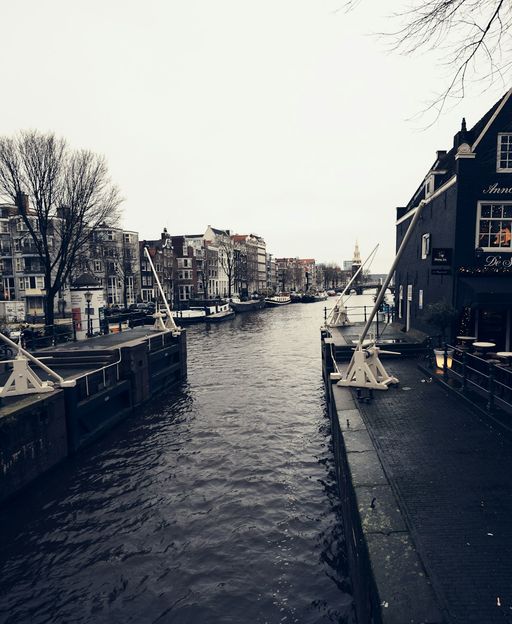
When you walk the canal streets of Amsterdam today — past the tall gabled houses, the bicycles, the grey winter water — you walk through streets where people starved. Every Dutch family has a Hunger Winter story, passed from grandparent to grandchild. Understanding that story is part of understanding the Netherlands. If you are just starting to explore, the Start Here guide is the right place to begin.
Love Netherlands — Free Every Week
Canal towns, hidden villages, Dutch stories. A free letter about the Netherlands — written slowly, delivered weekly.
Love more? Join 64,000 Ireland lovers → · Join 43,000 Scotland lovers → · Join 30,000 Italy lovers →
Free forever · One email per week · Unsubscribe anytime
Frequently Asked Questions
What caused the Dutch Hunger Winter?
In September 1944, Dutch railway workers went on strike to support the Allied advance, hoping to speed up the end of German occupation. The Germans responded by cutting off food supplies to the western provinces, leaving 4.5 million people without access to normal food.
What did people actually eat during the Hunger Winter?
With rations as low as 400 calories a day by February 1945, people ate tulip bulbs, sugar beets, grass, and pets that disappeared from the streets. Some families foraged so desperately they burned floorboards for heat and stripped window frames for firewood.
What were the hongertochten?
These were hunger treks—thousands of city residents who walked to farms in the countryside, pulling prams and carts to trade whatever possessions they had left for food from farmers who could still feed themselves.
How many people died during the Hunger Winter?
The article indicates it was devastating—many people who walked 50 kilometres to beg for food in the countryside did not make it back—though specific death tolls aren't provided in the excerpt.
Tours & experiences you might love


Powered by Viator. Some links are affiliate links — we may earn a small commission at no extra cost to you.