
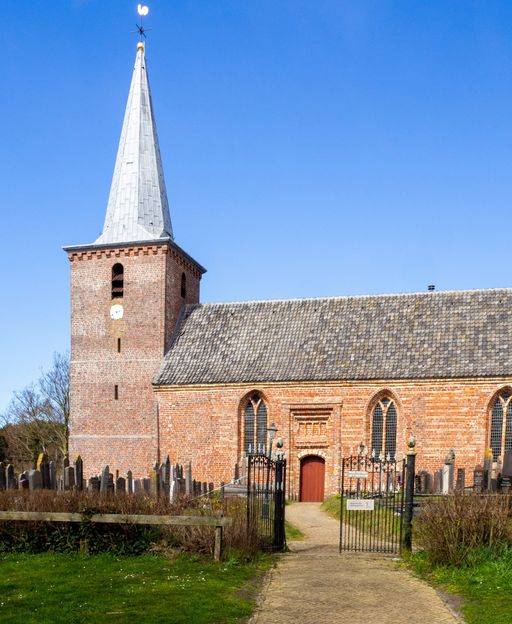
Stand in the quiet churchyard of a terp village in Friesland — a mound of earth that farmers built by hand over centuries to keep the sea at bay — and you feel the weight of an extraordinary story. The families who lived here did not simply inhabit this land. They shaped it, defended it, and carried its memory with them when they left. If your surname traces back to this province, you carry a piece of that story too.
Friesland is unlike any other Dutch province. It has its own language — Frisian — which is older than Dutch and closer to Old English than to modern Dutch. It has its own flag, its own anthem, and its own fierce sense of identity. For anyone researching Dutch ancestry, Friesland demands special attention: its records are distinctive, its naming conventions are unique, and its diaspora stretches from South Africa to the American Midwest in ways that continue to shape communities today.
This guide brings together everything you need to understand your Frisian roots: the history that shaped its families, the diaspora trails that took them across the world, the archives that hold their names, and the living landscape where their stories began.
Friesland: A Province That Always Stood Apart
To understand Frisian ancestry, you first need to understand Frisian identity — and why it matters so profoundly to the descendants of this province.
The Frisians were among the most independent peoples of medieval Europe. Their legal code — the “Frisian Freedom” — held that Frisians could not be subjected to feudal lords, and they defended this principle for centuries against Frankish, Danish, and later Habsburg attempts at domination. This fierce independence shaped everything: their communities, their families, their surnames, and ultimately their emigration patterns.
When French administrator Napoléon Bonaparte introduced compulsory family surnames across the Netherlands in 1811, most Dutch people grudgingly adopted names. The Frisians, characteristically, took a different approach. Many chose surnames that reflected their landscape, their trades, and their character — sometimes with a wry wit that still shows in the records. Others simply formalised the patronymic naming system they had already been using for generations, producing the distinctive -ma, -stra, and -sma endings that mark Frisian surnames to this day.
The province’s landscape is equally distinctive. Friesland sits below sea level in large parts, protected by dykes and defined by water: canals, lakes, and the vast Wadden Sea to the north. The ancient terp villages — settlements built on artificial mounds — dot the clay plains, each one a monument to centuries of human determination. Friesland remains the Dutch province where locals most strongly resist being called simply “Dutch” — and with good reason.
The Frisian Language and What It Means for Your Records
One of the most surprising facts about Frisian heritage is the province’s language. Frisian is spoken by roughly half a million people and is closer to English than Dutch is — a direct descendant of the Old Frisian spoken along the North Sea coast before the Norman Conquest changed English for ever.
This has practical implications for your research. Church records in Friesland before the nineteenth century were often kept in Frisian rather than Dutch, and place names appear in their Frisian forms. The provincial capital is called Ljouwert in Frisian and Leeuwarden in Dutch — you may encounter either spelling in records. Villages like Harns (Dutch: Harlingen), Snits (Sneek), and Drachten appear under both names depending on the era and the record-keeper.
This bilingual record landscape can be confusing at first, but it also means that Frisian records are often richer in detail than those of other Dutch provinces. The Frisians were diligent administrators, and the Tresoar — Friesland’s combined archive and library in Leeuwarden — holds one of the finest collections of regional records in the Netherlands.
🇳🇱 Enjoying this? Netherlands lovers get stories like this every week. Subscribe free →
Understanding Frisian Surnames
Frisian surnames are among the most recognisable in the Dutch-speaking world. Once you know what to look for, you can often identify a Frisian ancestor at a glance from their family name alone. Our detailed guide to Dutch Surnames of Friesland: Origins and Meanings covers the full range, but here is an introduction to the key patterns.
The Patronymic Tradition
Before 1811, Frisians typically did not use fixed hereditary surnames at all. Instead, they followed a patronymic system: a son of Jan would be called Jansen or Jans, and a son of Pieter would be Pieters or Pietersen. This changed completely when Napoleon required all families to register permanent surnames — but many Frisians simply formalised their existing patronymics, creating surnames that end in -sma, -stra, or -ma.
The Distinctive Frisian Endings
These endings are the clearest marker of Frisian ancestry in a surname:
- -sma — derived from the Frisian word for “son of” (Dijkstra = son of the dyke; Visser + sma = Vissersma)
- -stra — one of the most common Frisian endings (Hoekstra = from the corner/bend; Dijkstra = from the dyke; Wiersma = from the marsh)
- -ma — often indicating family origin or trade (Terpma = from the terp; Boruma = from the burgh)
- -inga or -inga — indicating “family of” or “descendants of” (Jellingaweg, Hemminga)
Common Frisian Surnames and Their Meanings
Dijkstra
Dijkstra means “from the dyke”. It comes from Dutch dijk (dyke) combined with the Frisian suffix -stra. Families with this name originally lived or worked beside the dykes that protected the Frisian lowlands. Dijkstra is now the most common surname in the Netherlands as a whole, but its roots are firmly Frisian.
Hoekstra
Hoekstra means “from the corner” or “from the bend in the road”. It derives from Dutch hoek (corner, bend). Families bearing this name typically came from a farmstead situated at a corner of land or a turn in a waterway, a landscape feature common in Friesland’s polder terrain.
Wiersma
Wiersma means “from the marshy ground” or “from the raised mound”. It connects to Old Frisian wier, meaning a small earthen mound or raised area in wet ground. Families with this name lived on the slightly elevated patches of land that made settlement possible in Friesland’s wetlands.
Visser
Visser simply means “fisherman”. It derives from Dutch and Frisian vis (fish). Given Friesland’s coastal and lacustrine character, fishing families were abundant; the name spread widely from this province across the Netherlands and into the diaspora.
De Vries
De Vries means “the Frisian” or “the person from Friesland”. It derives from the Dutch word Fries, meaning Frisian. This is the second most common surname in the Netherlands — a remarkable fact that speaks to just how widespread Frisian migration was across the Dutch world.
Postma
Postma means “from behind” or “from the back farm”. It comes from Dutch/Frisian post (post, behind) and the suffix -ma. Families with this name typically came from a farmstead situated behind another — the second farm down a track, away from the main road.
Bouma
Bouma means “from the farm” or “from the dwelling”. It derives from Frisian bou (to build, to farm). This is one of the oldest Frisian surnames, pointing to families who were among the original agricultural settlers of the Frisian clay lands.
Terpstra
Terpstra means “from the terp” — the ancient earthen mounds on which Frisian communities built their settlements above the flood plain. It derives from terp (Frisian for a raised mound). This surname is almost exclusively Frisian in origin.
Feenstra
Feenstra means “from the fen” or “from the peat bog”. It connects to Dutch veen (peat bog, fen). Friesland’s eastern areas border the great peat bogs of Drenthe, and families who worked or lived at this boundary often carried this name.
Westra
Westra means “from the west” or “western farm”. It comes from Frisian and Dutch west. Families bearing this name originally lived on the western side of a village or district, a common spatial descriptor in flat landscapes where direction was the key landmark.
The Frisian Diaspora: Where Frisian Families Went
Frisian migration has left communities across the world. Understanding the major waves helps you connect your family history to broader movements and locate records in unexpected places.
The Cape Colony and South Africa
Many of the original Dutch settlers at the Cape of Good Hope from the 1650s onwards were Frisians or had Frisian ancestry. The VOC (Dutch East India Company) recruited heavily from the northern provinces, and Frisian sailors, soldiers, and farmers were among the first permanent European settlers at the Cape. Surnames like De Vries, Visser, and Dijkstra appear in early Cape records, and many Afrikaner families today can trace a direct line back to Friesland.
The Dutch-American Migration (1840s–1920s)
The mid-nineteenth century saw a large wave of Dutch and Frisian emigration to North America, driven by agricultural hardship and religious dissent. The Christian Reformed communities of Michigan, Iowa, and Illinois drew heavily from Friesland. Towns like Pella (Iowa), Holland (Michigan), and Sioux Center (Iowa) still show evidence of this heritage in their community structures, church records, and family names. If your American family has Frisian-ending surnames, this is the most likely migration pathway.
Post-War Australia, Canada, and New Zealand
After the Second World War, the Dutch government actively encouraged emigration to reduce overcrowding and economic pressure. Frisian farming families were particularly targeted, and significant communities formed in the Canadian prairies (Alberta, Ontario), parts of Australia (Victoria, New South Wales), and New Zealand’s South Island. These post-war emigrants were typically well-documented; passenger records, immigration files, and church registrations are often accessible.
The Key Archives for Frisian Family Research
For anyone researching Frisian ancestry, the archive landscape is remarkably well-organised. Our comprehensive guide to Tracing Your Family in Friesland covers the full process, but these are the essential repositories.
Tresoar — Friesland’s Provincial Archive
The Tresoar in Leeuwarden is the primary archive for Frisian records. It holds civil registration records from 1811 onwards, church records (both Dutch Reformed and Catholic) going back to the seventeenth century, notarial records, land registers, and an extensive genealogical library. Many of Tresoar’s records have been digitised and are searchable online, making it one of the more accessible provincial archives in the Netherlands.
WieWasWie — The National Civil Registration Portal
WieWasWie (wiewaswie.nl) is the Dutch national gateway to civil registration records from 1811 to approximately 1950. Birth, marriage, and death certificates from every Dutch province — including Friesland — are indexed here. For post-1811 research, this is typically your first stop. Our step-by-step guide to tracing Dutch ancestry explains how to use WieWasWie alongside other databases.
DTB Registers — Church Records Before 1811
Before Napoleon introduced civil registration, births, marriages, and deaths were recorded by churches. In Friesland, these Doop-, Trouw-, en Begraafboeken (DTB registers — baptism, marriage, and burial books) typically begin in the seventeenth century, and some go back to the 1580s. Many have been microfilmed and indexed. The Frisian records on FamilySearch (familysearch.org) are particularly extensive, with church registers from hundreds of Frisian villages available free of charge.
Terp Village Records and Local Archives
Many of Friesland’s 300+ municipalities kept their own records, and some terp villages have remarkably detailed local histories. The ancient terpen villages of Friesland each have their own story, and the local dorpsarchief (village archive) can sometimes yield information not captured in provincial registers — land disputes, poor relief records, and community histories that illuminate exactly who your ancestors were.
Join Netherlands Lovers
Every week, discover the Netherlands beyond the tourist trail — hidden villages, local recipes, cycling routes, and travel insights you won’t find in any guidebook.
Subscribe free — enter your email:
Already subscribed? Explore our archives for more hidden Dutch gems.
Love more? Join 64,000 Ireland lovers → · Join 43,000 Scotland lovers → · Join 30,000 Italy lovers →
Free forever · One email per week · Unsubscribe anytime
Planning Your Frisian Heritage Visit
There is a particular quality to visiting Friesland with your family history in mind. The landscape is extraordinary in its flatness and its light — vast skies reflected in still water, dykes stretching to the horizon, church towers rising from terp mounds above the fields. If your ancestors came from here, you will recognise it immediately as a place that shapes its people.
Leeuwarden: Start at the Tresoar
The provincial capital is the logical starting point for any heritage visit. The Tresoar archive offers genealogical research assistance, and Leeuwarden’s old centre — with its distinctive leaning tower, the Oldehove — gives a vivid sense of the city’s medieval past. Allow at least a full day here before heading into the countryside.
The Terp Villages
The most evocative heritage experiences in Friesland come from visiting the terp villages. Places like Wierum, Blija, and Hegebeintum preserve their original elevated layout — the church at the centre of the mound, the farmsteads arranged around it, the dykes holding back the Wadden Sea beyond. Many of these villages have populations of under 200, but some have churchyards with records going back to the Reformation.
The Eleven Cities Route
The Elfstedentocht — the famous ice-skating race through eleven historic cities — maps almost perfectly onto the old Frisian market-town network. Even without ice, following this route by bicycle or car takes you through the historic towns where Frisian families traded, married, and buried their dead: Leeuwarden, Sneek, IJlst, Sloten, Stavoren, Hindeloopen, Workum, Bolsward, Harlingen, Franeker, and Dokkum.
For a longer heritage journey that extends beyond Friesland, our 5-Day Dutch Heritage Itinerary maps a route across multiple provinces, connecting the threads of a family story that might have begun in Friesland but played out across the Netherlands.
Frisian Heritage and Identity Today
One of the remarkable things about Frisian identity is how tenaciously it has survived. The Frisian language — officially recognised, taught in schools, and spoken daily by roughly 450,000 people — remains a living link to the past. If you visit and try a few words of Frisian, you will find people respond warmly. The language carries the DNA of the community; it is the sound of the same landscape your ancestors heard.
The Frisian flag — seven diagonal red and blue stripes with seven yellow water-lily leaves — flies from farmsteads and community buildings across the province. These leaves, the pompeblêden, are the symbol of Frisian identity: a water plant, rooted in the wetlands, as tenacious as the people who share its home.
For diaspora communities, connecting to this identity can be a powerful experience. The Fryske Krite (Frisian Circle) organisations in North America and Australia maintain active links with the home province, and the Tresoar archive staff are experienced in helping overseas visitors connect with their records. If you are also researching North Holland roots, our guide to Discover Your North Holland Roots covers the adjoining province that many Frisian families migrated into during the eighteenth and nineteenth centuries.
Frequently Asked Questions About Frisian Heritage
How do I know if my Dutch ancestors came from Friesland?
The most immediate clue is your surname. If it ends in -stra, -sma, or -ma, or if it is a name like De Vries, Visser, Dijkstra, or Hoekstra, there is a strong likelihood of Frisian ancestry. You can then cross-reference using the WieWasWie civil registration database (wiewaswie.nl) to find the earliest records of your family line within the Netherlands, which will point to a specific province.
Why do so many Dutch records have Frisian place names I can’t find on modern maps?
Friesland’s bilingualism means that villages and towns appear under both their Frisian and Dutch names in records. Leeuwarden is Ljouwert in Frisian, Sneek is Snits, Harlingen is Harns. If a place name in your records doesn’t match modern Dutch maps, try searching for it with “Frisian place name” or consult the Tresoar’s online gazetteer, which cross-references historical and current names.
What happened to Frisian records during the Second World War?
Friesland suffered significant hardship during the German occupation, particularly the Hunger Winter of 1944–45. However, the major archives were largely preserved. The Tresoar suffered no major losses to its core genealogical collections, and most church and civil registration records survived intact. Wartime disruption more commonly affects the completeness of records created during the occupation years rather than the preservation of earlier material.
Are Frisian records available in English?
Most original records are in Dutch or Frisian, with some older records in Latin (particularly pre-Reformation church records). However, the Tresoar’s genealogical service staff include English-speaking researchers, and major online databases like FamilySearch provide index translations. Many Frisian genealogical societies also publish English-language guides for overseas researchers.
Can I visit the Tresoar archive without an appointment?
The Tresoar reading room in Leeuwarden is open to the public, though booking in advance is recommended if you want to access specific collections or consult with a researcher. The archive publishes current opening hours and booking procedures on its website (tresoar.nl). For a visit focused on your own family research, arriving with the names and approximate dates of your known ancestors will make your session considerably more productive.
My family name changed when they emigrated — how do I trace it back?
Anglicisation of Dutch surnames was common in North America and Australia. Dijkstra became Dykstra, Hoekstra became Hoekstra or Huckstraw, De Vries became DeVries or Davis. Start with the surname as it appears in emigration-era records (passenger lists, naturalisation papers, early census records), then work backwards to find the original Dutch spelling. The Ellis Island Foundation database and Ancestry’s emigration records are useful starting points for American-bound families, while Library and Archives Canada holds excellent records for Canadian immigrants.
Tours & experiences you might love


Powered by Viator. Some links are affiliate links — we may earn a small commission at no extra cost to you.