
Nijmegen: Two Thousand Years on the Waal
The Netherlands’ oldest city rewards the curious traveller with Roman ruins, a bold new river island, and the world’s greatest walking festival.
An introduction to Nijmegen
Most visitors to the Netherlands head straight for Amsterdam, then Rotterdam, then perhaps Delft or Haarlem. Nijmegen, tucked into a great bend of the River Waal in the east of the country, tends to slip past on the itinerary — which is precisely why it remains such an extraordinary discovery. This is the oldest city in the Netherlands, a place where Romans built a legionary fortress on a bluff above the river some two thousand years ago, where Charlemagne held court and Frederick Barbarossa rebuilt a royal chapel, and where the river itself has recently been given back its freedom, carving a shining new channel and leaving a wild island park in its wake.
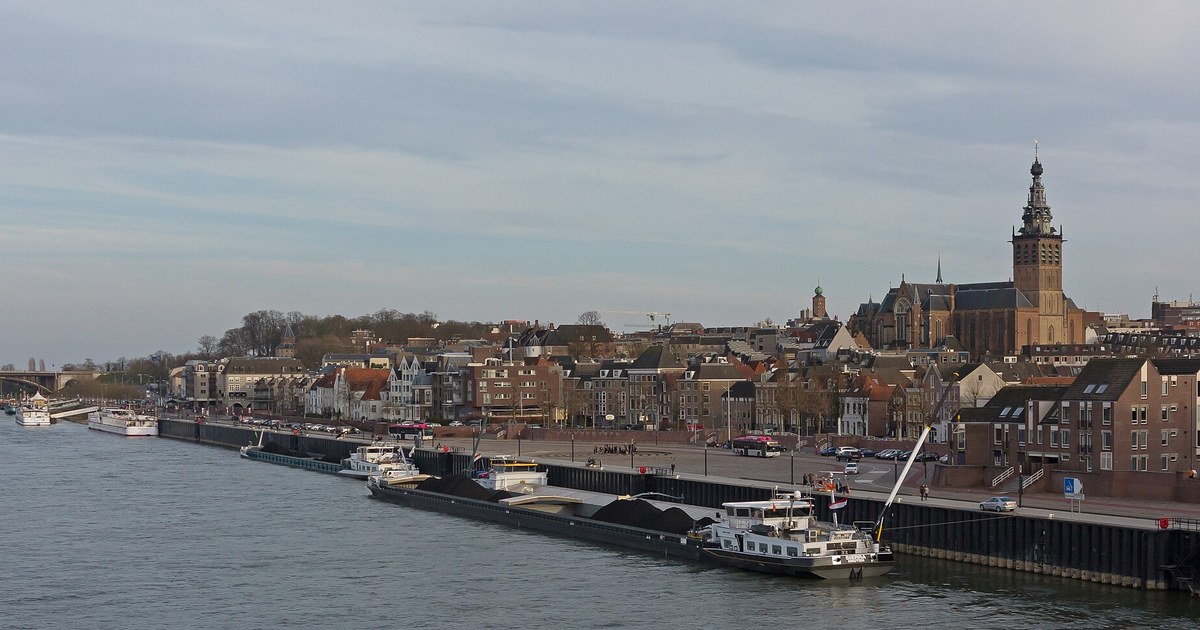
Nijmegen sits on the Waal — the largest and fastest of the Rhine’s three distributary arms — and the river defines the city in ways that go far beyond the practical. The Waal is wide here, a muscular, silver-green sweep of water that the city’s great steel arch bridge has straddled since 1936. From the Valkhof park on its high Roman hill, you look out over the river and the flat Betuwe orchards on the far bank, and on clear days the land dissolves into a haze that reaches all the way to Germany. That horizon has always mattered here. The Batavians, the Germanic tribe who gave their name to the entire Dutch lowland, called this bend of the river home. The Romans recognised the strategic value immediately.
The city that grew from those Roman foundations has lived through extraordinary moments: the Batavian Revolt of 69 AD, Charlemagne’s palace court, the medieval prosperity that raised the soaring Stevenskerk, and — with devastating suddenness — the American bombs of February 1944 that tore the old city centre apart. Nijmegen rebuilt with a dignity and quiet determination that still marks its character. It is a university city now, young and lively, but it carries its layered history with evident pride. Archaeology is visible at street level; the river is a living presence; and every July, tens of thousands of walkers from across the world arrive to take part in the Vierdaagse, the Four Days Marches, one of the great recurring rituals of European life.
What makes Nijmegen so compelling for the independent traveller is that it offers genuine depth in a compact setting. The Roman hill, the Gothic church, the medieval brewery, the wild wetlands of the Ooijpolder, the brand-new river island: all of it sits within cycling distance of a walkable centre. Come for a long weekend and you will leave with the feeling — rare and precious — of having understood somewhere properly.
In this email
- The Valkhof: where Rome, Charlemagne, and Barbarossa left their mark on the hill above the river
- The medieval heart: Stevenskerk, the Grote Markt, and the Benedenstad
- The Waal and Nijmegen Island: a great river reborn and a new urban park
- The Four Days Marches: the world’s greatest walking event and the Via Gladiola
- The Ooijpolder and Gelderse Poort: wild horses, beavers, and wide Gelderland skies
- Eating and drinking well: from medieval brewery to riverside café
Best time to visit: The city is wonderful year-round, but July is extraordinary — the Four Days Marches and the Vierdaagsefeesten festival transform Nijmegen into a joyful, flower-strewn carnival. Spring brings blossom to the Betuwe orchards and cycling weather to the Ooijpolder; autumn turns the river landscapes copper and gold. Avoid the Vierdaagse week if you prefer quieter streets and easier accommodation.
Travel logistics: Nijmegen is easily reached by direct train from Amsterdam Centraal (just over an hour) and from Utrecht (around forty minutes). The city centre is highly walkable; the Ooijpolder and surrounding countryside are best explored by hired bicycle. Trains also connect to Arnhem (fifteen minutes), which pairs well with a visit if you are following the Rhine-Delta landscapes or the Operation Market Garden trail.
Continue reading with a Premium subscription
This is a Love Netherlands Sunday Premium guide. Premium subscribers receive the full article in their inbox every Sunday and unlock the full archive of past editions.
Become a Premium subscriber →Tours & experiences you might love


Powered by Viator. Some links are affiliate links — we may earn a small commission at no extra cost to you.