
Walk into a café in Leeuwarden on a Friday afternoon. Order a coffee. The couple at the next table speak in low, flowing tones — and you realise it isn’t Dutch. It’s something older.
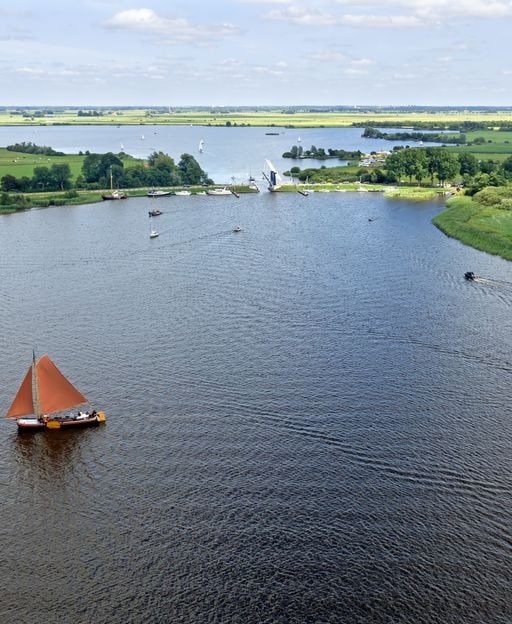
That something is Frisian. Friesland — the flat, lake-studded province in the far north — is one of the most distinctive corners of the Netherlands that most visitors never reach.
A Language That Predates Dutch
Frisian is not a dialect. It is a fully separate language, with its own grammar, vocabulary, and nearly a million native speakers. Linguists call it the closest living language to Old English. Some words sound eerily familiar: “dei” means day, “griene” means green, “brea” means bread.
Dutch and Frisian share a common ancestor, but they took different roads. For centuries, Frisian communities developed in relative isolation behind the coastal marshes of the far north. Their language grew independently of the merchant culture forming in Amsterdam and Utrecht.
Today, West Frisian is the second official language of the Netherlands. Road signs are bilingual. Schools teach it. The provincial government uses it alongside Dutch. Most of the rest of the Netherlands barely knows it exists.
What Makes Friesland Different
It is not just language. Frisians have their own flag — dark blue horizontal stripes with red and white lily pads — their own anthem, and their own unofficial motto: Nea slaef wurden — “Never enslaved.”
The Elfstedentocht is Friesland’s crowning tradition. This 200-kilometre ice skating race connects eleven historic Frisian towns along frozen canals and lakes. The race only runs when the ice is thick enough — an increasingly rare event. The last one was in 1997. Every winter since, the whole Netherlands watches the thermometer. When it drops far enough, the announcement triggers a national frenzy.
Friesland also has its own cattle breed — the famous black-and-white Friesian cow — its own distinctive pottery, and a deep sailing culture. The Sneekermeer and surrounding lakes host Sneekweek each summer, one of the largest sailing festivals in the country.
Enjoying this? Get stories like this every week from Love Netherlands — Subscribe free →
Leeuwarden — A Capital Nobody Expected
In 2018, Leeuwarden shared the title of European Capital of Culture. Many outside the Netherlands were surprised. Leeuwarden? Not Amsterdam? Not Rotterdam?
That surprise was the point. Leeuwarden rewards curiosity. The Oldehove — a leaning tower begun in the 16th century and never completed — tilts at an angle that rivals the tower in Pisa. The Fries Museum holds one of the finest collections of Delftware and Frisian silver in Europe. Mata Hari, the World War One spy, was born ten minutes from the central square.
The city feels unhurried. Cafés stay open late. People cycle everywhere. Nobody is selling you a guided tour. If you want to understand the Netherlands beyond the postcard, Leeuwarden is a good place to begin.
The Long History of Frisian Freedom
Frisian independence has deep roots. Rome never fully conquered Friesland. The Frisians resisted Frankish domination for centuries. For hundreds of years, Frisian farmers governed themselves through a system of direct democracy — no feudal lords, no king.
That tradition of self-reliance still shapes how Frisians see themselves. The identity is not aggressive. It is quiet. It is the shopkeeper who switches between two languages mid-sentence. The schoolchild who writes essays in Frisian and thinks nothing of it. The family that speaks Dutch at work and Frisian at home — and sees no contradiction in that at all.
You can read more about how the Dutch shaped their land against impossible odds — but in Friesland, the struggle was always cultural as much as physical.
Frequently Asked Questions About Friesland
What language do people speak in Friesland?
Most residents speak both Dutch and West Frisian. Frisian is the second official language of the Netherlands, taught in schools and displayed on bilingual road signs. Around 55% of the provincial population speaks it fluently.
What is Friesland best known for in the Netherlands?
Friesland is known for its lake sailing culture, the legendary Elfstedentocht ice skating race, the Friesian cow breed, and its own recognised language. Leeuwarden, the provincial capital, served as a European Capital of Culture in 2018.
Is Friesland worth visiting?
Yes — especially if you want to explore the Netherlands beyond Amsterdam. The lakes suit excellent sailing and cycling. Leeuwarden offers strong museums, good food, and a genuinely unhurried pace. Visit between May and September for the best weather.
How do you get from Amsterdam to Friesland?
Take a direct train from Amsterdam Centraal to Leeuwarden. The journey takes around two hours and trains run several times each hour throughout the day.
Friesland doesn’t announce itself. It doesn’t need to. The language has survived a thousand years of pressure to disappear. The people have outlasted empires. Sit by the water for a morning. Listen. You might hear something you have never heard before — and feel, unexpectedly, at home.
Love Netherlands — Free Every Week
Canal towns, hidden villages, Dutch stories. A free letter about the Netherlands — written slowly, delivered weekly.
Love more? Join 65,000 Ireland lovers → · Join 43,000 Scotland lovers → · Join 30,000 Italy lovers →
Free forever · One email per week · Unsubscribe anytime
Tours & experiences you might love


Powered by Viator. Some links are affiliate links — we may earn a small commission at no extra cost to you.