Jul 26, 2026
|
Europe’s Drowned Wilderness
Discover how a medieval flood created a pristine tidal haven for eagles, beavers and solitude.
|
|
Love Netherlands
|
|
Dear Netherlands,
Somewhere in the Netherlands right now, someone is pouring a pint of something dark — perfectly. Somewhere, a tulip field is waiting to bloom. Somewhere, a baker is sliding the first tray of stroopwafels onto the counter while the smell fills the whole street. The Dutch don’t make a fuss. They just make things the way their parents and their parents’ parents made them.
|
|
Was this forwarded to you? Subscribe free and never miss an edition →
|
|
If the daily newsletter brings you closer to the Netherlands, our Sunday Premium Edition takes you deeper into it. Every Sunday you’ll receive travel deep dives, curated itineraries, regional stories, and hidden gems you won’t find anywhere else.
Upgrade for less than the price of a pint and see the Netherlands in a completely new way.
|
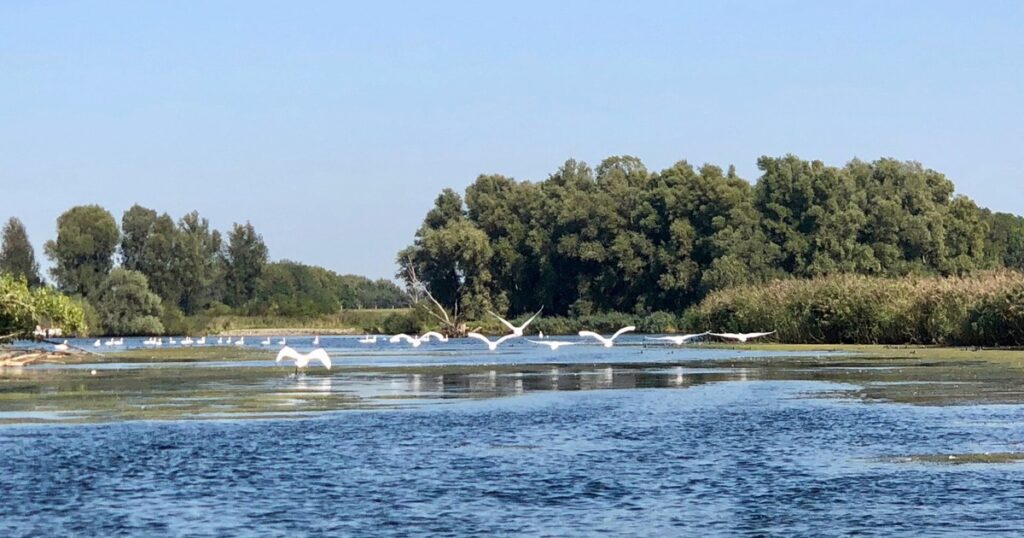
Travelamāns via Wikimedia Commons (CC0)
|
In today’s email:
- Into the Drowned Lands: Your Complete Guide to The Biesbosch
- At The Café — Café Karpershoek — Amsterdam’s Oldest Café, Right by the Station
- Around The Web — Gouda Day Trip from Amsterdam or Rotterdam: The Complete Guide (2026), Tracing Your Family in Overijssel: A Heritage Travel Plan, Tracing Your Family in North Brabant: A Heritage Travel Plan + more
- From Love Netherlands — Tracing Your Family in Utrecht: A Heritage Travel Plan
- Dutch Food You Will Love — Poffertjes — The Tiny Pancakes Sold From Copper Pans
|
Into the Drowned Lands: Your Complete Guide to The Biesbosch
👉 Read the full story
Into the Drowned Lands: Your Complete Guide to The Biesbosch Where a medieval catastrophe gave birth to one of Europe’s last freshwater tidal wildernesses — and where beavers, eagles and whisper-quiet waterways await in the willows. An introduction to The Biesbosch There is a particular quality of silence in the Biesbosch that takes a moment to place. You are drifting in a small electric boat through a corridor of willows, the engine barely audible beneath you, the only sounds the creak of branches and the distant piping of a reed warbler somewhere deep in the rushes. Then you notice the gnawed stump on the bank — a willow the thickness of your thigh, cut clean at an angle by a set of teeth you realise are very large indeed — and you understand that this place is not simply a nature reserve. It is a functioning wild system, returned to itself after centuries of managed use, and…
👉 Read the full story
Have you been there? Do you have a memory of this corner of the Netherlands? Hit reply and tell us — we’d love to hear your story.
|
|
“Want deep dives into the Netherlands every Sunday? Our Premium readers already have their next edition waiting.”
|
At The Café
Café Karpershoek — Amsterdam’s Oldest Café, Right by the Station
Café Karpershoek opened in 1606 — older than Café Hoppe, older than the Westerkerk, older than most things in Amsterdam that are still standing. It’s a small brown café two minutes from Centraal Station, easy to miss in the rush of arriving travellers. The floor is sand, scattered fresh every morning the way every Dutch tavern used to do it. The walls are nicotine-stained from before the smoking ban and lined with antique tin signs. It’s where you go for your first beer in Amsterdam if you want to start the way the city started.
👉 Visit the café
|
Around The Web
|
From Love Netherlands
Your ancestor left Utrecht for somewhere far away. Perhaps it was New Amsterdam in the 1630s. Perhaps it was the Dutch East Indies a century later. Perhaps it was South Africa during the Boer era. Whatever the story, the records are still there — waiting for you in the heart of the Netherlands. Utrecht province sits at the geographic centre of the Netherlands. It is a small province, but a rich one. Its archives hold centuries of births, deaths,…
👉 Read the full story
|
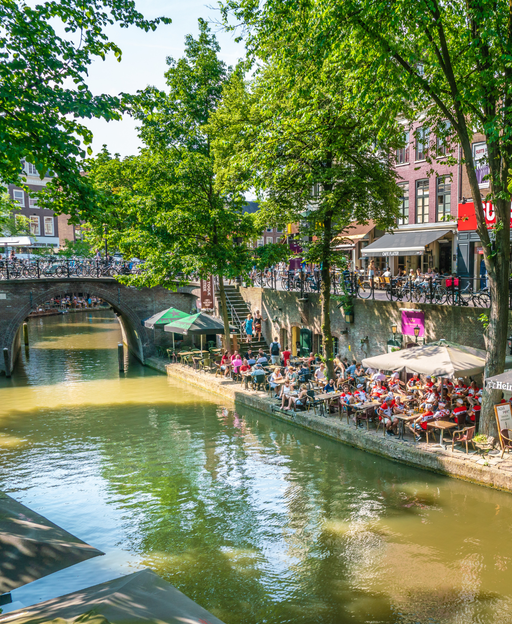
Photo via Love Netherlands
|
Dutch Food You Will Love
Poffertjes — The Tiny Pancakes Sold From Copper Pans
Poffertjes are small, fluffy yeasted pancakes made on cast-iron pans with little round dimples, dusted with icing sugar and topped with a knob of butter. You eat them with a wooden fork from a paper plate, ten or twelve at a time, while standing at a stall on the street or sitting in a market square. They appear at every Dutch outdoor festival from spring to Christmas markets, and the smell of butter and sugar drifting across a town square is one of the most reliable cues that you’ve found a real local event rather than a tourist set-piece. A poffertjes pan can hold over forty at once — it takes about three minutes to fill a plate.
👉 Read the full story
|
|
Know Someone Who Loves the Netherlands?
If you’re enjoying this letter, the best thing you could do is forward it to one friend who’d love the Netherlands too. This newsletter grows by word of mouth alone — every single subscriber came from someone sending it to someone else. Thank you for being one of the first.
|
|
Our daily newsletter is free and always will be. But for less than the price of a pint, you can upgrade to our Sunday Premium Edition, which gives you access to our travel deep dives, curated itineraries, and regional stories. Consider buying us a stroopwafel — it’s the Dutch way to say thank you.
|
Also From Our Family
Love Ireland too? Over 64,000 readers wake up each morning to the Love Ireland newsletter — loveireland.substack.com
Or Scotland? Join 43,000 Scotland lovers — lovescotland.substack.com
|
|
You’re reading Love Netherlands — a free letter about canal towns, hidden villages, and Dutch stories, delivered Monday to Friday.
inlovewithnetherlands.com ·
Unsubscribe
© 2026 Love Netherlands · Part of the Love To Visit LLC family
|