

A Zaanse Schans day trip from Amsterdam is one of the most rewarding half-days you can spend in the Netherlands. Just 15 kilometres north of the city, this open-air heritage village sits along the banks of the River Zaan, where a row of working windmills turns against the flat Dutch sky, painted houses lean over the water, and craft workshops have been producing clog shoes, Gouda cheese, and traditional Dutch paint for centuries. It is, in short, exactly what the Netherlands looks like in your imagination — and remarkably, it is genuine.
Love the Netherlands? Join our free newsletter for hidden Dutch gems → inlovewithnetherlands.com/subscribe
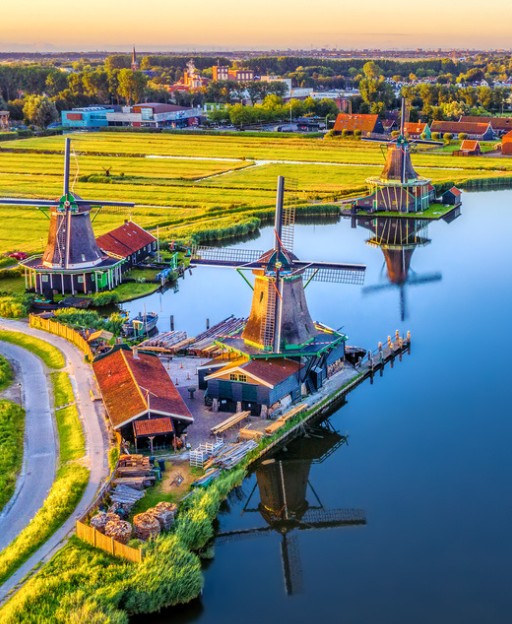
Unlike many heritage attractions built around tourism, Zaanse Schans began as a genuine working community. The windmills here are not decorative — they produce real sawdust, oil, and paint. The cheese dairy makes cheese you can actually buy. The clog workshop turns out wooden shoes that local farmers still occasionally wear. When you visit Zaanse Schans, you are stepping into a version of the Netherlands that existed long before Amsterdam became one of Europe’s most visited cities.
Getting to Zaanse Schans from Amsterdam
The easiest way to reach Zaanse Schans is by train from Amsterdam Centraal. Trains run frequently throughout the day to Zaandijk Zaanse Schans station, and the journey takes around 17 minutes. From the station, it is a pleasant 10-minute walk along the riverside path to the main entrance of the heritage village. Trains leave Amsterdam Centraal roughly every 30 minutes, so you rarely need to check schedules — simply turn up and go.
Alternatively, you can take the regional bus (Bus 391) from Amsterdam Centraal, which drops you closer to the village entrance. The journey takes around 40 minutes due to local stops, but it passes through charming North Holland countryside and gives a more leisurely approach. If you are hiring a car during your time in the Netherlands, Zaanse Schans has its own car park right at the entrance, priced per hour.
For visitors combining Zaanse Schans with other day trips from Amsterdam, the train is by far the most flexible option. You can combine Zaanse Schans with nearby Haarlem, Alkmaar, or Volendam on the same day without needing to return to Amsterdam in between.
What to See and Do at Zaanse Schans
The heritage village is free to enter — you simply walk in along the riverside. Individual attractions inside charge their own entry fees, typically between €4 and €6 each. If you plan to visit three or more windmills and workshops, the combined entry ticket offers better value.
The Windmills
There are eight windmills at Zaanse Schans, and several are open to visitors. Each mill has a specific function: De Kat grinds natural pigments used to make paint, De Zoeker presses oil from seeds, De Huisman produces mustard and spices, and De Bonte Hen produces flour. Climbing inside an operating windmill is one of those experiences that stays with you — the machinery is enormous, loud, and surprisingly complex, and the views from the upper level over the river and flat polder landscape are genuinely beautiful.
The best time to see the windmills turning is on a breezy day, which is most days in North Holland. On calm summer days, the millers may not operate the machinery, though the windmills are still open for exploration. Unlike Kinderdijk’s 19 windmills, which are a UNESCO World Heritage Site primarily observed from the outside, many Zaanse Schans windmills allow you to enter and climb — which makes this Zaanse Schans day trip particularly engaging for families and anyone who wants more than a photograph.
The Cheese Dairy and Clog Workshop
Two workshops at Zaanse Schans operate live demonstrations throughout the day. The cheese dairy explains how traditional Dutch cheese is made — from pressing and salting through to ageing — and the cheese for sale at the end is reliably excellent. The clog workshop is even more impressive: a craftsman shapes a pair of wooden shoes from a raw block of poplar or willow in around six minutes using automated lathes, following a process that has changed little in 300 years. Clogs here are available to buy in every size from infant to adult, and they make an unusually practical souvenir.
The Zaans Museum
For a deeper understanding of the Zaan region’s history, the Zaans Museum is worth an hour of your time. It covers the industrial heritage of the area — this was one of the world’s first industrial zones in the 17th century, with hundreds of windmills powering sawmills, paper mills, and dye works that supplied the Dutch Golden Age shipping industry. The museum also holds a collection of Albert Heijn artefacts: the supermarket chain that now operates across Europe began as a small grocery shop right here in the Zaan region in 1887.
The Wooden Houses and Painted Facades
The distinctive green wooden houses of Zaanse Schans are not reproductions. Many were relocated here from other parts of the Zaan region during the 20th century, when industrialisation threatened to demolish them. The deep green hue — Zaans Groen — was traditionally made using a pigment ground at De Kat windmill using copper acetate and verdigris. You can still buy this exact paint today at the mill. Walking along the riverside path between the houses, with the windmills turning in the background, is a genuinely peaceful experience, even when the village is busy with visitors.
When to Visit Zaanse Schans
Zaanse Schans is open year-round, and each season has something to recommend it. Spring (April and May) is arguably the best time: the weather is mild, the fields surrounding the village fill with tulips, and the summer crowds have not yet arrived. Visiting in April also allows you to combine Zaanse Schans with the tulip fields at nearby Keukenhof, which opens for roughly eight weeks each spring.
Summer (June through August) brings the largest crowds, particularly between 10:00 and 15:00 on weekends. If you are visiting in summer, arrive before 09:30 or after 16:00 to avoid the most congested periods. The village genuinely empties in the late afternoon, and the evening light on the windmills along the Zaan is exceptional.
Autumn and winter visits are quieter and atmospheric. The village can be foggy in November and December, which makes the windmills look particularly dramatic. Several workshops reduce their opening hours in winter, so check in advance if you are planning to visit specific attractions. The Christmas market in December draws additional visitors, so if quiet is your priority, October or early November is ideal.
How Long to Spend at Zaanse Schans
Most visitors spend two to three hours at Zaanse Schans. This is enough time to enter two or three windmills, watch the cheese and clog demonstrations, walk the full length of the riverside path, and have a Dutch pea soup or stroopwafel at one of the village cafés. If you add the Zaans Museum, allow three and a half to four hours in total.
A popular combination is to visit Zaanse Schans in the morning, then continue by train to Haarlem for the afternoon. Haarlem is just 25 minutes from Zaandijk by train and offers a beautifully preserved medieval centre, the Frans Hals Museum, and some of the best restaurant options in the Amsterdam region.
Practical Tips for Your Visit
A few things worth knowing before you go:
- Cash and cards: Most workshops and windmills accept cards, but a small amount of cash is useful for the occasional stall or outdoor vendor.
- Cycling: You can cycle to Zaanse Schans from Amsterdam in around 45 minutes via the North Holland cycling routes. The Dutch cycling infrastructure makes this route pleasant and well-signposted — a fitting way to arrive at a heritage village that celebrates Dutch craftsmanship. See our guide to why the Dutch cycle everywhere for more context on how the country’s bike culture developed.
- Photography: The best light for photography is early morning or late afternoon, when the low North Holland sun catches the wooden facades and windmill sails. The eastern bank of the river (across the footbridge) offers the most photogenic angle looking back towards the village.
- Crowds: Weekdays are noticeably quieter than weekends, even in high season. If your schedule allows, a Tuesday or Wednesday morning visit is significantly more peaceful.
- Children: Zaanse Schans is excellent for families. The clog workshop in particular holds children’s attention well, and climbing inside working windmill machinery is the kind of tactile experience that indoor museums rarely offer.
Where to Eat Near Zaanse Schans
There are several cafés and a restaurant inside the village. The Pancake Restaurant at Zaanse Schans serves traditional Dutch pannenkoeken — large, thin pancakes served with sweet or savoury toppings — and is popular with both visitors and locals. Dutch pancakes bear little resemblance to either British pancakes or American-style stacks: they are closer to crêpes, served flat across a wide plate, and typically topped with apple and cinnamon, smoked bacon, or cheese and mustard.
For a lighter option, the bakery near the windmills sells fresh stroopwafels — the thin, caramel-filled waffle biscuits invented in nearby Gouda in the early 19th century. Eating a fresh stroopwafel at Zaanse Schans, still warm from the iron, is one of those simple pleasures that tends to stay in the memory long after you have returned home.
Combining Zaanse Schans with Your Amsterdam Itinerary
Zaanse Schans fits naturally into a broader Amsterdam itinerary as a half-day excursion. If you are spending 3 days in Amsterdam, the best moment to include Zaanse Schans is on your second morning, when the novelty of the city has settled but your energy is still high. Take the early train, spend the morning at the windmills and workshops, and return to Amsterdam by early afternoon.
For longer trips, Zaanse Schans makes a strong pairing with the cheese town of Gouda (accessible by train via Rotterdam) or the tulip region around Lisse in spring. The North Holland coastal route — Alkmaar, Volendam, Edam, and Marken — can be done as a longer day trip from Amsterdam using a combination of train and bus, with Zaanse Schans as an early stop.
Frequently Asked Questions About Visiting Zaanse Schans
Is entry to Zaanse Schans free?
Yes — walking into the village and along the riverside path is free. Individual windmills, the Zaans Museum, the cheese dairy, and the clog workshop each charge their own entry fees, typically between €4 and €6. A combined ticket for multiple attractions is available and offers better value if you plan to visit three or more sites.
How far is Zaanse Schans from Amsterdam?
Zaanse Schans is approximately 15 kilometres north of Amsterdam city centre. By train from Amsterdam Centraal to Zaandijk Zaanse Schans station, the journey takes around 17 minutes. From the station, it is a 10-minute walk to the heritage village along the riverside. The total travel time from central Amsterdam, door to door, is around 30 minutes.
What is the best time of year to visit Zaanse Schans?
April and May offer the best combination of mild weather, fewer crowds, and the chance to see tulip fields in bloom across North Holland. If you are visiting in summer (June to August), arrive before 09:30 or after 16:00 to avoid peak congestion. Autumn visits (October to November) are quieter and atmospheric, with low light that makes the windmills particularly photogenic.
Can you visit Zaanse Schans without a tour?
Absolutely. Zaanse Schans is easy to visit independently using the train from Amsterdam Centraal. There is no need to book in advance — simply turn up, walk in, and explore at your own pace. Guided tours are available if you prefer more context, but the village is well-signposted and the workshops provide their own explanations throughout the day.
You Might Also Enjoy
- Day Trips from Amsterdam — the best half-day and full-day excursions from the city
- Haarlem Travel Guide — the historic city that most Amsterdam visitors miss entirely
- What Kinderdijk’s 19 Windmills Actually Did — the UNESCO windmill site and the extraordinary engineering story behind it
Plan Your Netherlands Trip
Ready to plan your time in the Netherlands? Our Start Here guide brings together the best itineraries, practical travel tips, and hidden gems across the country — whether you have three days or three weeks.
Join Netherlands Lovers
Every week, discover the Netherlands beyond the tourist trail — hidden villages, local recipes, cycling routes, and travel insights you won’t find in any guidebook.
Subscribe free — enter your email:
Love more? Join 64,000 Ireland lovers → · Join 43,000 Scotland lovers → · Join 30,000 Italy lovers →
Free forever · One email per week · Unsubscribe anytime
Tours & experiences you might love


Powered by Viator. Some links are affiliate links — we may earn a small commission at no extra cost to you.