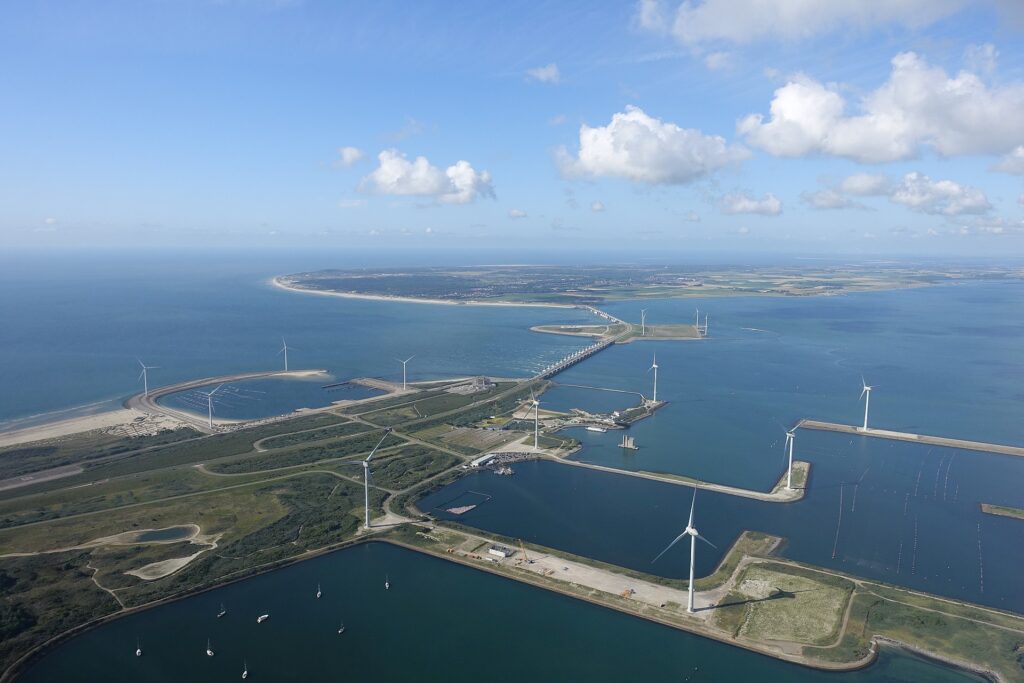
Zeeland’s islands and storm barriers reveal the Dutch mastery of water—and the warmth of coastal towns that survived catastrophe.
Love Netherlands
Dear Netherlands,
If you walk through Haarlem early on a weekday morning, you can still feel the rhythm of a 17th-century town that never quite left. Coffee at a canal-side café, a short cycle to the old centre, a pause at a bookshop that’s been in the same family for three generations. The Dutch don’t advertise this. They just live it.
If the daily newsletter brings you closer to the Netherlands, our Sunday Premium Edition takes you deeper into it. Every Sunday you’ll receive travel deep dives, curated itineraries, regional stories, and lesser-known places you won’t find anywhere else.
The dyke near Ouwerkerk runs straight as a Roman road, its grass crown worn smooth by centuries of footsteps. On one side, the fields of North Brabant stretch inland. On the other, the Oosterschelde glints grey-green, and you can feel the weight of water pressing against the ancient earthwork. This is Zeeland’s ordinary miracle: a province where geography and human stubbornness have written the landscape together. Zeeland—meaning “sea-land”—sits in the Netherlands’ southwestern corner, a fragmented archipelago of islands and peninsulas that jut into the North Sea and the Rhine delta. It’s connected by the Delta Works , the engineering complex built after the catastrophic flood of 1953. To visit Zeeland is to understand, viscerally, why the Dutch have always been a people who build walls against the sea—and why they’ve learned to live, with characteristic pragmatism and even joy, on the…
Café ‘T Mandje on the Zeedijk opened in 1927, run by Bet van Beeren — one of the first openly lesbian bar owners in the world. The bar’s interior is preserved exactly as Bet left it: dozens of cut-off ties pinned to the ceiling (her custom for any man who got too rowdy), framed photos of regulars from the 1930s onwards, and the same long wooden bar her customers leaned on for half a century. It’s still a working café and an active part of LGBTQ history. Stop in for a beer, take in the ceiling, and read the small museum corner near the door.
The Rapenburg canal catches the afternoon light differently than the rest of Leiden ‘s waterways. The water reflects the gabled houses in near-perfect symmetry, and the willows…
The light hits the façades of Grote Markt in that particular Dutch way: soft, almost silver, bouncing off the wetness of rain-darkened brick. It’s a Saturday morning in autumn,…
The bullet holes are still there. Two of them, embedded in the wooden doorframe of the Prinsenhof Museum , where Balthasar Gérard’s musket fire killed William of Orange on 10 July…
On a Thursday evening, the Vismarkt fills with students balancing paper cones of fried eierbal—rounded croquettes of ragout that burst with cream and spiced meat—while cyclists…
The Maas river curves lazily around Maastricht , and on a Saturday morning, the city’s oldest square fills with the smell of fresh bread, grilled cheese, and the particular…
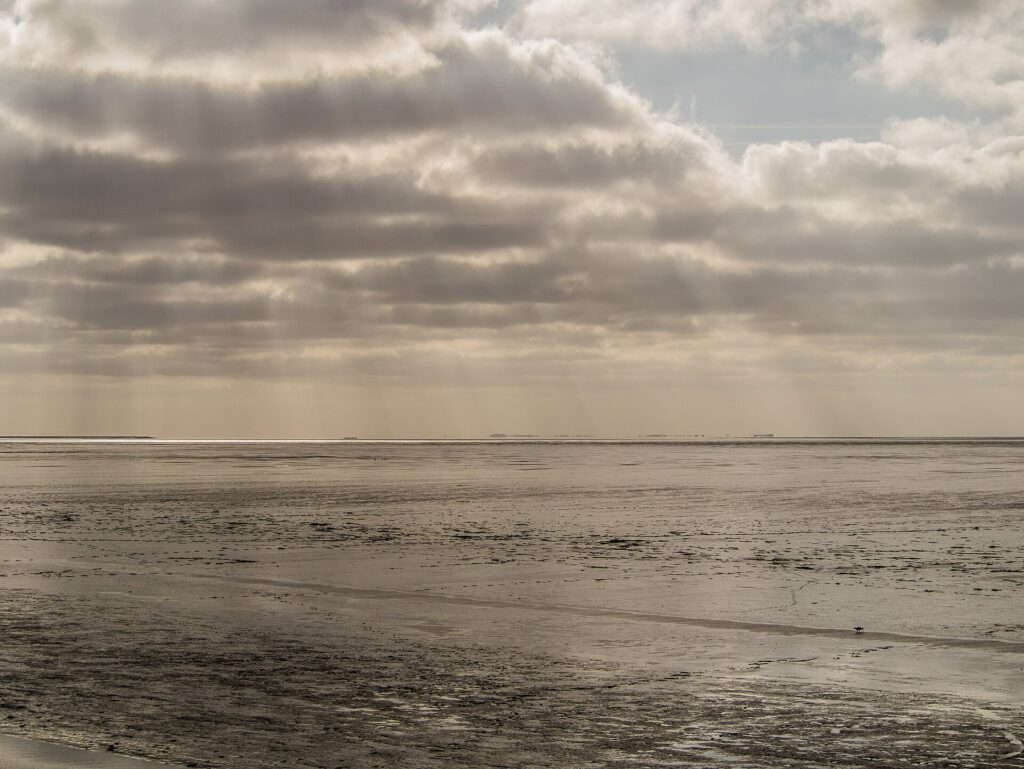
The ferry from Den Helder leaves at half past eight on a grey April morning, and within minutes the Dutch coastline becomes abstract—a thin line of dunes and church spires receding into mist. The North Sea is the colour of wet concrete. Gulls wheel overhead. Ahead, invisible until the last moment, one of five inhabited Dutch Wadden Islands materialises out of the haze: a low, green shape, ringed with sand. Most travellers who make it this far…
A Dutch pannenkoek is the size of a dinner plate, thinner than an American pancake but thicker than a French crêpe, and it’s served as a full meal — savoury or sweet, never both. The classic order is a pannenkoek met spek (with bacon) drizzled in stroop. Children get them with apple and cinnamon. The pannenkoekenhuis tradition runs in old farmhouses and converted mills across the countryside, where you can sit at long tables and order a pancake the size of your face for the price of a sandwich. It’s the Sunday family lunch you’ll wish your grandmother had known about.
If you’re enjoying this letter, the best thing you could do is forward it to one friend who’d love the Netherlands too. This newsletter grows by word of mouth alone — every single subscriber came from someone sending it to someone else. Thank you for being one of the first.
Our daily newsletter is free and always will be. But for less than the price of a pint, you can upgrade to our Sunday Premium Edition, which gives you access to our travel deep dives, curated itineraries, and regional stories. Consider buying us a stroopwafel — it’s the Dutch way to say thank you.
Also From Our Family
Love Ireland too? Over 64,000 readers wake up each morning to the Love Ireland newsletter — loveireland.substack.com
The best Scottish rugby updates, straight to your inbox — Six Nations, the Nations Championship, Glasgow and Edinburgh. Only when there's something worth reading.
A newsletter for Londoners who want to rediscover their own city. Travellers planning their first or fifth visit. Anglophiles who fell in love with London through literature, film, or a rainy afternoon on the South Bank.