

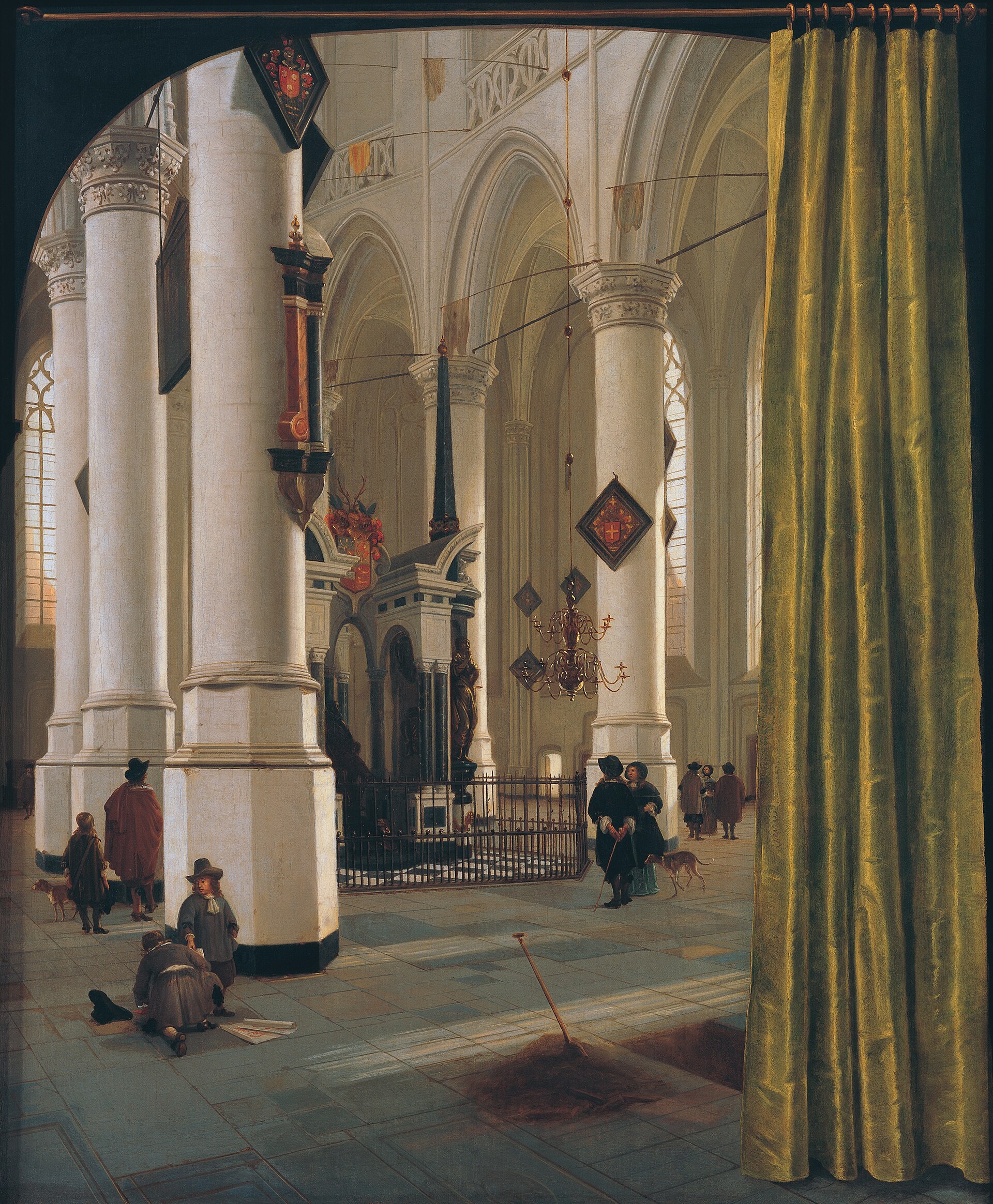
In July 1584, a man walked into a house in Delft and killed the person who, more than anyone else, had made the Netherlands possible. The building is still there. So are the bullet holes.
The Father of the Fatherland
William of Orange spent nearly two decades fighting to keep the Dutch provinces free from Spanish rule. He was a wealthy nobleman who had served the Spanish crown loyally for years. Then he chose the people over the king.
The Dutch called him “Vader des Vaderlands” — Father of the Fatherland. His enemies called him a traitor. Philip II of Spain placed a bounty on his head so large that any man who claimed it would never need to work again.
By 1584, William ran his operations from a former convent along the Oude Delft canal. The building carried the name Prinsenhof — the Prince’s Court. It was quiet, unassuming, and entirely unsuitable as a fortress.
The Morning of 10 July 1584
Balthasar Gérard was a young Catholic fanatic from France. He believed that killing William would save Christendom from Protestant heresy. For weeks he lived inside Delft, gaining the trust of those around the Prinsenhof under a false name.
On 10 July, William descended the stairs after his midday meal. Gérard waited near the foot of the steps. He fired three shots at close range. Two struck William.
Witnesses carried William to a nearby room. He murmured a brief prayer — one account records the words “have mercy on my soul and on this poor people” — then died. He was 51 years old.
What the Wall Still Shows
Go to Museum Prinsenhof Delft today and find the main staircase. Look at the stone wall at the base of the steps. Behind a small pane of protective glass, you will see two dents in the stone.
Those marks are where Gérard’s shots struck after passing through William. Four hundred and forty years later, they remain.
The museum adds no drama around them. No velvet rope, no spotlight. Just the wall, the marks, and the quiet of a weekday afternoon.
Enjoying this? Get stories like this every week from Love Netherlands — Subscribe free →
What Came After
William’s murder shocked the Republic but did not break it. His sons continued the fight. The revolt ran on for 64 more years. In 1648, the Peace of Westphalia ended the Eighty Years’ War and Spain formally recognised Dutch independence.
The country William had given his life to protect went on to build one of history’s great trading empires. Rembrandt painted in Amsterdam. Vermeer painted in Delft. The VOC sent ships to every corner of the world.
None of it was inevitable. Without William, much of it might never have happened. If you want to understand why Delft looks the way it does today, the Prinsenhof is the right place to start.
Visiting the Prinsenhof Today
The museum opens most days from 10am and covers Dutch history from the medieval period through the Golden Age. The bullet holes in the staircase wall remain the emotional centre of the visit. The building rewards a slow hour.
Delft is about 55 minutes by direct train from Amsterdam Centraal and ten minutes from The Hague. Most visitors to the Netherlands never go. That makes it one of the most rewarding day trips available.
Walk the old canal alongside the Prinsenhof. The Old Church next door leans visibly over the water — that is not a trick of the eye. The market square is one of the finest in the country. And the story of the blue pottery that made Delft world-famous started just a few streets away.
If this is your first visit to the Netherlands, our start here guide covers everything you need to plan your trip.
What is the Museum Prinsenhof in Delft?
The Museum Prinsenhof sits in the former home of William of Orange, the leader of the Dutch revolt against Spanish rule. The museum covers Dutch history from the 15th century onward and includes the staircase where William was shot and killed in 1584.
Can you still see the bullet holes in the Prinsenhof?
Yes. The bullet holes are visible at the base of the main staircase inside the museum, behind a small pane of protective glass. They form part of the permanent exhibition and standard admission gives you access to this area.
How do you get to Delft from Amsterdam?
Take a direct train from Amsterdam Centraal to Delft — the journey takes around 55 minutes. Trains run frequently throughout the day. From The Hague, Delft is just ten minutes by train. The Prinsenhof is a short walk from Delft station.
The Netherlands built itself on tolerance, trade, and a stubborn refusal to accept the word no. That character took shape over centuries — in the fields, the harbours, and the counting houses. But it also took shape in a narrow stairwell in Delft, on a Tuesday afternoon in July, 440 years ago. The wall remembers.
Love Netherlands — Free Every Week
Canal towns, hidden villages, Dutch stories. A free letter about the Netherlands — written slowly, delivered weekly.
Love more? Join 64,000 Ireland lovers → · Join 43,000 Scotland lovers → · Join 30,000 Italy lovers →
Free forever · One email per week · Unsubscribe anytime
Tours & experiences you might love


Powered by Viator. Some links are affiliate links — we may earn a small commission at no extra cost to you.