

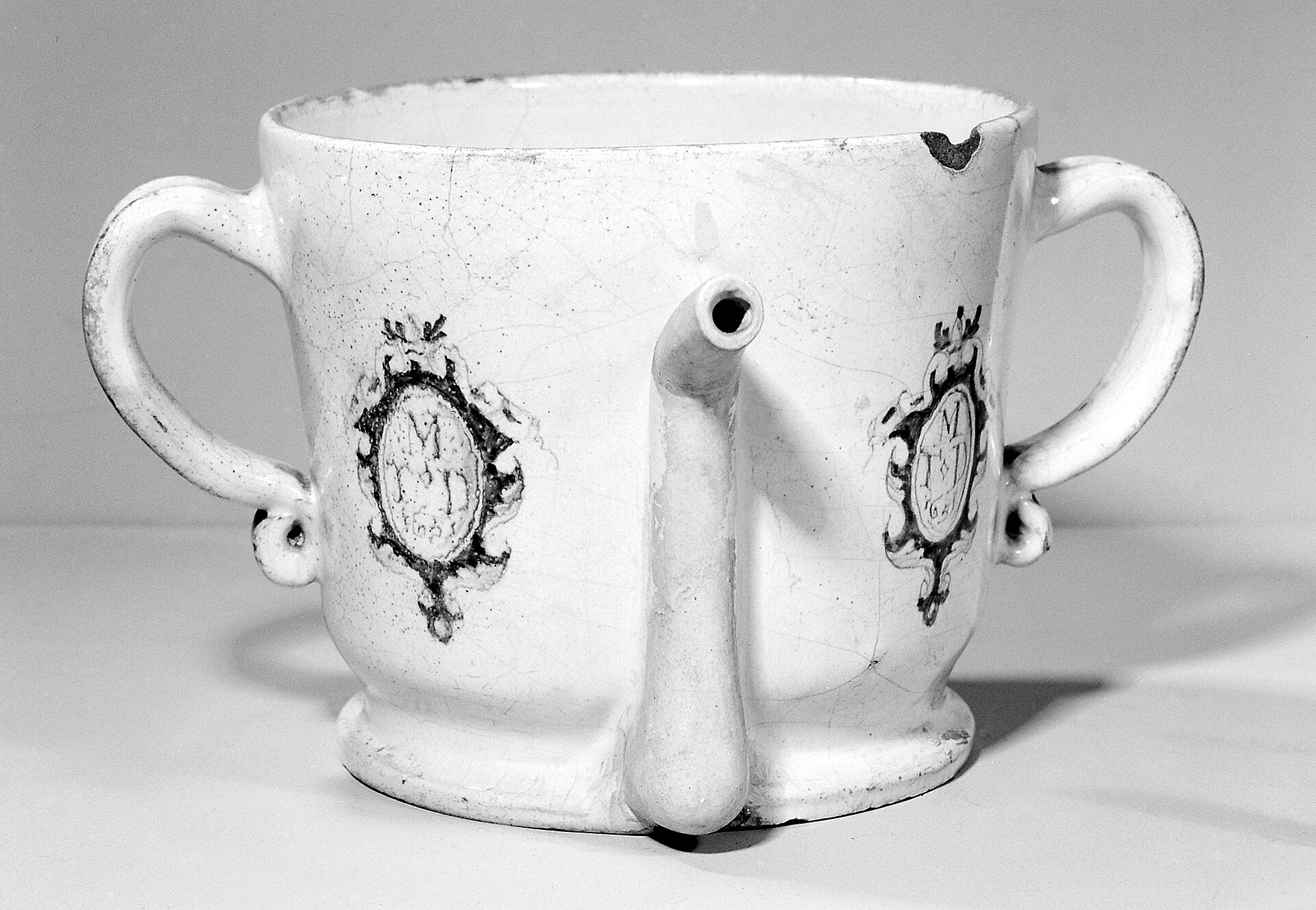
Walk into almost any souvenir shop in Amsterdam. You’ll find it on every shelf. Blue and white pottery, windmills painted in cobalt, a little Dutch house. The label reads “Delftware.” Turn it over. The base says “Made in China.”
The irony runs deeper than you might expect.
Where Delftware Actually Came From
In the 1600s, Dutch merchants were obsessed with Chinese porcelain. The fine white clay, the vivid cobalt blue, the delicate patterns — nothing in Europe came close. Ships from the Dutch East India Company brought millions of pieces home each year.
Then Chinese supply dried up. Civil war disrupted trade routes. Dutch potters saw their chance.
Craftsmen in Delft began copying the Chinese style — the blue and white palette, the cloud and floral patterns, even faux-Chinese characters painted on the base. They called it Delftware. It was, in origin, a European copy of Chinese art.
It was also extraordinarily good.
When the Copy Became More Prized Than the Original
Within decades, Delftware had spread across Europe. Dutch merchants sold it to French aristocrats, English royalty, and German courts. The demand was insatiable.
Delft potters didn’t just copy — they adapted. They painted Dutch harbour scenes, tulip fields, and coastal maps onto the blue and white canvas. The style became its own distinct thing.
By the early 1700s, collectors considered Delftware more desirable than the Chinese porcelain that had inspired it. The Dutch took something foreign, made it entirely their own, and sold it back to the world.
It is, in many ways, a very Dutch story.
What Survives in Delft Today
At its peak, Delft had over 30 pottery factories. Today, only one original remains.
Royal Delft — known formally as De Porceleyne Fles — has operated continuously since 1653. It is the only factory still producing authentic hand-painted Delftware on its original site.
Every piece is hand-thrown, hand-painted, and kiln-fired on site. Each one takes a skilled painter several hours to complete. As the cobalt blue heats in the kiln, it deepens in colour. No two pieces are ever identical.
If you visit Delft, the Royal Delft factory and museum is the real thing. You can watch painters at work and buy directly from the source. For more on what makes this city remarkable, read our piece on Delft — the small Dutch city that taught Vermeer how to paint light.
Enjoying this? Get stories like this every week from Love Netherlands — Subscribe free →
How to Spot a Fake
The souvenir shops are full of imitations. Here is how to tell them apart.
Authentic Royal Delft carries a specific mark on the base: a stylised vase with “De Porceleyne Fles” and a production year number. Manufacturers have used this mark since 1879. Always check the base of any piece before you buy.
Imitation pieces — often labelled “Delfts Blauw” — look similar at first glance. The paint is applied by machine. The clay is moulded rather than hand-thrown. The designs are perfectly uniform. Many pieces come from factories in China or Eastern Europe.
Real Delftware is expensive. A small hand-painted tile starts around €30. Larger decorative pieces run into hundreds of euros. If the price seems too low, it almost certainly is.
Why the Real Thing Is Worth Finding
Authentic Delftware is a direct connection to the Dutch Golden Age. Each piece carries more than 370 years of craft tradition.
The painters who work at Royal Delft train for years before touching a commercial piece. They learn to control a brush so precisely they can paint a single tulip petal in one stroke. They mix their own pigments. They understand how the blue shifts during firing.
Buying a genuine piece is not just a souvenir. It is a fragment of Dutch history you can take home.
If you want to explore more of what makes the Netherlands distinct, start here with our complete visitor guide. And if Dutch artistry interests you, our piece on how De Stijl shaped everything from furniture to modern design shows just how far Dutch creativity has reached.
What is Delftware and where does it come from?
Delftware is a style of tin-glazed blue and white pottery that originated in Delft, the Netherlands, in the 17th century. Dutch potters began copying Chinese porcelain when trade routes were disrupted. They adapted the style with Dutch scenes and motifs, and the craft became one of the most recognised art forms in Europe.
Where can I buy authentic Delftware in the Netherlands?
The only factory still making authentic hand-painted Delftware is Royal Delft (De Porceleyne Fles) in Delft. You can visit the factory museum, watch painters at work, and buy directly from the source. Most souvenir shops and market stalls sell mass-produced imitations, often made outside the Netherlands.
How do I tell real Delftware from a fake?
Check the base of the piece for the De Porceleyne Fles mark — a stylised vase with the factory name and a production year number. Genuine pieces are hand-painted, subtly varied between examples, and priced from around €30 for a small tile. Machine-printed imitations have perfectly uniform patterns and typically carry vague “Delfts Blauw” labels without an authenticated factory mark.
What is the best time to visit Delft to see Delftware made?
The Royal Delft factory and museum is open year-round, Monday to Saturday. Spring visits (April to June) are particularly rewarding — the nearby Keukenhof tulip fields are in bloom, and Delft’s outdoor terraces and canal paths are at their finest.
The next time you pick up a blue and white plate in a Dutch market, turn it over. If the base says “Made in China,” you’ll know exactly why. And if it carries the vase mark of De Porceleyne Fles — you’ve found the real thing. A craft that started by copying China, came to define a nation, and is now copied in return. There is something almost poetic about that.
Love Netherlands — Free Every Week
Canal towns, hidden villages, Dutch stories. A free letter about the Netherlands — written slowly, delivered weekly.
Love more? Join 64,000 Ireland lovers → · Join 43,000 Scotland lovers → · Join 30,000 Italy lovers →
Free forever · One email per week · Unsubscribe anytime
Tours & experiences you might love


Powered by Viator. Some links are affiliate links — we may earn a small commission at no extra cost to you.