
Most people planning a trip to the Netherlands put Amsterdam at the top of their list. Some add Utrecht or Delft. Very few have ever typed “Dordrecht” into a search bar — and that is exactly why you should go.
The City That Came First
Dordrecht received its city charter in 1220. Amsterdam got its charter in 1306. That gap — 86 years — is small by European standards, but in the Netherlands it carries real weight. Dordrecht has a claim no other Dutch city can match: it was the first city in Holland.
Local people call the city “Dort” with quiet pride. No explanation needed. Sit at the old harbour on a weekday morning and you begin to understand why that pride runs so deep.
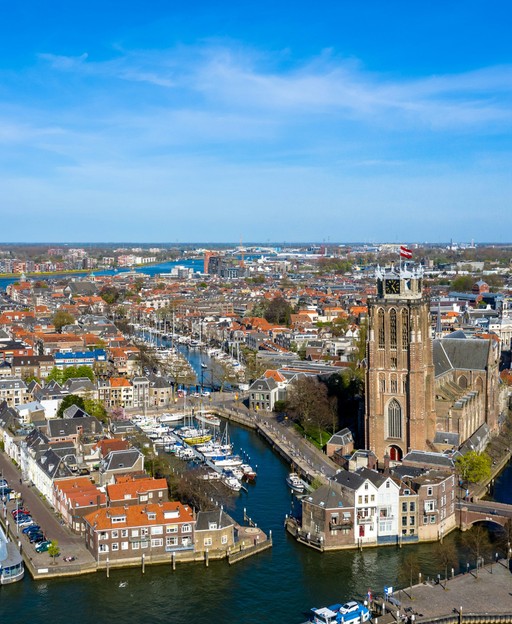
Three rivers meet at Dordrecht — the Noord, the Merwede, and the Dordtse Kil. The city sits on an island, surrounded by moving water. At one point in history, Dordrecht controlled more river traffic than almost anywhere else in the Low Countries.
A City That Shaped Global Christianity
In 1618, something happened in Dordrecht that still echoes today. The Synod of Dort gathered here — an international council of Protestant theologians debating questions that shaped Reformed churches across Europe, North America, and South Africa.
Its conclusions influenced how millions of people think about faith, free will, and salvation. Decisions made in a small Dutch city over four centuries ago still appear in the creeds of churches on six continents.
Stand outside the Grote Kerk — the Great Church — and look up. The tower never received a spire. It collapsed during construction and was never rebuilt. That unfinished silhouette became a permanent part of the city’s identity: something beautifully incomplete, left standing exactly as it fell.
The Painters Who Grew Up Here
Albert Cuyp was born in Dordrecht in 1620. His paintings — warm golden light over flat Dutch countryside, cattle standing still in shallow rivers — now hang in the National Gallery in London and the Rijksmuseum in Amsterdam.
Nicolas Maes, a pupil of Rembrandt, was also a Dordrecht native. The light of this city, where three rivers meet and the sky reflects off open water in every direction, clearly did something to the painters who grew up beside it.
The Dordrecht Museum holds one of the finest collections of Dutch Golden Age art outside Amsterdam. Admission is affordable. The crowds are almost non-existent. On a quiet Tuesday morning, you might stand alone in front of a seventeenth-century masterpiece — the entire room to yourself.
Enjoying this? Get stories like this every week from Love Netherlands — Subscribe free →
Where the Tourists Don’t Go
That lack of crowds is the point. Dordrecht sits just twenty minutes from Rotterdam by train. It could not feel more different. Rotterdam is bold and modern, rebuilt after the Second World War, shaped by contemporary architecture. Dordrecht feels preserved — a city that history chose not to disturb.
The waterfront along the Wijnhaven and Kuipershaven is lined with old merchant houses. Stepped gable facades rise above the water. Houseboats bob alongside small ferries crossing the river. In the evening, the light turns golden and sits on the water in a way that feels familiar — because Cuyp painted it exactly like this.
If you enjoy discovering the Netherlands through its overlooked corners, our Start Here guide collects the stories and places that most travel guides skip entirely.
Into the Biesbosch
A short boat ride from the city centre takes you to one of the largest freshwater tidal areas in Europe. The Biesbosch stretches out in every direction — reed marshes, willow forests, and quiet waterways where herons stand motionless in the shallows.
Beavers returned here after centuries of absence. The Dutch reintroduced them in 1988. Today the Biesbosch is one of the few places in the Netherlands where you genuinely feel far from everything.
Day-trippers from Amsterdam rarely think to come this far south. Rotterdam visitors tend to stay in the city. That leaves Dordrecht — and the Biesbosch — to people who know where to look. The Dutch have always had a talent for engineering remarkable places from ordinary water. The article on the Dutch city that shaped early America shows how often this country changed the world quietly, without making a fuss.
How to Spend a Day in Dordrecht
Start at the Grote Kerk. Climb the tower for views across the rivers. Walk down to the old harbour — the Wolwevershaven — and follow the waterfront south. Stop at the Dordrecht Museum. Have lunch at one of the canal-side restaurants where locals eat, not tourists.
In the afternoon, take the ferry across to the Biesbosch visitor centre and walk one of the marked trails through the reed landscape. Return to Dordrecht for dinner. The city is small enough to cover on foot. A single day rewards you with more than most people expect.
What is Dordrecht, Netherlands known for?
Dordrecht is the oldest city in Holland, chartered in 1220. It is known for its role in the Synod of Dort (1618), its connection to Dutch Golden Age painters Albert Cuyp and Nicolas Maes, and its position at the confluence of three rivers. The nearby Biesbosch National Park is one of the largest freshwater tidal areas in Europe.
How do I get to Dordrecht from Amsterdam?
Direct trains run from Amsterdam Centraal to Dordrecht roughly every half hour. The journey takes about 75 to 90 minutes depending on the service. From Rotterdam, the journey is just 20 minutes. Dordrecht railway station sits a short walk from the historic centre.
Is Dordrecht worth visiting?
Absolutely. Dordrecht offers authentic Dutch history, a world-class art museum, beautiful canal waterfront, and access to the Biesbosch National Park — all without the crowds of Amsterdam or Utrecht. It suits visitors who want to experience the Netherlands beyond the obvious tourist trail.
What is the best time to visit Dordrecht?
Spring (April to June) and early autumn (September to October) offer the best weather and light. Summer brings occasional boat festivals and the Dordrecht market. Winter is quiet but atmospheric — the rivers reflect the grey sky and the city empties of visitors entirely.
Somewhere in the Netherlands, a city sits at the meeting of three rivers and waits. Dordrecht has been waiting for eight hundred years. It knows how to be patient — and it knows how to reward those who finally arrive.
Love Netherlands — Free Every Week
Canal towns, hidden villages, Dutch stories. A free letter about the Netherlands — written slowly, delivered weekly.
Love more? Join 64,000 Ireland lovers → · Join 43,000 Scotland lovers → · Join 30,000 Italy lovers →
Free forever · One email per week · Unsubscribe anytime
Tours & experiences you might love


Powered by Viator. Some links are affiliate links — we may earn a small commission at no extra cost to you.