

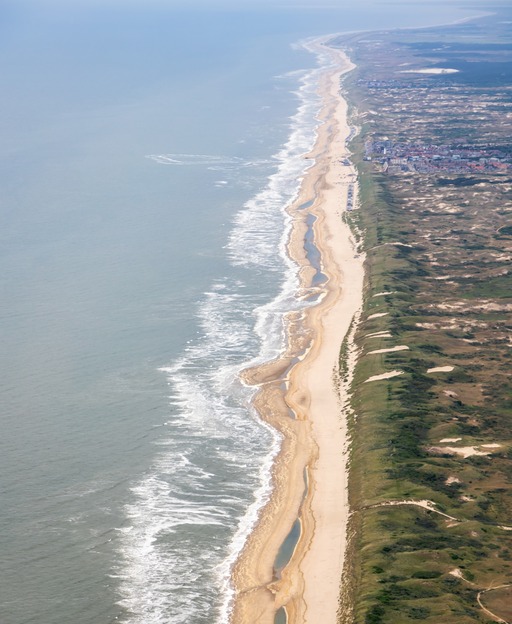
Every August, the Dutch make a quiet pilgrimage south. They load up the car, drive past Rotterdam, and keep going until the land starts to dissolve into water. They are heading to Zeeland. Some go for the beaches. Some go for the silence. But the ones who really know go for the mussels.
What Makes Zeeland Mussels Different
The answer is the Oosterschelde — a wide tidal estuary that opens directly into the North Sea. Every tide pushes in cold, clean, mineral-rich water. Mussels filter enormous volumes of this water. They feed on the phytoplankton and algae that the tides carry in.
They grow slowly. That slow growth is exactly the point. A Zeeland mussel develops a firm, dense texture and a deep briny flavour that mussels raised in calmer, warmer water simply cannot match. No shortcuts. No heating tanks. Just the Oosterschelde doing what it has done for centuries.
The mussels hang on ropes or rest on the sandy seabed. They stay there for two to three years. Then the boats come in.
The Town Nobody Visits — That the World Buys From
Few tourists stop at Yerseke. It is a small working town on the Eastern Scheldt, an hour from Antwerp. But arrive on a weekday morning and you will understand why it matters. Mussel boats line the quayside. Refrigerated trucks idle. Buyers from Belgium, France, and Spain negotiate at the water’s edge.
Yerseke ships roughly 85 per cent of all Dutch mussels — and most of those leave the country immediately. The Dutch grow them. Europe eats them.
The town also sells directly to anyone who shows up with a bag. A kilo of live mussels bought straight from the source costs almost nothing. Locals have known this for generations. Most visitors never find it. If you want to go deeper into what makes Zeeland worth the journey, our guide to why Dutch families return to Zeeland every summer covers everything you need to know.
When the Season Opens
The Dutch mussel season opens in late July or early August. The exact date depends on a quality inspection carried out by the Dutch Mussel Bureau. When the harvest passes, it passes — and the whole province knows.
From that point until April the following year, mussels appear everywhere in Zeeland. Fish stalls in Goes and Middelburg stock them throughout the week. Harbour restaurants cook them to order. The first week of the season has a quiet, celebratory feeling — not fireworks, but a collective return to the kitchen.
Peak quality runs from August through November. The mussels are at their heaviest and most flavourful during these months.
Enjoying this? Get stories like this every week from Love Netherlands — Subscribe free →
How the Dutch Eat Them
Open a pot of Zeeland mussels and the smell reaches you first — sea, steam, and something faintly mineral. Dutch families cook them simply. A handful of vegetables in the bottom of the pot: celery, onion, a bay leaf. White wine or beer. Then the mussels go in on top. The lid goes on. Twelve minutes.
They arrive at the table in the pot itself. Everyone reaches in and picks directly from the shell, using an empty shell as a scoop. Frites come alongside — not in a bowl but in a paper cone, with mayonnaise. This combination has not changed in a hundred years. It is a Dutch coastal ritual and it works.
You can eat standing at a harbour stall on a cold afternoon, or sit down at a long wooden table with a carafe of local wine. Both are correct. Both are very Zeeland.
The Bigger Picture Behind Every Pot
Zeeland is the flattest, most water-surrounded corner of the Netherlands. The province is a collection of islands and peninsulas — the name itself means “sea land”. The Oosterschelde, which feeds the mussels, is also a protected national park. Seals rest on the sandbanks. Osprey hunt over the channels in autumn.
The Delta Works — the vast system of dams and barriers built after the catastrophic 1953 flood — ring this mussel-farming world. But the Oosterschelde barrier is different from the others. Engineers kept it open. They designed it to close only during storms. The reason was partly ecological, but partly economic: the tidal flow is what makes the mussels taste the way they do. The farmers argued their case in front of parliament. They won.
To understand how deeply water shapes this province, read our piece on the Dutch province built on land the sea never wanted to give up. It puts the mussels, the barriers, and the whole of Zeeland into context. Or start your wider Netherlands journey at our Start Here guide.
Frequently Asked Questions
When does the Zeeland mussel season start each year?
The season opens in late July or early August, once the annual quality inspection passes. It runs through to April the following year, with the best mussels available between August and November.
Where can I buy Zeeland mussels directly from the source?
Yerseke is the mussel capital of the Netherlands. Boats sell directly from the quayside on weekday mornings. Fish stalls throughout Zeeland also stock fresh mussels during the season, particularly in Goes and Middelburg.
What is the traditional Dutch way to cook Zeeland mussels?
Steam them in a large pot with white wine or beer, celery, onion, and a bay leaf. Cook for twelve minutes with the lid on. Serve in the pot at the table, with frites and mayonnaise alongside. This is how Dutch families have eaten them for generations.
Are Zeeland mussels the same as Belgian moules de Zélande?
Yes — they are the same mussel. Belgium imports the majority of its mussels from Zeeland, particularly from Yerseke. “Moules de Zélande” on a Belgian menu means Dutch-grown, harvested from the Oosterschelde estuary.
Love Netherlands — Free Every Week
Canal towns, hidden villages, Dutch stories. A free letter about the Netherlands — written slowly, delivered weekly.
Love more? Join 64,000 Ireland lovers → · Join 43,000 Scotland lovers → · Join 30,000 Italy lovers →
Free forever · One email per week · Unsubscribe anytime
Zeeland is easy to miss. No famous museum. No Instagram landmark. Just flat land, wide water, and a cold sea wind. But somewhere in a town most visitors have never heard of, on a quayside nobody photographs, some of the finest shellfish in Europe change hands every morning. That is very Dutch — and very worth the detour.
Tours & experiences you might love


Powered by Viator. Some links are affiliate links — we may earn a small commission at no extra cost to you.