
A proper Dutch breakfast table almost always holds a jar of tiny chocolate sprinkles meant to be shaken over buttered bread — and this is not a children’s treat that adults outgrow, but something civil servants, grandparents and office workers eat without a second thought. The sprinkles are called hagelslag, a word that literally means a pelting of hail, and the Dutch take the chocolate ones seriously enough that the law sets a minimum cocoa content. This is Guide № 012 in The Love Netherlands Guide series.
Get the Full Collectible Guide (Free PDF)
The Dutch Breakfast (Hagelslag) — in a beautifully designed, printable booklet. The Love Netherlands Guide № 012.
What Hagelslag Actually Is
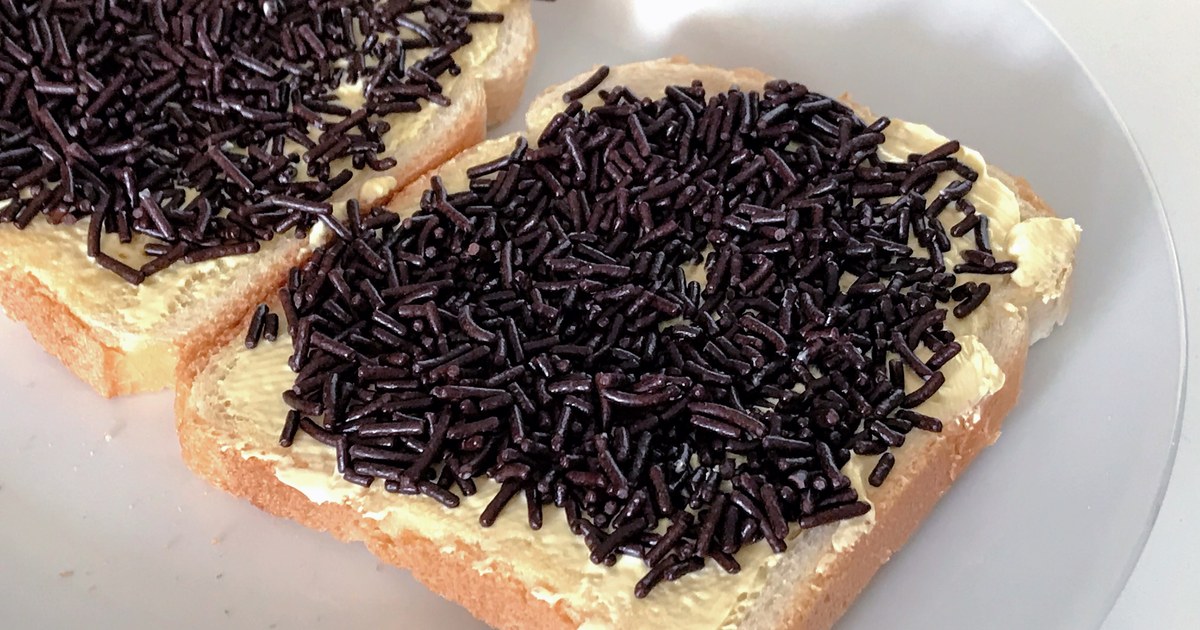
Hagelslag is the Dutch term for sprinkles eaten as a bread topping. The classic version is small rods of chocolate, but the family extends to fruit-flavoured sprinkles (vruchtenhagel) and larger chocolate flakes (vlokken). The standard way to eat it is simple: a slice of plain bread spread with butter, then a generous scattering of sprinkles, with the butter doing the quiet work of stopping them rolling onto the floor.
It is treated as an ordinary everyday food rather than a dessert. You will find it at breakfast and at the Dutch lunch, which is itself usually a cold spread of bread with sweet and savoury toppings. Children are often given a boterham met hagelslag (a slice with sprinkles) in their lunchbox, and most households keep several jars of different kinds in the cupboard at once.
The Name That Came From the Weather
The word hagelslag is the everyday Dutch word for a hailstorm, and the sprinkles borrow it because a shower of them over a slice of bread looks like hail landing. The widely repeated company story credits B. E. Dieperink, a director of the firm that became Venco, with giving the product its name in 1919, supposedly after watching a genuine hailstorm from his window while trying to think of what to call the new sweet; chocolate maker Venz went on to launch the first chocolate hagelslag in 1936. Whether every detail of that tale is accurate, the name stuck and became the generic term.
The Brands and the 32 Per Cent Rule
Two names dominate the shelves. De Ruijter, founded in Baarn in 1860, is the market leader and the brand most Dutch people picture first, while Venz is the other long-established household name. Both sit alongside supermarket own-brands in every store, from Albert Heijn to Jumbo.
There is a genuine rule behind the label. Under Dutch commodities law — the kind of food-labelling standard overseen by the Nederlandse Voedsel- en Warenautoriteit (the Netherlands Food and Consumer Product Safety Authority) — a product sold as chocoladehagelslag must contain a minimum share of cocoa, commonly cited as at least 32 per cent. Sprinkles that fall below that threshold have to be labelled differently, as a cocoa-flavoured version rather than true chocolate hagelslag. It is one of the few breakfast toppings anywhere with a legal definition.
Vlokken, Vruchtenhagel and the Famous Muisjes
Chocolate sprinkles are only the start. Vlokken are shaved chocolate flakes, larger and more delicate than hagelslag, that melt faster against warm bread. Vruchtenhagel are brightly coloured fruit sprinkles, sweeter and fruitier, and a common favourite with younger children. Chocolate hagelslag itself is sold in pure, milk and mixed varieties.
The most culturally loaded cousin is muisjes — “little mice” — aniseed seeds coated in a hard sugar shell. Traditionally pink-and-white muisjes are served when a baby girl is born and blue-and-white for a boy, scattered over buttered rusk as beschuit met muisjes and handed to everyone who visits the new parents. The rusk itself typically comes from a maker such as Bolletje. Orange muisjes have been produced to mark royal births, tying the custom to the House of Orange.
How to Eat It Like a Local
The method matters more than it looks. Spread the bread with real butter first — not only for taste but because the butter is the glue, and margarine or a dry slice leaves you chasing loose sprinkles. Hold the slice flat, shake the jar over it, and resist overfilling, since a thick drift simply slides off at the first bite.
Hagelslag is eaten open-faced on a single slice, not folded into a sandwich, and almost always on plain white or wholemeal bread rather than anything sweet or enriched. It belongs at breakfast and lunch; serving it after dinner as a pudding is the sort of thing that marks you out as a visitor rather than a resident.
Myths Worth Retiring
Myth: Hagelslag is just a snack for small children. In reality, adults eat it routinely across every age group, and it is a standard fixture on breakfast and lunch tables in homes and canteens alike.
Myth: Any chocolate sprinkle counts as hagelslag. Dutch labelling rules distinguish true chocoladehagelslag, with its minimum cocoa content, from cheaper cocoa-flavoured sprinkles that cannot legally use the same description.
Myth: Muisjes and hagelslag are the same thing. Muisjes are sugar-coated aniseed seeds tied to celebrating a newborn, while hagelslag is an everyday chocolate or fruit sprinkle — related toppings with very different roles.
Frequently Asked Questions
Is hagelslag only eaten at breakfast?
No. It is just as common at the traditional Dutch lunch, which is usually a cold spread of bread with various toppings. It is not typically served as an after-dinner dessert.
What is the difference between hagelslag and vlokken?
Hagelslag is made of small solid rods or grains, while vlokken are thin shaved flakes of chocolate. Vlokken tend to melt more quickly against warm bread and have a softer texture.
Why are muisjes sometimes pink or blue?
The colours mark a birth: pink-and-white muisjes are traditionally served for a baby girl and blue-and-white for a boy, eaten on buttered rusk and offered to visitors. Orange versions have appeared to celebrate royal births.
More The Love Netherlands Guides
The Love Netherlands Guide is a numbered series — one tightly focused subject at a time, each with its own downloadable collectible edition. Guide № 001 is Stroopwafel, Guide № 002 is King’s Day (Koningsdag), Guide № 003 is Delft Blue Pottery, Guide № 004 is Dutch Jenever, Guide № 005 is Dutch Cycling Culture, Guide № 006 is Gezelligheid, Guide № 007 is Dutch Beer & Brewing, Guide № 008 is Dutch Brass Bands, Guide № 009 is Wooden Clogs (Klompen), Guide № 010 is Dutch Windmill Folklore, Guide № 011 is Dutch Sayings & Proverbs, This is Guide № 012. More editions are on the way.
🇳🇱 Join Love Netherlands
Free stories and local tips from Netherlands, from people who live and love it.
Tours & experiences you might love


Powered by Viator. Some links are affiliate links — we may earn a small commission at no extra cost to you.