
On one day each April, the entire country turns orange and the normal rules of commerce briefly dissolve: anyone can lay a blanket on the pavement and sell their old records, bicycle parts, and children’s toys without a permit or tax. This is the vrijmarkt, the free market that anchors the Netherlands’ biggest national party — a celebration of the reigning monarch’s birthday. Welcome to Guide № 002 in The Love Netherlands Guide series.
Get the Full Collectible Guide (Free PDF)
King’s Day (Koningsdag) — in a beautifully designed, printable booklet. The Love Netherlands Guide № 002.
What King’s Day Actually Celebrates
Koningsdag marks the birthday of King Willem-Alexander, who was born on 27 April 1967 and became the first Dutch king in over a century when his mother, Queen Beatrix, abdicated on 30 April 2013. The holiday is fixed to his birth date, so it lands on 27 April most years. There is one built-in exception: when the 27th falls on a Sunday, the celebration moves to Saturday the 26th instead — which is exactly what happened in 2025.
For most of the 20th century the country celebrated Koninginnedag (Queen’s Day) instead, held on 30 April. That date was the birthday of Queen Juliana, and her daughter Beatrix chose to keep it out of respect for her mother even though her own birthday was in January. When Willem-Alexander took the throne, the holiday shifted to his actual birthday and was renamed, with the first Koningsdag celebrated on 26 April 2014.
Why Everyone Wears Orange
The sea of orange has nothing to do with the Dutch flag, which is red, white, and blue. It comes from the royal family’s name: the House of Orange-Nassau, tracing back to William of Orange, the 16th-century leader of the Dutch revolt against Spanish rule. On Koningsdag the affection for the monarchy shows up as oranjegekte — “orange madness” — in the form of clothing, wigs, face paint, bunting, and even orange-tinted pastries.
The Vrijmarkt: A Nation of Sellers
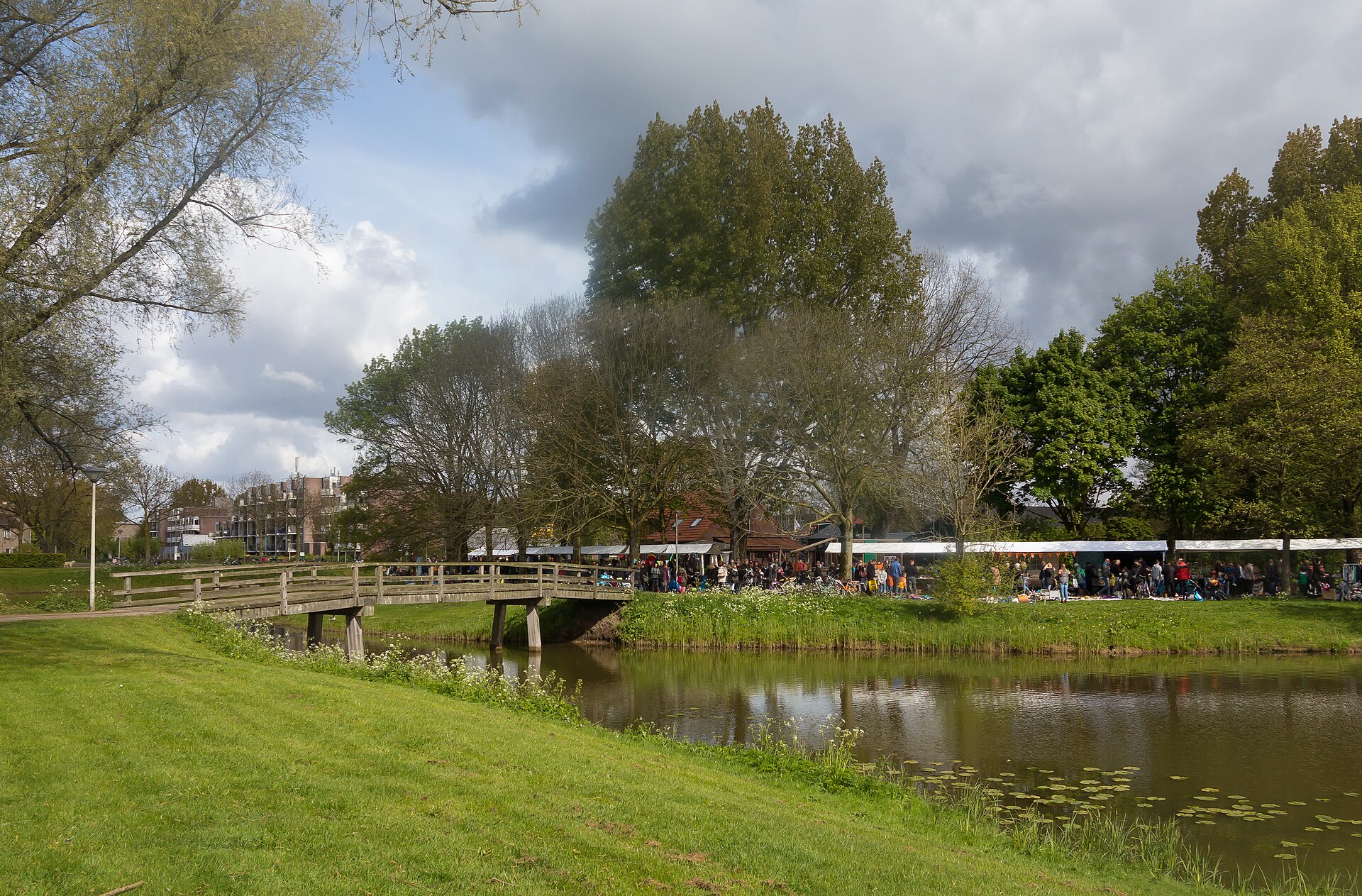
The vrijmarkt, or “free market,” is the heart of the day. For this one occasion, ordinary people are allowed to sell secondhand goods on the street without a market permit or paying tax on the sales. Families stake out spots on sidewalks and in parks the night before, children sell toys and lemonade, and buskers perform for coins. In Amsterdam, popular hunting grounds include the Jordaan and the Vondelpark, the latter traditionally set aside as a children’s market.
Boats, Canals, and King’s Night
In Amsterdam the party spills onto the water, with the canals packed so densely with decorated boats that vessels can barely move. The celebrations often begin the evening before with Koningsnacht (“King’s Night”), a night of concerts and street parties that is especially large in The Hague. Meanwhile the King, Queen Máxima, and their daughters typically spend the day visiting one or two selected towns, walking through crowds and taking part in local games — a tour that rotates to a different part of the country each year.
Practical Notes for Visitors
Expect crowds on a scale few other days in the Netherlands produce. Public transport in city centres is heavily reduced or rerouted, many roads close, and trams often stop running through the busiest districts, so plan to walk. Bring cash and small change, since much of the vrijmarkt runs person-to-person, and wear at least something orange if you want to blend in. If large crowds are not for you, smaller towns and villages hold gentler versions of the same festivities.
Myths Worth Retiring
Myth: King’s Day celebrates the king’s coronation. It celebrates his birthday. The Netherlands does not crown its monarchs at all — Willem-Alexander was inaugurated in a ceremony in Amsterdam in 2013, not crowned, and the holiday is tied to 27 April, the day he was born.
Myth: It has always been called King’s Day. For decades it was Queen’s Day, celebrated on 30 April under three successive queens. The name and date changed only in 2014, after Willem-Alexander became the first Dutch king since Willem III died in 1890.
Myth: The orange comes from the Dutch flag. The flag is red, white, and blue. The orange is a nod to the House of Orange-Nassau and the legacy of William of Orange.
Frequently Asked Questions
When is King’s Day held?
It is held on 27 April, the King’s birthday, unless that date falls on a Sunday — in which case it is moved forward to Saturday 26 April.
Can tourists join the vrijmarkt and sell things?
Yes. The whole point of the free market is that anyone can sell secondhand goods on the street without a permit for the day. Claim a spot early, as locals often reserve their patch the evening before.
Where is the best place to experience it?
Amsterdam is the largest and most famous celebration, with its canal boat parties and city-wide markets. For a calmer day, The Hague is known for its King’s Night, and smaller towns across the country hold their own family-friendly festivities.
More The Love Netherlands Guides
The Love Netherlands Guide is a numbered series — one tightly focused subject at a time, each with its own downloadable collectible edition. Guide № 001 is Stroopwafel, This is Guide № 002. More editions are on the way.
🇳🇱 Join Love Netherlands
Every week, get hidden stories, local secrets, and travel inspiration from people who live and love it.


