

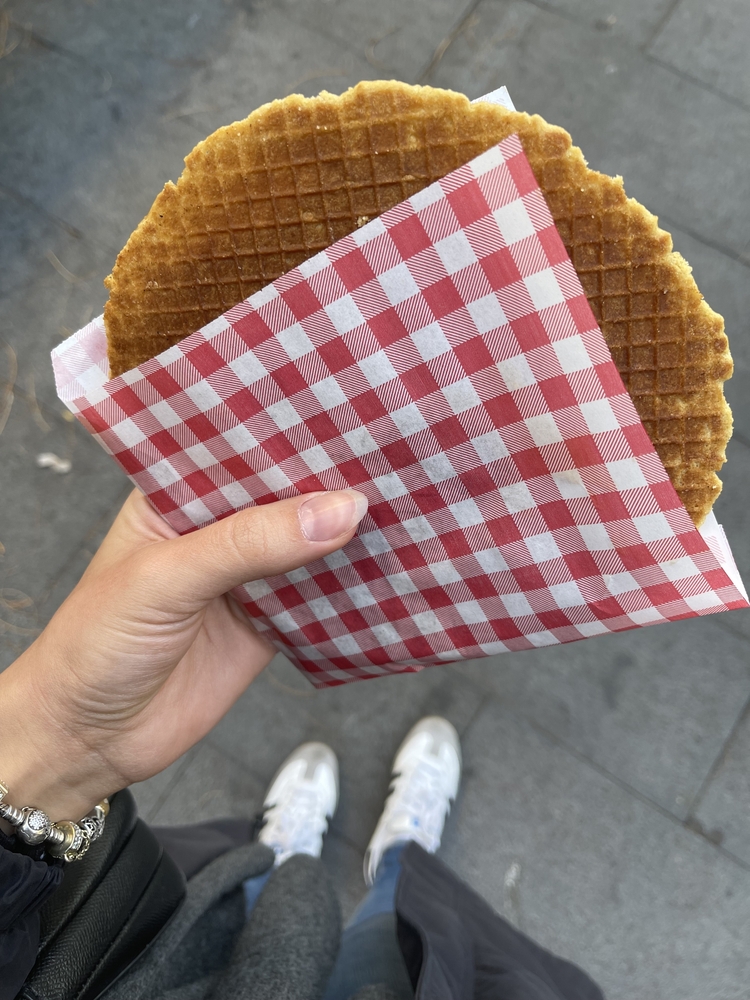
A proper stroopwafel is built to sit on top of your hot drink for a minute or two — the rising steam softens the caramel syrup pressed between its two thin waffle layers until it turns gooey again. The cookie was born in Gouda in the late 18th or early 19th century, and one story credits a baker named Gerard Kamphuisen with selling the first ones using leftover crumbs and syrup. This is Guide № 001 in The Love Netherlands Guide series.
Get the Full Collectible Guide (Free PDF)
Stroopwafel — in a beautifully designed, printable booklet. The Love Netherlands Guide № 001.
What a Stroopwafel Actually Is
A stroopwafel is two wafer-thin rounds of baked dough sandwiched together with a layer of thick caramel syrup — stroop is the Dutch word for syrup, and wafel means waffle. The dough is made from flour, butter, brown sugar, yeast, milk and eggs, and the syrup filling is traditionally cooked from a mix that includes brown sugar, butter and cinnamon. What sets it apart from a soft Belgian-style waffle is the texture: the waffle plates are pressed thin and crisp, then the disc is sliced through the middle while still warm so the syrup can be spread inside.
How They Are Made
The baker presses a ball of dough between two hot iron plates patterned with the familiar grid, which cooks it into a thin, firm waffle in well under a minute. While it is still warm and pliable, the waffle is cut horizontally into two discs, the caramel syrup is spread across one half, and the two halves are pressed back together so the filling bonds them. Timing matters: if the waffle cools before it is split, it becomes too brittle to slice cleanly. At markets you will often see this done to order, which is why a fresh stroopwafel is warm, slightly bendy and far softer than the sealed packaged version.
Gouda and the Market Tradition
Gouda is widely regarded as the home of the stroopwafel, and the city still leans into that heritage at its market stalls and bakeries. Buying one hot off the iron at a market — in Gouda, Amsterdam’s Albert Cuypmarkt, or countless smaller town squares — remains the way locals and visitors alike tend to eat them. Beyond the market, they are sold in every Dutch supermarket in stacked round tins and packets, and larger “giant” versions have become a popular street-food format sold folded over or loaded with toppings.
The Coffee-Cup Ritual
The best-known way to enjoy a packaged stroopwafel is to rest it on top of a mug of hot coffee or tea. The steam and warmth gently melt the caramel inside, softening the whole cookie and loosening the syrup so it becomes sticky and warm again. A minute or so is usually enough. It is a small, genuinely Dutch habit, and many cafés and offices in the Netherlands keep a supply of stroopwafels precisely because they pair so naturally with a coffee break.
Buying and Keeping Them
Packaged stroopwafels keep well for weeks thanks to the sugar and low moisture, which makes them a practical souvenir or gift to carry home. Fresh market ones are a different product: best eaten the same day, since they lose their soft, warm quality as they cool and firm up. If you want to revive a slightly stale one, the coffee-cup trick works, or a few seconds near gentle heat will soften the syrup again. Look for the word roomboter (butter) on the packet if you want the richer, all-butter style rather than a cheaper vegetable-fat version.
Myths Worth Retiring
Myth: A stroopwafel is basically a soft waffle folded over. In reality it is two crisp, thin baked waffles glued together with caramel syrup — the crunch-then-chew contrast is the whole point, and there is no fold involved in the classic form.
Myth: The filling is honey or chocolate. The traditional filling is a caramel syrup cooked largely from brown sugar and butter, usually with cinnamon — not honey, and not chocolate, though chocolate-dipped novelty versions do exist.
Myth: They are a modern tourist snack. The stroopwafel dates back to Gouda around the late 18th to early 19th century and has been an everyday Dutch treat for generations, long before it became a popular souvenir.
Frequently Asked Questions
How do you eat a stroopwafel properly?
Rest it on top of a mug of hot coffee or tea for a minute or two. The steam softens the caramel inside so the cookie turns warm and gooey. Fresh ones straight from a market iron can simply be eaten as they are, while still warm.
Where did stroopwafels come from?
They are traditionally traced to the city of Gouda in the Netherlands, around the late 18th or early 19th century. One popular account credits a Gouda baker with making the first ones from leftover baking scraps and syrup, though the exact origins are debated.
Are stroopwafels vegetarian?
The classic recipe uses flour, butter, sugar, eggs and milk with a caramel syrup, so it is generally suitable for vegetarians but not vegans. Ingredients vary by brand, so it is always worth checking the packet — some use vegetable fat instead of butter, and some newer versions are made to be vegan.
More The Love Netherlands Guides
The Love Netherlands Guide is a numbered series — one tightly focused subject at a time, each with its own downloadable collectible edition. This is Guide № 001. More editions are on the way.
🇳🇱 Join Love Netherlands
Every week, get hidden stories, local secrets, and travel inspiration from people who live and love it.


