
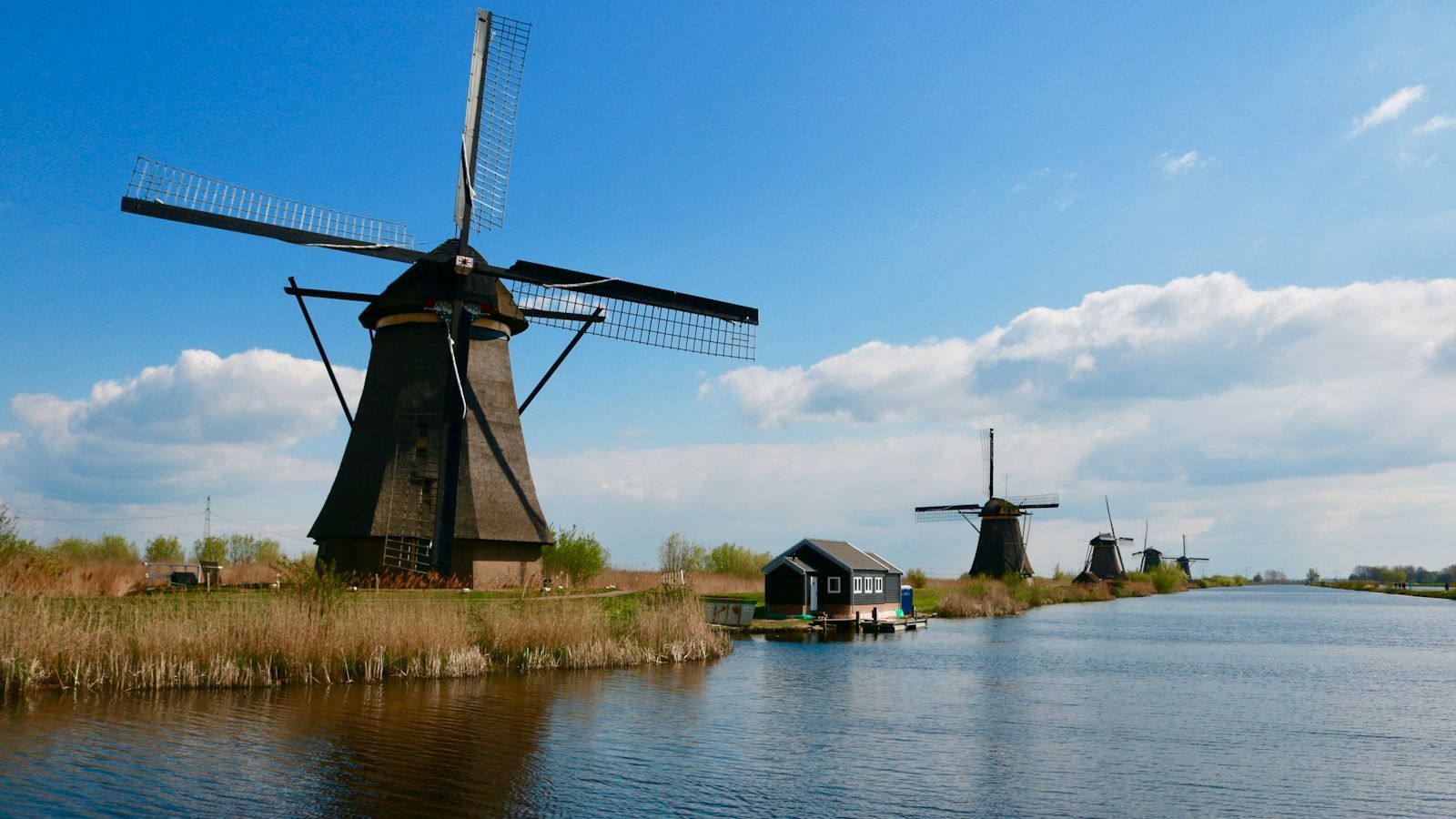
Most visitors to the Netherlands see the same places. Amsterdam’s canals. The Keukenhof tulip fields. Kinderdijk’s windmills. But two hours from Amsterdam, a different Netherlands waits — one that almost no one talks about.
De Hoge Veluwe National Park covers 5,500 hectares of heathland, forest, sand dunes and wetland. Red deer walk through the purple heather. Wild boar root around in the pine forests. And at every entrance gate, a pile of white bicycles stands ready — free to borrow, no deposit, no booking needed.
What Is De Hoge Veluwe?
The Netherlands doesn’t feel like a country with wild places. It’s flat, planned, orderly. Every field has a purpose, every waterway a name.
De Hoge Veluwe breaks all of that.
The park sits in Gelderland province, close to the city of Arnhem. It opened to the public in the 1930s after the Kröller family — one of the Netherlands’ most powerful business dynasties — gifted their vast private estate to the nation.
Inside, the landscape shifts constantly. One moment you’re cycling through dark pine woods. The next, you emerge onto open heathland that turns violet-purple in late summer when the heather blooms. Sandy dunes rise unexpectedly from the flat ground, shaped by centuries of wind.
This is not the Netherlands most tourists picture. That’s exactly the point.
The Free White Bikes
The white bicycle programme at De Hoge Veluwe is one of the Netherlands’ quiet legends.
You arrive at any of the park’s three entrance gates. You take a white bicycle from the rack. You cycle wherever you like through 40 kilometres of dedicated paths. When you finish, you leave the bike at any rack you find.
No deposit. No booking. No extra cost beyond the park entry fee.
The park introduced the scheme in the 1970s to help visitors explore the full landscape rather than drive through it. Today, thousands of white bikes circulate freely each day. They’ve become a symbol of the park — and of something broader about how the Dutch think about transport.
If you’re curious why cycling runs so deep in Dutch culture, the story behind the Netherlands’ cycling obsession is worth reading before your visit.
Enjoying this? Get stories like this every week from Love Netherlands — Subscribe free →
The Museum Nobody Expects
De Hoge Veluwe holds one of the Netherlands’ greatest surprises: the Kröller-Müller Museum, sitting in the middle of the forest.
You reach it by bicycle or on foot. The building is a quiet masterpiece of modernist architecture. The collection inside is extraordinary.
The museum holds 91 paintings and 180 drawings by Vincent van Gogh — the second-largest Van Gogh collection on earth. They hang in calm, uncrowded galleries. No queues form outside. No one is jostling for space in front of The Sower or Café Terrace at Night.
The sculpture garden extends beyond the museum walls and covers 25 acres of open parkland. Works by Rodin, Picasso, and Barbara Hepworth sit among trees and grass. Children run past bronze figures. It feels like nowhere else in the Netherlands.
New to the Netherlands and not sure where to begin? Our Start Here guide covers the best of what this country has to offer.
The Wildlife You Don’t Expect
Most visitors don’t expect to see wild animals in the Netherlands. De Hoge Veluwe changes that completely.
The park manages a free-roaming population of red deer, roe deer, wild boar and mouflons — a wild sheep originally from the Mediterranean islands. They move freely across the heathland and forest. Red deer appear most often at dawn, grazing on the moorland edges. Wild boar come out at dusk, moving in family groups through the undergrowth.
The birdlife is equally striking. Kingfishers flash along the streams. Buzzards circle above the pine canopy. After dark in summer, nightjars call from the open heath — one of the most atmospheric sounds in Dutch nature.
The wildlife rewards patience. Cycle slowly, stay quiet, and keep your eyes on the treeline. The park gives back more when you rush less. If wildlife-rich Dutch landscapes appeal to you, Texel island is another side of the Netherlands that surprises first-time visitors.
Frequently Asked Questions
When is the best time to visit De Hoge Veluwe National Park?
Late August and September are the finest months. The heather blooms purple across the open moorland, and red deer are active during the autumn rut. Spring brings wildflowers and active birdlife. Summer is busiest but still calm compared to most Dutch tourist sites.
How far is De Hoge Veluwe from Amsterdam?
About 90 minutes by train to Arnhem, then a short bus or taxi ride to the park entrance. Summer coach tours also run from Amsterdam. Many visitors combine the park with a night in Arnhem or the nearby town of Apeldoorn.
Are the white bikes really free at De Hoge Veluwe?
Yes — the white bicycles are free to borrow once you’ve paid the park entrance fee. No deposit or booking is required. Pick one up at any entrance gate and return it to any bike rack when you’re done.
What should I wear for a visit to De Hoge Veluwe?
Bring comfortable walking or cycling shoes — heathland paths can be sandy and uneven. In summer, carry sun protection as the open moorland offers little shade. In autumn and winter, bring warm layers; the park is exposed and the wind comes in hard from the east.
Some places need to be found slowly. De Hoge Veluwe is one of them — a Netherlands that exists between the tourist trails, where wild boar still push through the heather at dusk and a stag stands completely still in the violet distance.
Love Netherlands — Free Every Week
Canal towns, hidden villages, Dutch stories. A free letter about the Netherlands — written slowly, delivered weekly.
Love more? Join 64,000 Ireland lovers → · Join 43,000 Scotland lovers → · Join 30,000 Italy lovers →
Free forever · One email per week · Unsubscribe anytime
Tours & experiences you might love


Powered by Viator. Some links are affiliate links — we may earn a small commission at no extra cost to you.