
During carnival in Limburg, you may hear a band that sounds like it has had one too many: wandering tempo, bent notes, a tuba lagging half a beat behind. This is not a mistake. It is the zaate hermeniek, the “tipsy band,” a deliberate send-up of the serious wind orchestras that fill the rest of the Dutch calendar — and it is only one corner of a brass tradition that runs deeper here than almost anywhere else in Europe. This is Guide № 008 in The Love Netherlands Guide series.
Get the Full Collectible Guide (Free PDF)
Dutch Brass Bands — in a beautifully designed, printable booklet. The Love Netherlands Guide № 008.
Harmonie, Fanfare, Brass Band: Three Words, Three Ensembles
In the Netherlands the catch-all word “brass band” hides three distinct ensemble types, abbreviated together as HaFaBra. A harmonie is a full concert wind band with flutes, clarinets, saxophones and a complete brass section. A fanfare is built around the saxhorn family plus saxophones and flugelhorns, with no flutes or clarinets — a format that thrives mainly in the Low Countries and parts of France and is rare in the English-speaking world. A brassband, by contrast, follows the British model exactly.
That British-style brass band is a precise thing: a standard group of around 28 players using only brass and percussion, with no woodwind at all. It runs from soprano and B-flat cornets through flugelhorn, tenor horns, baritones, euphoniums and trombones down to E-flat and B-flat basses. The umbrella body that organises this amateur movement nationally is the Koninklijke Nederlandse Muziek Organisatie, which represents hundreds of local societies.
Kerkrade and the World Music Contest
Every four years the mining town of Kerkrade, in the far south-east of Limburg, hosts the World Music Contest, one of the largest wind-music competitions on the planet. First held in 1951, it draws thousands of musicians from harmonies, fanfares, brass bands, marching formations and show bands across several weeks each summer. For many Dutch players a WMC year is the fixed point their whole season is built around.
The choice of Kerkrade is no accident. The brass tradition in the southern provinces grew up alongside coal mining and the Catholic parish life that organised village bands, so Limburg became the heartland of the movement. Visitors planning a trip around the contest can check the regional tourism board, Visit Zuid-Limburg, for timing and the wider programme of concerts that spill out across the town.
The Dweilorkest: Music on the Move
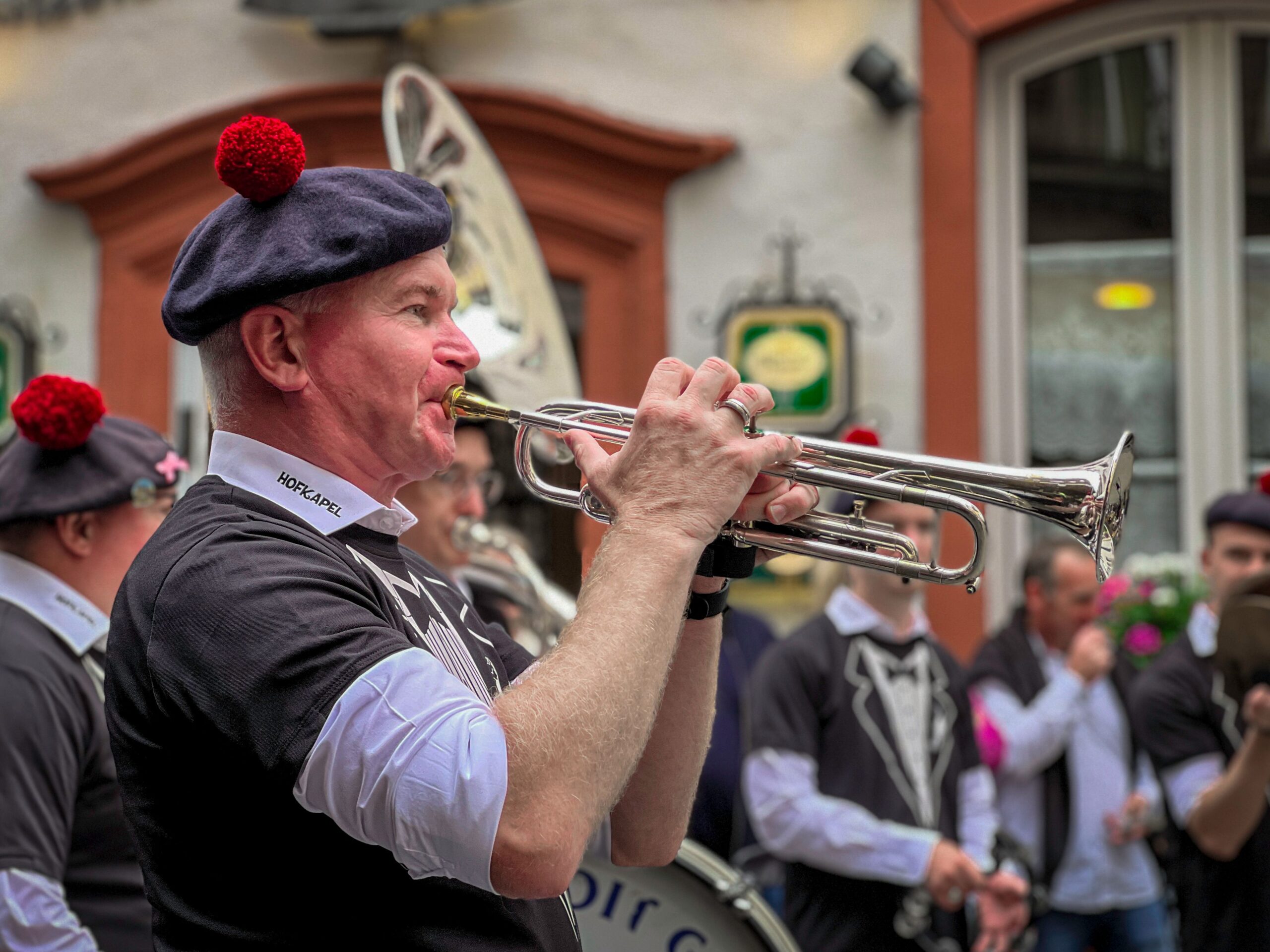
If the WMC is the formal end of the spectrum, the dweilorkest is the opposite. The name translates roughly as “mopping orchestra,” and these are loose, mobile wind bands that play while walking — at carnival, football matches, town festivals and markets. There is no conductor’s podium and no concert hall; the band simply moves through the crowd, often in costume, trading a fixed repertoire of pop tunes, oompah numbers and football chants.
Dweilorkesten have their own competitions and festivals, where bands are judged as much on showmanship and crowd interaction as on precision. It is a genuinely social form of music-making, and for many Dutch towns the local dweilorkest is as much a fixture of public life as the formal harmonie that rehearses in the same village hall.
Carnival’s Zaate Hermeniekes
During Vastelaovend, the carnival celebrated in Limburg and North Brabant, the zaate hermeniek takes centre stage. These small bands parody the disciplined wind orchestra, playing deliberately loose and slightly off-kilter, as if the whole group had spent the morning in the café. In Maastricht especially, the zaate hermeniek is a protected part of the carnival identity, with recognisable uniforms and marching routes through the old town.
The humour is affectionate rather than mocking. The musicians are often skilled players from the region’s serious bands, and the “drunken” style is a craft of its own — it takes control to sound convincingly out of control. Maastricht’s wider cultural scene, from carnival to the brass-heavy concerts of local figure André Rieu and his Johann Strauss Orchestra, keeps the city’s association with live brass very much alive.
How the Bands Stay Alive
The Dutch amateur band movement survives on a dense network of local societies, youth sections and regional contests. Many villages have run a band continuously for well over a century, funded by membership, local councils and the occasional paid appearance. National and regional championships — including brass-band finals staged at major venues such as TivoliVredenburg in Utrecht — give these groups a competitive calendar to aim at, with set test pieces and graded divisions.
Professional brass has its own platforms too: the Royal Concertgebouw in Amsterdam regularly programmes brass ensembles and fanfare repertoire alongside its symphonic seasons. Between the amateur societies, the youth academies and the four-yearly spectacle at Kerkrade, the pipeline that feeds Dutch brass runs from the village hall right up to the concert stage.
Myths Worth Retiring
Myth: “Brass band” and “fanfare” are just two words for the same thing. They are different ensembles. A brass band is all brass and percussion in the British format; a fanfare is built on saxhorns and saxophones and has its own instrumentation. Mixing the terms up is a reliable way to spot an outsider.
Myth: Dutch brass is a fading, old-fashioned hobby. The movement remains one of the broadest amateur music cultures in Europe, with active youth sections and competitions that fill large halls. It has shrunk from its mining-era peak, but it is far from gone.
Myth: The zaate hermeniek plays badly because the musicians can’t play. The loose, “tipsy” style is intentional and difficult to pull off. The performers are usually trained players deliberately parodying the formal band tradition.
Frequently Asked Questions
When and where is the World Music Contest held?
It takes place in Kerkrade, in southern Limburg, once every four years over several weeks in summer. Check the official WMC site for the next edition’s dates and programme before planning a visit.
What is the difference between a harmonie, a fanfare and a brass band?
A harmonie is a full concert wind band including flutes, clarinets and saxophones; a fanfare uses saxhorns and saxophones but no flutes or clarinets; and a brass band, in the British sense, uses only brass instruments plus percussion. All three are common in the Netherlands.
Can visitors hear Dutch brass bands outside of festivals?
Yes. Local societies give regular concerts throughout the year, and venues such as TivoliVredenburg in Utrecht and the Royal Concertgebouw in Amsterdam programme brass performances. Carnival season in Limburg and North Brabant is the easiest time to hear bands playing in the streets.
More The Love Netherlands Guides
The Love Netherlands Guide is a numbered series — one tightly focused subject at a time, each with its own downloadable collectible edition. Guide № 001 is Stroopwafel, Guide № 002 is King’s Day (Koningsdag), Guide № 003 is Delft Blue Pottery, Guide № 004 is Dutch Jenever, Guide № 005 is Dutch Cycling Culture, Guide № 006 is Gezelligheid, Guide № 007 is Dutch Beer & Brewing, This is Guide № 008. More editions are on the way.
🇳🇱 Join Love Netherlands
Every week, get hidden stories, local secrets, and travel inspiration from people who live and love it.
Tours & experiences you might love


Powered by Viator. Some links are affiliate links — we may earn a small commission at no extra cost to you.