
There is a word Dutch people use several times a day. They use it to describe a candle-lit café, a long Sunday dinner with family, a walk home along a lamplight canal. The English language has no equivalent. And once you understand it, the Netherlands makes perfect sense.
The word is gezellig.
What Gezellig Actually Means
Gezellig (pronounced roughly heh-SELL-ikh) does not translate directly into English. The closest you might get is “cosy,” “convivial,” or “snug” — but none of those capture it fully.
Gezellig is an atmosphere and a feeling at once. It describes physical warmth — low lights, candlelight, people close together — but also emotional warmth: connection, ease, belonging.
A place can be gezellig. A moment can be gezellig. Even a person can be gezellig — meaning they make the people around them feel at home. There is no English word that does all three jobs at once.
Where You Feel It Most
The Dutch brown café is gezellig by design. These bruine kroegen — named for their tobacco-stained wooden walls — have served beer since the 17th century. Candles flicker on the bar. Regulars know each other by name. Nobody rushes. Nobody checks their phone.
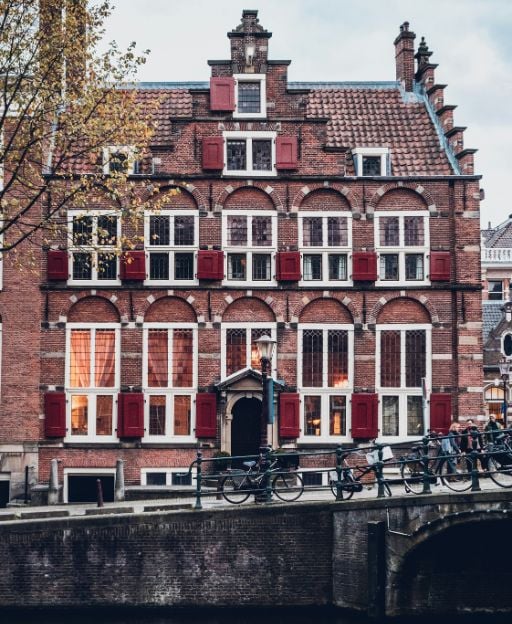
You feel gezellig on Utrecht’s canal wharves, where restaurants are built into the waterside vaults beneath the bridges — a tucked-in, sheltered world below street level. You feel it in Amsterdam’s Jordaan on a winter evening, when the glow of lit windows reflects off the still canal.
You feel it most strongly in small moments: a neighbour who stops to talk, a stroopwafel balanced on a coffee cup, a table that stays full two hours after dinner ends.
Enjoying this? Get stories like this every week from Love Netherlands — Subscribe free →
The Opposite Is Also a Word
Dutch has a counterpart: ongezellig. This is the worst thing you can call a situation — cold, unfriendly, isolating. A room with harsh fluorescent lighting and no conversation is ongezellig. So is a party where no one talks.
This duality tells you something about Dutch culture. Gezelligheid — the noun form — is not a nice extra. It is a social priority. The Dutch design their homes, their cafés, and their working hours around it.
Why the Dutch Leave Work on Time
Here is something visitors often notice: Dutch people leave work when their shift ends. They do not glorify long hours. A job that keeps you from home, from dinner, from friends — that is, by definition, ongezellig.
The concept shapes the entire Dutch attitude to time. Evenings are protected. Weekends are structured around rest and connection. Work exists to fund life, not replace it.
This is not laziness. It is an old cultural argument that gezelligheid is worth protecting — and that the Dutch have simply won it.
How Visitors Can Experience It
You do not need to speak Dutch to feel gezellig. Walk into any bruine kroeg and sit at the bar. Order a beer. Let the conversation find you.
If you are invited to a Dutch home for borrel — the early evening drinks ritual — accept immediately. The snacks (bitterballen, kaas, a plate of nuts) matter less than the gathering itself. You are being offered gezelligheid.
For more on what makes Dutch daily life distinct, start with our guide to the Netherlands — it covers everything from the regions to the rituals. And for a glimpse of how the Dutch built their cities around staying together, read about the canal houses the spice merchants built along Amsterdam’s waterways.
Frequently Asked Questions About Gezellig
What does gezellig mean in English?
Gezellig is a Dutch word with no direct English translation. It describes an atmosphere of cosiness, warmth, and togetherness — somewhere between “snug,” “convivial,” and “at home.” It can describe a place, a moment, or a person who makes others feel welcome.
Where is the best place to experience gezellig in the Netherlands?
Dutch brown cafés (bruine kroegen) are the most reliable starting point. Amsterdam’s Jordaan neighbourhood, Utrecht’s canal-level restaurants, and any small market town on a winter evening all deliver the feeling quickly. The key ingredients are warmth, low light, and unhurried company.
What is the best time of year to experience Dutch gezelligheid?
Autumn and winter are peak gezellig season in the Netherlands. As the days shorten, the Dutch double down — candles, warm lighting, long evenings indoors. That said, a summer terrace in golden afternoon light, with good company and cold beer, is equally gezellig.
Is gezellig just about cafés and pubs?
No. Gezellig describes any warm, connected atmosphere — a family dinner at home, a slow walk along a canal with a friend, a neighbourhood street where people stop and talk. The concept travels far beyond the bar. It is about the quality of the moment, not the location.
Gezellig is not just a word. It is an argument for how life should feel — warm, unhurried, full of people who want to be exactly where they are. When you feel it in the Netherlands for the first time, you will wonder why English let it go without a fight.
Love Netherlands — Free Every Week
Canal towns, hidden villages, Dutch stories. A free letter about the Netherlands — written slowly, delivered weekly.
Love more? Join 64,000 Ireland lovers → · Join 43,000 Scotland lovers → · Join 30,000 Italy lovers →
Free forever · One email per week · Unsubscribe anytime
Tours & experiences you might love


Powered by Viator. Some links are affiliate links — we may earn a small commission at no extra cost to you.