

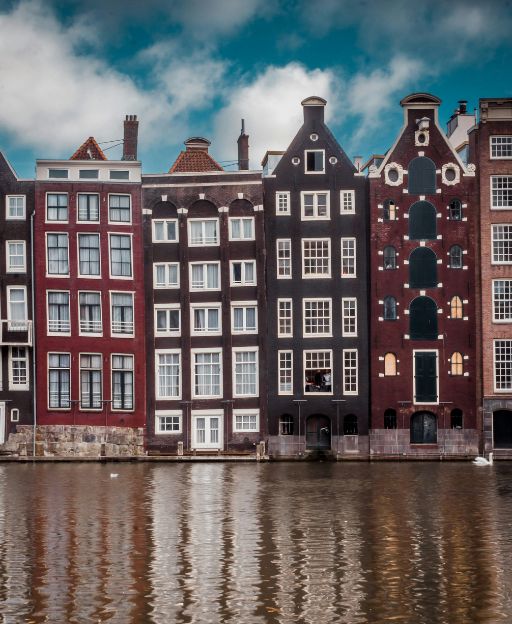
Walk along the Herengracht on a quiet morning and you are walking past private money. Those tall, narrow houses with their decorative gable tops were not designed purely for beauty. Merchants built them — men who owned ships, controlled spice routes, and once held the world’s trade in their hands.
The Company That Rewrote Global Trade
In 1602, a group of Dutch merchants did something no one had done before. They combined six rival trading firms into one: the VOC, or Vereenigde Oost-Indische Compagnie — the Dutch East India Company. It became the world’s first publicly traded corporation.
Within a generation, the VOC controlled around 40 per cent of all global maritime trade. It ran its own army and navy. It minted its own coins. At its peak, the company sent more ships out annually than most European nations managed in a decade.
The profits flowed back to Amsterdam. And Amsterdam’s merchants spent them on houses — very specific, very deliberate houses.
What the Spice Money Built
Between 1610 and 1670, Amsterdam carved three great arcs of canals around its medieval centre. Planners called this the Grachtengordel — the canal girdle. UNESCO added it to the World Heritage List in 2010.
Each canal served a social purpose. The Herengracht (Gentlemen’s Canal) belonged to elite merchant families. The Keizersgracht (Emperor’s Canal) hosted the next tier. The Prinsengracht (Prince’s Canal) housed smaller traders along its edges.
Tax collectors measured every house by its street-facing width. So owners built narrow and deep — often stretching 30 metres back from the waterfront. They added iron hooks above the doors to hoist cargo into upper storage floors. They competed fiercely on gable designs: step gables, neck gables, bell gables. A merchant’s façade was his public reputation.
The VOC Landmarks You Can Still Walk Into
The VOC left physical traces all over Amsterdam — and most visitors walk straight past them.
Start at the Oost-Indisch Huis on Kloveniersburgwal. Builders completed this building in 1606 as the Amsterdam headquarters of the VOC. The University of Amsterdam now occupies it. Walk through the courtyard during opening hours — entry is free.
Head west toward the Jordaan and find the Westindisch Huis. Directors in this building approved Peter Minuit’s 1626 proposal to purchase Manhattan Island from the Lenape people for 60 guilders’ worth of trade goods. The structure still stands.
Then walk the Golden Bend on the Herengracht, between Leidsestraat and Vijzelstraat. The merchants who lived here bought two adjacent building plots and combined them — double-width façades, double the prestige. These are the widest and most ornate canal houses in the city.
Enjoying this? Get stories like this every week from Love Netherlands — Subscribe free →
The Cost No One Carved into the Façades
The VOC’s wealth came at a price. The company enslaved more than 600,000 people across its trading empire — in Indonesia, Sri Lanka, South Africa, and beyond. It dismantled local trade networks wherever it operated.
Amsterdam now confronts this history directly. The Rijksmuseum’s permanent Slavery exhibition, which opened in 2021, documents these stories with care. Walking the canal ring carries more meaning when you hold both sides of the story.
How to Walk the Golden Age in an Hour
You do not need a guided tour. Start at Dam Square, where Amsterdam’s original medieval dam gave the city its name. Walk east to the Oost-Indisch Huis. Then head west along the Keizersgracht toward the Golden Bend. Finish at the Westindisch Huis near the Jordaan.
Stop on every bridge and look down the canal. Each row of gables tells you something about which merchants grew rich, and in which decade. The canal ring rewards slow walkers.
For more on Amsterdam’s Golden Age art, Rembrandt’s Night Watch explains why the city’s most famous painting is also its most misunderstood. New to the Netherlands? Start here for a complete guide to planning your trip.
What is the VOC and why does it matter to Amsterdam’s history?
The VOC (Vereenigde Oost-Indische Compagnie) was the Dutch East India Company, founded in 1602 as the world’s first publicly traded corporation. Its spice trade profits funded Amsterdam’s Golden Age canal ring, built between 1610 and 1670 and now a UNESCO World Heritage Site.
Can you visit the original VOC headquarters in Amsterdam?
Yes. The Oost-Indisch Huis on Kloveniersburgwal has served as the Amsterdam chamber of the VOC since 1606. The University of Amsterdam now occupies the building. The inner courtyard is open during daytime hours and free to enter.
What is the Golden Bend on the Herengracht?
The Golden Bend is a stretch of the Herengracht canal between Leidsestraat and Vijzelstraat in Amsterdam. Wealthy VOC-era merchants built double-width canal houses here, making it the most prestigious address in 17th-century Amsterdam. The houses remain largely intact today.
When is the best time to walk Amsterdam’s canal ring?
Early morning on a weekday gives you the canal ring almost to yourself. Spring (April to May) and early autumn (September to October) offer the best light and temperatures. April is particularly beautiful — the canal-side trees are in full leaf and the summer crowds have not yet arrived.
Love Netherlands — Free Every Week
Canal towns, hidden villages, Dutch stories. A free letter about the Netherlands — written slowly, delivered weekly.
Love more? Join 64,000 Ireland lovers → · Join 43,000 Scotland lovers → · Join 30,000 Italy lovers →
Free forever · One email per week · Unsubscribe anytime
The iron hooks still hang above the canal-house doors. Nobody uses them to hoist cargo any more. But they are still there — small reminders that the people who built this city were merchants first, dreamers second, and city planners somewhere after that.
Tours & experiences you might love


Powered by Viator. Some links are affiliate links — we may earn a small commission at no extra cost to you.