

Breda does not appear on most people’s Netherlands itinerary. That is not because it lacks anything. It is because Amsterdam, Utrecht, and Leiden absorb all the attention. Breda just sits there, 50 minutes south of Amsterdam by train, quietly containing one of the finest medieval city centres in the country.
People who find it tend to come back.
A Castle That Never Became a Museum
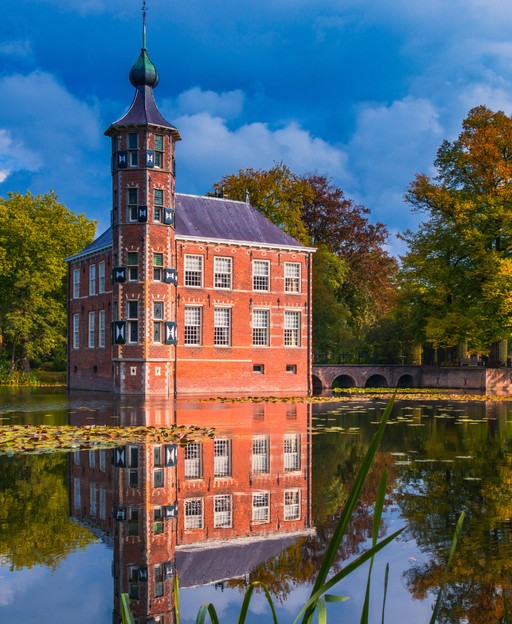
The Kasteel van Breda stands at the heart of the old town. It is a 14th-century castle surrounded by a moat, with stone towers and a gatehouse that has watched five centuries of Dutch history pass beneath it.
Most castles of this age are either ruins or museums. Breda’s castle is neither. Since 1828, it has been home to the Royal Netherlands Military Academy. The Dutch army trains its officers here. The castle is not open to the public, but you can walk the outer grounds and see the towers reflected in the water. Few travel photographs from the Netherlands are as striking.
The castle’s gardens are free to enter. On a sunny afternoon, locals come here to sit on the grass, eat lunch, and ignore the presence of one of the best-preserved medieval fortifications in the country.
Two Hundred Years to Build One Church
The Grote Kerk of Breda — officially the Onze-Lieve-Vrouwekerk — dominates the skyline. Building began in the early 14th century. The tower was not finished until the 1500s. At various points the money ran out and the builders stopped. Then they started again.
The result is an extraordinary interior. The nave is soaring and light-filled. Carved stone capitals line the columns. A wooden rood screen — rare in a Protestant country — survived the Reformation intact. The church holds the mausoleum of the Princes of Orange-Nassau, the ancestors of the Dutch royal family.
William of Orange, who led the Dutch revolt against Spanish rule, spent much of his childhood in Breda. His family owned the castle. The church was their mausoleum. Breda is not just a pretty city on the train line. It is where Dutch royal history is buried.
The Document That Changed Dutch History
In 1566, a group of Dutch and Flemish nobles signed a petition in Breda. It demanded an end to Spanish religious persecution. The petition became known as the Compromise of Breda. They delivered it to the Spanish governor in Brussels. He dismissed them as “beggars” — a word the rebels adopted as a badge of pride.
The Compromise of Breda is the first organised act of Dutch resistance to Spanish rule. It lit a spark. Within months, Dutch churches were being ransacked. Within years, an eighty-year war had begun. The Dutch Republic that emerged from that war gave the world religious tolerance, free trade, and a new model for governance.
Most visitors walk past the plaque marking the spot in Breda’s old town without reading it. You should stop and read it.
Enjoying this? Get stories like this every week from Love Netherlands — Subscribe free →
The Burgundian Soul of the South
Breda sits in Noord-Brabant, the Catholic province that makes up the southern part of the Netherlands. Brabant is different from the Protestant north. The Reformation passed through here too, but the culture kept its older habits: long meals, good beer, Carnaval in February, and a general attitude that a working day should leave room for pleasure.
The Dutch word for this is “Bourgondisch” — Burgundian. It describes how people in Brabant and neighbouring Limburg think about food and drink. Not extravagance — just taking the time to eat well and stay at the table a little longer.
Breda’s city centre reflects this. The Grote Markt fills with terrace cafes on warm evenings. Side streets hold independent restaurants serving old Brabantse recipes — slow-cooked meat, dark bread, and dishes shaped by centuries of trade. The wider Brabant countryside is where Van Gogh painted before he discovered colour — a landscape of dark soil and farmhouses that feels completely different from the tourist Netherlands. To the east, Limburg has its own castle country and a similar Burgundian spirit worth exploring. New to the country? The Start Here guide covers the best ways to discover the Netherlands.
When to Visit Breda
Breda works in all seasons. Spring brings terrace life back to the Grote Markt. Summer fills the castle gardens with locals and the occasional visitor who stumbled off the train. Autumn turns the surrounding forests gold.
February or March is when Breda surprises people most. The city holds its own Carnaval — three days of music, costume, and street life that bear no resemblance to the orderly Netherlands most visitors expect. This is the Catholic south doing what the Catholic south has done for centuries.
The train from Amsterdam Centraal takes 50 minutes. From Rotterdam, 25 minutes. There is no need to book in advance. Breda is the kind of city you arrive in, walk around, eat too much, and realise you have not looked at your phone in three hours.
What is Breda best known for in the Netherlands?
Breda is known for its medieval castle, the Gothic Grote Kerk, and its role in Dutch history as the site of the Compromise of Breda (1566) — the petition that helped spark the Dutch revolt against Spanish rule. The city is also known for its Burgundian food culture and the largest Carnaval in Noord-Brabant.
When is the best time to visit Breda?
Spring and summer (April to August) are ideal for terrace dining and exploring the castle grounds. If you want to see Carnaval — one of the most vibrant in the Netherlands — visit in February or March, when the city transforms into something entirely unexpected.
How do I get to Breda from Amsterdam?
Direct trains from Amsterdam Centraal to Breda run throughout the day, taking around 50 minutes. From Rotterdam, Breda is just 25 minutes by train. The railway station sits a short walk from the old town centre and the Grote Markt.
Is Breda worth visiting as a day trip from Amsterdam?
Yes. The castle grounds, Grote Kerk, Grote Markt, and old town are all within easy walking distance of each other. Most visitors allow four to five hours for the highlights plus lunch. The journey is short enough that you can be back in Amsterdam for dinner.
Breda is not a secret — it is just a city the tourist trail has not caught up with yet. The castle is still there. The church is still standing. The plaque marking the start of Dutch independence is still waiting for someone to stop and read it.
Love Netherlands — Free Every Week
Canal towns, hidden villages, Dutch stories. A free letter about the Netherlands — written slowly, delivered weekly.
Love more? Join 64,000 Ireland lovers → · Join 43,000 Scotland lovers → · Join 30,000 Italy lovers →
Free forever · One email per week · Unsubscribe anytime
Tours & experiences you might love


Powered by Viator. Some links are affiliate links — we may earn a small commission at no extra cost to you.