
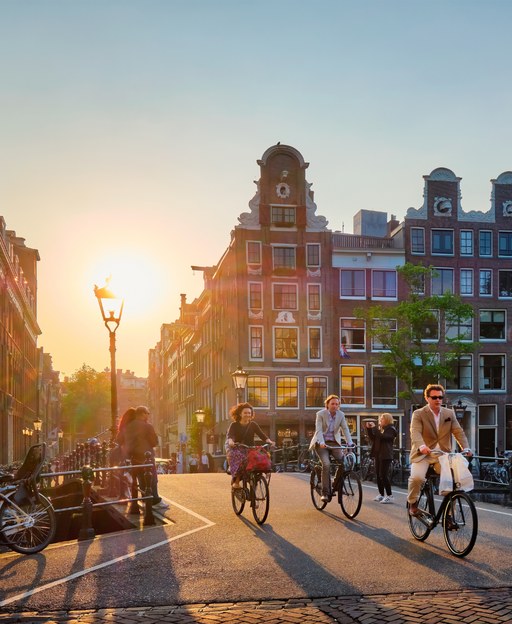
The Dutch invented cycling as a way of life. With more bicycles than people — roughly 23 million bikes for 17 million residents — the Netherlands treats the bicycle not as a leisure item but as a primary mode of transport. When you cycle here, you enter a country that has spent decades engineering its roads, paths, and cities around the rider. For visitors, that means smooth fietspad (cycle paths) stretching across every province, clear signage, and a culture that actively makes space for you on two wheels.
Love the Netherlands? Join our free newsletter for hidden Dutch gems → inlovewithnetherlands.com/subscribe
This guide covers everything a visitor needs to know before setting off: where to hire a bike, the rules of the road (and path), the best cycling routes by region, and how to plan a multi-day cycling trip through the Dutch countryside.
Why Cycling in the Netherlands Is Unlike Anywhere Else
The Netherlands has approximately 35,000 kilometres of dedicated cycling infrastructure — a network that dwarfs those of most other countries combined. Cycle paths run alongside rivers, through tulip fields, past windmill clusters, and directly into city centres. Traffic lights include separate signals for cyclists. Roundabouts give cyclists priority. Lorries and buses yield to bikes at junctions.
This infrastructure did not emerge by accident. Following the oil crisis of 1973, Dutch cities made a deliberate choice to invest in cycling over car dependency. The results are visible everywhere: in Amsterdam, cycling accounts for more than 40% of all journeys within the city. In smaller towns such as Groningen, that figure climbs even higher.
For visitors, the practical consequence is simple: cycling here is safe, comfortable, and often the fastest way to move. You share paths with local commuters, school children, elderly residents on e-bikes, and delivery cyclists. Blending into this flow takes an hour at most.
How to Hire a Bike in the Netherlands
Rental options exist at virtually every scale of the country, from international airports to village train stations.
OV-Fiets (National Scheme at Train Stations)
The most convenient option for visitors already using Dutch public transport is OV-fiets, the national bike hire scheme operated by NS (Dutch Railways). You collect a bike at any staffed train station, ride to your destination, and return it to any other participating station. The fee is around €4 per 24 hours. You need a Dutch OV-chipkaart (public transport card) to access the scheme, which you can register online before arrival. This system suits day trips perfectly — take the train out of Amsterdam, hire a bike at your destination station, and explore.
City Rental Shops
In Amsterdam, MacBike and Star Bikes are among the longest-established rental operators, with depots near Central Station and across the canal ring. Expect to pay €10–€15 per day for a standard three-speed city bike, with deposits typically required. Swapfiets operates a subscription model — useful if you plan to stay for a week or longer, as monthly rates undercut daily rentals considerably.
Outside Amsterdam, most sizeable towns have at least one fietsenverhuur (bike hire) shop, often near the railway station. In cycling-centric destinations such as Zaanse Schans and around Kinderdijk, rental shops open early precisely because cyclists arrive with the first morning trains.
E-Bikes
Electric bikes (e-bikes) have become ubiquitous throughout the Netherlands, and most rental shops now offer them alongside standard cycles. They cost roughly €5–€10 more per day but make longer journeys — particularly those against the coastal wind — far more manageable. If you plan to cover 50 kilometres or more in a day, or if you want to keep up with Dutch locals (who cycle at a brisk 20–25 km/h), an e-bike is worth every euro.
Rules of the Road for Cyclists
Dutch cycling laws are straightforward, but knowing them before you set off prevents embarrassing (and potentially dangerous) mistakes.
- Ride on the dedicated cycle path (fietspad). Where a separate red-surfaced cycle path exists alongside a road, you must use it. Cycling on the road when a path is available is illegal and draws strong disapproval from locals.
- Yield to the right. At unmarked junctions, traffic from the right has priority — this applies to cyclists too. Watch for this rule carefully in residential streets where paths cross.
- Use lights after dark. Front and rear lights are legally required once visibility drops. Police actively enforce this in cities, particularly in autumn and winter.
- Signal with your hand. Indicate your intention to turn by extending your arm. This is standard practice and keeps the flow of cyclists predictable.
- Helmets are not required by law for adult cyclists in the Netherlands, and most Dutch people do not wear them. However, children under sixteen cycling at speed, and e-bike riders on mopeds, must wear helmets. If you prefer to wear one as a visitor, that is entirely your choice — rental shops sometimes offer them for a small fee.
- No cycling while using your phone. Holding a mobile device while cycling carries a fine of €100. Use a handlebar mount or stop to check your map.
The Best Cycling Routes in the Netherlands
The Netherlands uses a numbered node system (knooppunten) to mark its cycle route network. Signposts at junctions display node numbers, and cyclists plan routes simply by writing down a sequence of numbers. Apps such as Komoot and Routeyou integrate this network, making route planning intuitive even for first-time visitors.
Amsterdam and the Randstad Loop (1–3 Days)
The area around Amsterdam, Haarlem, Leiden, and Delft offers some of the most accessible cycling in the country. A popular loop begins in Amsterdam, heads south through Amstelveen and across the Amstel polders, continues to Leiden through tulip-growing areas near Hillegom, then returns via Haarlem — approximately 120 kilometres in total. You can break this into two or three days, stopping overnight in Haarlem or Leiden and exploring the historic streets and canal districts of each city along the way.
The Windmill Route: Kinderdijk to Rotterdam (Half Day)
The nineteen windmills at Kinderdijk sit 15 kilometres east of Rotterdam along a dedicated cycle path that follows the Lek and Noord rivers. The ride from Rotterdam takes around 45 minutes at a relaxed pace and requires no hills whatsoever. You can return by ferry from Kinderdijk, which runs seasonally and lets you avoid retracing the same path. This route suits families with children because the terrain is entirely flat and the paths well-separated from traffic.
Giethoorn and the Weerribben-Wieden (1–2 Days)
In the north of Overijssel, cycling through the wetland landscape around Giethoorn and the Weerribben-Wieden National Park reveals a Netherlands that most visitors never reach. Narrow dyke roads pass between reed beds and open water channels. Herons stand motionless in the shallows. Villages of thatched farmhouses cluster along canals accessible only by boat or bike. The area has a dense node network and an excellent cycle map available from the local tourist office in Steenwijk.
The Veluwe (1–3 Days)
The Veluwe in Gelderland is the closest the Netherlands comes to hilly terrain, and its pine forests and sandy heathland make for outstanding cycling. The De Hoge Veluwe National Park houses the famous Kröller-Müller Museum — one of the world’s largest Van Gogh collections — and offers white “white bikes” (witfietsen) free to all park visitors within the gates. Outside the park, an extensive network of forest paths and quiet roads connects the villages of Apeldoorn, Arnhem, and Otterlo.
The Zeeland Delta (2–4 Days)
Zeeland in the south-west offers coastal cycling with a character distinct from anywhere else in the country. The Delta Works — the extraordinary series of dams and surge barriers built after the 1953 flood disaster — carry cycle paths across open water between the islands of Schouwen-Duiveland, Noord-Beveland, and Walcheren. The wind here can be significant, so plan your direction carefully. Cycling into a westerly coming from the sea makes for slow progress; cycling with it, you can cover 30 kilometres in an hour without effort.
Practical Tips for Cycling in the Netherlands
Navigation
Download the Komoot app and create a route before departure using the “road cycling” or “gravel cycling” profile — the Dutch network is well-mapped on both. Alternatively, the ANWB (Royal Dutch Touring Club) produces detailed paper cycling maps for every region, available from bookshops and tourist offices. For short city rides, Google Maps’ cycling mode includes most dedicated paths accurately.
Weather and Seasons
The Netherlands is a year-round cycling country, but conditions vary considerably. April and May bring tulip season along with mild temperatures — the most popular time for visiting cyclists. June through August offers the longest days and warmest weather, though paths around Amsterdam and Haarlem become busy. September and October are excellent: lighter crowds, golden light on the polders, and comfortable temperatures. Winter cycling is possible and common among locals, but visitors should expect short days, rain, and the occasional icy path. For more on seasonal conditions, see our guide to the best time to visit the Netherlands.
Bike Security
Bike theft is a genuine issue in Dutch cities, Amsterdam in particular. When you hire a bike, you receive at least one lock — use it every time, even for a five-minute stop. The standard Dutch approach is to lock the frame to a fixed object (a rack, a railing, a lamppost) rather than simply locking the wheel. Rental shops typically bear the loss for stolen hire bikes if you followed locking instructions and report the theft promptly.
Carrying Luggage
Dutch bikes standardly come with a rear rack (bagagedrager). Panniers (zijfietszakken) clip onto this rack and allow you to carry several days’ worth of clothing, camera gear, and supplies without wearing a backpack. Most rental shops offer panniers as an add-on for €5–€10 per day. If you plan a multi-day cycling tour and bring your own panniers, confirm in advance that your clips match the rack style of the hire bike.
Planning a Multi-Day Cycling Tour
Long-distance cycling routes (LF routes) cross the entire country along marked corridors. The LF1 (North Sea Route) follows the entire Dutch coastline from the Belgian border to Den Helder in the north. The LF2 (Riverside Route) tracks the Rhine and Maas through central and southern Netherlands. The LF3 (Pilgrim’s Route) connects medieval church towns from Delft to the German border.
Fietshotels (cycle-friendly hotels) along these routes welcome cyclists with secure storage, early breakfasts, luggage transfer services, and basic repair facilities. The fietsroute.org website lists certified fietshotels by region. For luggage transfers — which allow you to cycle light and collect your bag at each night’s destination — operators such as BagsAhead and luggage-free.com serve the major Dutch cycling corridors.
A realistic daily distance for an unfamiliar visitor on a standard hire bike is 40–70 kilometres. Experienced cyclists on e-bikes regularly cover 80–100 kilometres per day, particularly in flat Zeeland or Friesland. Factor in time for stops, photographs, canal-side lunches, and the inevitable wrong turning — the node network is clear, but junctions do require attention.
Frequently Asked Questions About Cycling in the Netherlands
Do you need to wear a helmet when cycling in the Netherlands?
No, helmets are not legally required for adult cyclists in the Netherlands. Most Dutch people cycle without one, and you will attract curious glances if you wear a helmet on a city bike. If you prefer the added protection, particularly on faster e-bikes or rural roads, you can bring your own or ask your hire shop.
Is cycling in the Netherlands safe for beginners and families?
Yes — the Netherlands is widely considered the world’s most beginner-friendly cycling country. Dedicated cycle paths separate from motor traffic cover the vast majority of routes, and Dutch drivers are conditioned to yield to cyclists. Families with children as young as five or six cycle regularly on Dutch paths. Route planners such as Komoot allow you to select traffic-free options for the most cautious riders.
What is the knooppunten system and how does it work?
The knooppunten (node) system is a numbered junction network that covers the Netherlands’ entire cycling route infrastructure. At each junction, a signpost displays node numbers and directions to nearby nodes. You plan a route simply by noting the sequence of node numbers you want to follow — no complex maps required. Apps like Komoot, Fietsrouteplanner, and the ANWB website generate knooppunten sequences automatically when you enter a start and end point.
What is the best region in the Netherlands for cycling?
It depends on what you want. For iconic Dutch scenery — windmills, canals, and historic city centres — the area between Amsterdam, Haarlem, and Leiden is unbeatable. For wild, quiet landscapes, Zeeland’s coastal delta and the Weerribben wetlands in Overijssel offer exceptional cycling with few tourists. For forest and gentle elevation, the Veluwe in Gelderland is outstanding. All regions have well-marked networks suitable for visitors.
You Might Also Enjoy
- Kinderdijk: The Complete Guide to the Netherlands’ Most Famous Windmills
- Zaanse Schans: The Complete Visitor’s Guide (2026)
- Best Time to Visit the Netherlands: A Month-by-Month Guide (2026)
Plan Your Netherlands Trip
Ready to start planning? Our complete Netherlands travel guide covers everything from itineraries and transport to hidden local favourites across every province.
Join Netherlands Lovers
Every week, discover the Netherlands beyond the tourist trail — hidden villages, local recipes, cycling routes, and travel insights you won’t find in any guidebook.
Subscribe free — enter your email:
Love more? Join 64,000 Ireland lovers → · Join 43,000 Scotland lovers → · Join 30,000 Italy lovers →
Free forever · One email per week · Unsubscribe anytime
Tours & experiences you might love


Powered by Viator. Some links are affiliate links — we may earn a small commission at no extra cost to you.