

Few places in the Netherlands stop visitors in their tracks quite like Giethoorn. This car-free village in Overijssel replaces roads with narrow waterways, thatched farmhouses line the banks, and the loudest sound you’ll hear most mornings is birdsong. Giethoorn Netherlands is often called the Venice of the North — and once you drift through its canals on a whisper boat, you’ll understand why. This guide covers everything you need to plan a visit, from getting there and hiring a boat to the best spots to eat and the smartest times to go.
Love the Netherlands? Join our free newsletter for hidden Dutch gems → inlovewithnetherlands.com/subscribe
What Is Giethoorn?
Giethoorn is a village of around 2,600 residents in the Dutch province of Overijssel, roughly 130 kilometres northeast of Amsterdam. The village came into being in the thirteenth century, when settlers dug turf from the boggy land to use as fuel, accidentally creating a lattice of canals that now defines its character. There are no roads through the historic centre — just 7.5 kilometres of waterway, a network of wooden footbridges, and cycling paths. Residents use boats to reach their front doors, children paddle to school, and the handful of local shops sit right at the water’s edge.
Giethoorn earned wider fame after Dutch filmmaker Bert Haanstra set his 1958 comedy Fanfare here. The film showed the village to the world, and visitors have been arriving ever since. Today the canals receive hundreds of thousands of tourists each year, yet the historic core remains remarkably intact and genuinely beautiful.
Getting to Giethoorn
From Amsterdam by Public Transport
The most straightforward route runs from Amsterdam Centraal to Steenwijk by train. Direct intercity services run regularly and take around 80 to 90 minutes. From Steenwijk station, bus lines connect to Giethoorn in roughly 20 minutes, dropping you at the northern entrance to the village. Check the NS (Nederlandse Spoorwegen) app or website for current timetables, as services vary by day.
From Amsterdam by Car
Driving from Amsterdam takes about 90 minutes via the A6 motorway through Flevoland. Park at one of the designated car parks on the village’s edge — the most central is near the boat hire cluster at the northern end. Do not attempt to drive into the village itself; the lanes are for residents only and there is genuinely nowhere to park inside the historic area. A shuttle boat from the car park into the canal network costs very little and saves a good deal of walking.
From Zwolle or Meppel
Travellers already exploring the east of the Netherlands can reach Giethoorn easily from Zwolle (roughly 35 kilometres to the south) or Meppel. Bus connections from both towns run to Giethoorn throughout the day. This makes Giethoorn an excellent addition to a wider Overijssel itinerary, combining village life with the region’s historic towns and landscapes.
Getting Around Giethoorn
Hire a Whisper Boat
A whisper boat (Dutch: fluisterboot) is a small electric vessel that you steer yourself without a licence. Boat hire companies line the northern entry point to the village, and you can rent a boat by the hour or for the day. The boats move quietly — hence the name — and give you complete freedom to explore the canals at your own pace. Tie up at any bank, step onto a path, and wander on foot before continuing your route by water. This is by far the most satisfying way to see Giethoorn, and the one the village was built for.
Guided Canal Boat Tours
Several operators run narrated group tours of the waterways. These last around an hour and follow the main canal through the historic centre, stopping at key viewpoints and offering commentary on village history. Guided tours suit visitors who prefer a structured introduction before exploring independently, and they run from early spring through to late autumn.
Cycling and Walking
Giethoorn sits at the heart of an excellent cycling network. Hire bikes in the village and ride out into the surrounding polder landscape, reaching the edges of Weerribben-Wieden National Park with ease. Walking along the Binnenpad, the village’s main footpath, offers close views of the canal and the farmhouses that line it. The path winds past arched bridges, timber-fronted gardens, and reed beds — an hour’s stroll at a relaxed pace covers the full length of the historic village.
What to See and Do in Giethoorn
The Historic Canal Zone
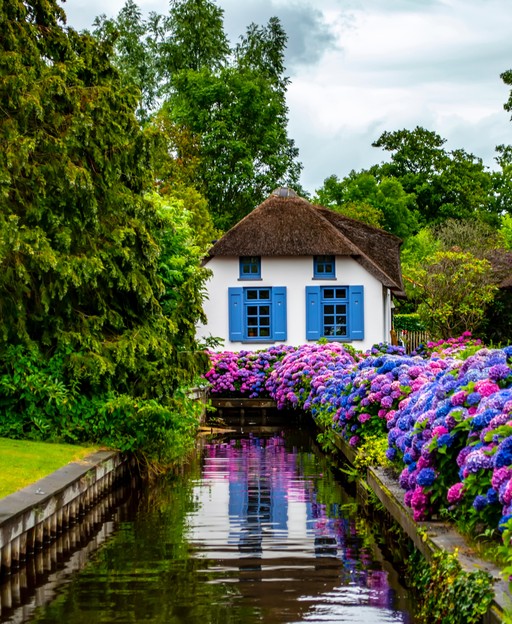
The Dwarsgracht and Binnenpad area forms the heart of Giethoorn. Here the canals narrow, the bridges arch low over the water, and the farmhouses show their characteristic construction: thick thatched roofs, painted wooden facades, and gardens tumbling to the water’s edge. Many of the oldest structures date to the eighteenth and nineteenth centuries. Floating through this section takes around 45 minutes to an hour and offers the most photographed views in the village. Early morning visits — before 10 o’clock — give you much of the canal to yourself, as most day-trippers arrive late in the morning.
Museum Giethoorn ‘t Olde Maat Uus
This local history museum occupies a traditional Overijssel farmhouse and tells the story of Giethoorn from its peat-digging origins to the present day. Exhibits cover rural life, fishing, boat building, and the cultural traditions that shaped the village. The museum is compact but well-presented, and the building itself — with its stone floors and low-beamed ceilings — gives a genuine sense of how farming families lived here for centuries. Check the Museum Giethoorn website for current opening hours before you visit.
Weerribben-Wieden National Park
Just beyond the village edge lies Weerribben-Wieden, one of the largest lowland wetland reserves in northwest Europe. The park covers over 10,000 hectares of peat lakes, reed marshes, and waterways, and supports rare species including the marsh harrier, the bittern, and the European otter. Canoe routes wind through the reed beds, cycling trails cross the polders, and walking paths follow the dike tops with open views across the water. Spring brings extraordinary wildflower colour to the bog landscape, and birdsong on a calm May morning here is something you don’t forget. Pick up a map at the national park visitor centre in nearby Ossenzijl.
Where to Eat in Giethoorn
The village has a modest but pleasant selection of restaurants and cafés, most sitting along the Binnenpad or overlooking the main canal. Expect Dutch staples alongside lighter café fare — think stamppot (mashed potato with root vegetables), bitterballen (crispy fried snacks with mustard), and pannenkoeken (Dutch pancakes). Several restaurants offer canal-side terraces where you can eat while watching boats drift past, which is a very civilised way to spend a lunchtime. Our Dutch food guide covers the wider national food culture if you’d like a deeper introduction to what you’ll find on menus across the country.
The pancake restaurants are particularly popular with families, and Giethoorn has several that have operated for decades. Queues form on busy summer weekends, so arrive early or book ahead if the restaurant accepts reservations.
Best Time to Visit Giethoorn
Giethoorn is at its most beautiful between April and September, when the gardens are green, boats fill the canals, and the long Dutch summer evenings make late visits magical. Spring brings wildflowers to the surrounding wetlands and tulips to the village gardens. Summer is the busiest season, and weekends in July and August can feel very crowded. The village is small and the canal network is narrow, so on peak days the combination of hire boats, tour boats, and canoes creates genuine congestion in the centre.
May and September offer the ideal balance. The weather holds, the crowds thin considerably compared to peak summer, and boat hire is easier to arrange on the day. Our full month-by-month guide to visiting the Netherlands can help you plan around the best conditions for the rest of your trip.
Winter in Giethoorn is quiet and atmospheric. Many boat hire operations close between November and March, but the village remains open, walking is pleasant in dry weather, and the absence of tourists reveals a very different, more local character. In cold winters, the canals occasionally freeze and locals skate through the village — a rare and unforgettable sight.
Day Trip vs Overnight Stay
Most visitors come to Giethoorn as a day trip from Amsterdam or from a nearby city like Zwolle. A full day gives you enough time to hire a boat, walk the Binnenpad, visit the museum, and have a proper lunch — that’s a very satisfying visit. If you want to explore Weerribben-Wieden National Park properly, or cycle the wider region, staying overnight makes far more sense.
The village has a handful of small hotels, B&Bs, and holiday cottages. Booking ahead is essential from May through August, as rooms fill quickly. An overnight stay gives you the enormous advantage of the village in the early morning and late evening, when the day-trippers have left and Giethoorn returns to something quieter and entirely its own.
Practical Tips for Visiting Giethoorn
- Book your boat in advance. On peak summer days, boat hire sells out by mid-morning. Call or book online before you travel.
- Arrive early or late. The crowds peak between 11 o’clock and 3 o’clock. Get there before 10 or after 4 for a much calmer experience.
- Wear non-slip footwear. The wooden canal paths and boat jetties become slippery after rain.
- Respect the residents. Giethoorn is a living village. Keep noise low, stick to footpaths, and steer boats away from private gardens and moorings.
- Cash and cards. Most boat hire companies and restaurants accept cards, but carry a small amount of cash for smaller purchases at market stalls and cafés.
- Combine with other day trips. Utrecht and Haarlem are both excellent additions to a multi-day Netherlands itinerary.
You Might Also Enjoy
- Zaanse Schans: The Complete Windmill Village Guide — another iconic Dutch village experience, within easy reach of Amsterdam.
- Tracing Your Family in Overijssel — explore the ancestry and heritage of the province that Giethoorn calls home.
- Best Time to Visit the Netherlands — a full seasonal guide to planning your Dutch trip.
Plan Your Netherlands Trip
Ready to build your Netherlands itinerary? The Start Here guide covers everything from the best regions to visit and top day trips from Amsterdam to practical advice on transport and accommodation — the best place to begin planning your Dutch adventure.
What is the best way to get to Giethoorn from Amsterdam?
The easiest route is by train from Amsterdam Centraal to Steenwijk (around 80 to 90 minutes), then by bus to Giethoorn (around 20 minutes). By car the journey takes approximately 90 minutes via the A6 motorway, and parking is available at the edge of the village close to the boat hire area.
Do you need a licence to hire a boat in Giethoorn?
No licence is required to hire a whisper boat (fluisterboot) in Giethoorn. The electric boats are straightforward to steer and hire companies give a brief introduction before you set off. Most operators require the person at the helm to be 18 or over.
When is Giethoorn least crowded?
Giethoorn is quietest in May, September, and October, when the weather remains pleasant but the peak summer crowds have eased. Weekday visits are always calmer than weekends, and arriving before 10 o’clock or after 4 o’clock makes a significant difference even during busy periods.
Is Giethoorn worth visiting in winter?
Yes, though with adjusted expectations. Many boat hire operators close from November to March, but the village is open and the canals are beautiful in the quiet season. In cold winters the canals sometimes freeze, allowing locals and visitors to skate — a rare and atmospheric experience. If you visit outside boat season, plan for walking and cycling rather than time on the water.
Join Netherlands Lovers
Every week, discover the Netherlands beyond the tourist trail — hidden villages, local recipes, cycling routes, and travel insights you won’t find in any guidebook.
Subscribe free — enter your email:
Love more? Join 64,000 Ireland lovers → · Join 43,000 Scotland lovers → · Join 30,000 Italy lovers →
Free forever · One email per week · Unsubscribe anytime
Tours & experiences you might love


Powered by Viator. Some links are affiliate links — we may earn a small commission at no extra cost to you.