

Zaanse Schans sits fifteen minutes from Amsterdam by train, yet it feels worlds apart — a living Dutch village where working windmills turn against open skies, green wooden houses line quiet canals, and craftspeople still make cheese, clogs, and pewter by hand. If you want to understand what the Netherlands looked like three centuries ago, this is where you come.
Love the Netherlands? Join our free newsletter for hidden Dutch gems → inlovewithnetherlands.com/subscribe
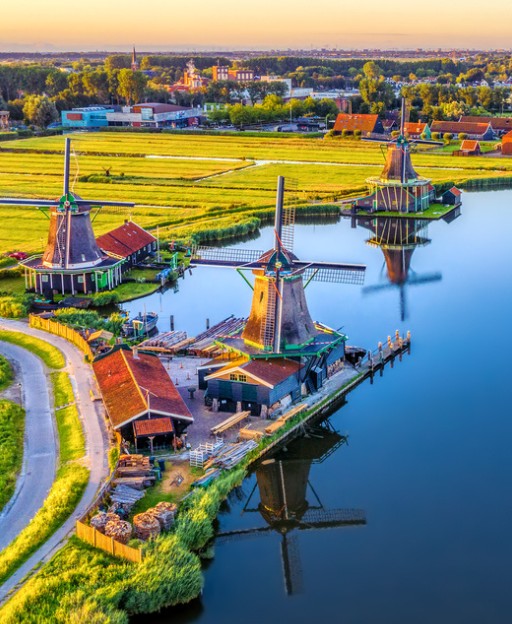
This guide covers everything you need to plan a great visit — how to get there, what to see, when to go, how much it costs, and the tips that make the difference between a rushed selfie stop and a genuinely memorable morning.
What Is Zaanse Schans?
Zaanse Schans is an open-air museum village on the banks of the river Zaan, in the municipality of Zaanstad, North Holland. The name translates roughly as “the Zaan fortress,” a reference to a sixteenth-century earthwork that once stood nearby. Today, the area preserves historic green wooden buildings relocated from across the Zaan region during the 1960s and 1970s — rescued from demolition and reassembled here to form a coherent historic streetscape.
Five or six working windmills stand along the river, each grinding spices, pressing oil, or sawing timber just as they did in the seventeenth and eighteenth centuries, when this stretch of the Zaan was one of the most industrialised places on earth. Peter the Great came here in 1697 to study Dutch shipbuilding; the lessons he learned shaped Russian industry for generations.
Walking through Zaanse Schans today, you encounter that same layered history — industrial ingenuity, rural craftsmanship, and everyday Dutch life all compressed into a short stretch of riverbank.
How to Get to Zaanse Schans from Amsterdam
Zaanse Schans is one of the easiest day trips from Amsterdam. You have several options, and none requires a car.
By Train (Recommended)
The fastest route runs from Amsterdam Centraal to Zaandam station, then a short local train to Koog-Zaandijk. Total journey time: around 17 minutes from Centraal. From Koog-Zaandijk station, Zaanse Schans is a ten-minute walk, well-signposted. Trains run frequently throughout the day. A single ticket costs around €4.50 each way using an OV-chipkaart, or you can buy a day return at the ticket machine.
You can also take the Intercity direct from Amsterdam Centraal to Zaandam and catch a bus from there — but the train via Koog-Zaandijk drops you closer to the village entrance. See our complete Netherlands by train guide for tips on buying tickets and using the rail network.
By Boat
Several tour operators run boat trips from Amsterdam to Zaanse Schans along the river Zaan. The journey takes around 90 minutes each way and gives you a fine view of the river landscape. This suits visitors who want a slower, more scenic approach — though if your time is limited, the train is far more practical.
By Bus
Bus 391 runs from Amsterdam Centraal to Zaanse Schans during peak tourist season, typically April through October. Journey time is around 45 minutes, depending on traffic. Check current timetables with EBS or GVB before you travel — schedules vary by season.
What to See and Do at Zaanse Schans
Entry to the village itself is free. You pay separately for individual attractions — windmill interiors, the museum, and most workshops charge a small admission fee, typically €4–€6 per person.
The Working Windmills
The windmills are the heart of Zaanse Schans. Six stand here, each with a different function. De Gekroonde Poelenburg grinds hardwoods; De Kat produces pigments and dyes; De Zoeker presses oil from seeds; De Bonte Hen and Het Pink grind spices. At least two or three windmills open their interiors on any given day, allowing visitors to climb the steep internal ladders and watch the grinding mechanisms at work.
These are not museum pieces — the sails turn, the stones grind, and the millers work inside. Standing on the balcony of a working windmill with the river below and the sails sweeping past is one of the more genuinely memorable experiences the Netherlands offers. The miller on duty usually speaks English and will happily explain the mechanism if you ask.
Compare this with Kinderdijk, the UNESCO-listed windmill network in South Holland — both are excellent, but Zaanse Schans allows you to enter the windmills and watch them work, while Kinderdijk offers a more dramatic landscape of nineteen mills stretching along the canals.
Traditional Craft Workshops
Scattered across the village are several working craft workshops. The cheese farm (Catharina Hoeve) produces traditional Gouda and Edam, and you can watch the entire process — from curdling milk to pressing the rounds into moulds. Tastings are included, and you can buy directly from the farm shop.
The clog workshop demonstrates the machine-carving of wooden shoes from a single block of poplar or willow. A skilled carver finishes a pair in minutes. The process is surprisingly loud and impressively efficient. Custom-painted clogs make a practical souvenir that actually fits in a suitcase.
A pewter workshop shows the casting of traditional Dutch pewter — a craft with deep roots in the Zaan region. The bakery produces traditional Dutch biscuits and treats, including the stroopwafel (syrup waffle), the quintessential Dutch snack. You can learn more about Dutch culinary traditions in our Dutch food guide.
The Zaans Museum
The Zaans Museum sits at the entrance to the village and tells the story of the Zaan region across the centuries — its industrial past, its distinctive architecture, and the people who lived and worked here. The museum houses an impressive collection of Zaans furniture and household objects, alongside exhibitions on the Verkade biscuit and chocolate company, which grew from these very streets.
Admission is around €12 for adults. The museum includes the Verkade Experience, a dedicated section tracing the history of one of the Netherlands’ most beloved confectionery brands. Even visitors with little interest in industrial history tend to find this section engaging.
Strolling the Village
Much of the pleasure at Zaanse Schans comes simply from walking the riverfront path. The houses — painted in the deep grey-green associated with the Zaan region — line the water in a way that feels genuinely unchanged from the paintings of old Dutch masters. The river views are particularly beautiful on calm mornings, when the windmills reflect in still water.
A small grocery and café sits near the entrance if you need coffee or lunch. The village has several souvenir shops, though the craft workshops offer more interesting and authentic purchases than the standard tourist fare.
Best Time to Visit Zaanse Schans
Zaanse Schans is open year-round, and each season offers something different.
Spring (April–May) brings the most visitors — this is peak tulip season, and tour coaches arrive in large numbers. If you plan to come in spring, arrive before 9:30am or after 3:30pm to beat the worst of the crowds. April mornings can be spectacularly clear, and the combination of windmills and nearby tulip fields makes for a quintessentially Dutch scene.
Summer (June–August) offers the most reliable weather and the longest windmill opening hours. Crowds build through the day but thin out after 4pm. The river catches the evening light beautifully.
Autumn (September–October) brings golden light, cooler temperatures, and noticeably fewer visitors. September is perhaps the ideal month — the windmills are still fully operational, the crowds have thinned, and the riverside colours are spectacular.
Winter (November–March) is the quietest season. Some workshops close or reduce their hours, and not all windmills operate. But Zaanse Schans in winter — especially on a clear frost morning with bare willows reflecting in the Zaan — has a quiet beauty that summer visitors rarely see. The December Christmas market draws a gentle local crowd.
Practical Tips for Your Visit
Opening Hours and Admission
The village itself opens daily from 9:00am to 5:00pm (with extended hours in summer). The Zaans Museum opens daily from 10:00am to 5:00pm. Individual windmills keep varying hours — generally 9:30am or 10:00am to 4:30pm or 5:00pm — and at least two or three are open on any given day. In winter, check the Zaanse Schans website in advance as some windmills operate only at weekends.
A Zaanse Schans Card covers admission to all individual attractions including the Zaans Museum, windmill interiors, and most workshops. At around €23 for adults, it represents good value if you plan to visit more than two paid sites.
Avoiding the Crowds
Zaanse Schans can feel genuinely overwhelming between 10:30am and 3:00pm in spring and summer, particularly when coach groups arrive. Two strategies work well. First, arrive by 9:30am — the village is calm before the coaches and you can photograph the windmills without crowds in frame. Second, visit on a weekday in May or September and plan to leave by noon. An early evening visit in summer (4:30pm onwards) is often quiet, warm, and beautiful.
Combining Zaanse Schans with Haarlem or Volendam
Zaanse Schans works well as a morning stop on a longer day. After spending two to three hours at the windmills, you can catch the train on to Haarlem — a forty-minute journey — for a leisurely afternoon in one of the Netherlands’ most charming canal cities. Alternatively, combine with Volendam, on the IJmeer, for a seafood lunch and a glimpse of traditional fishing-village life.
Zaanse Schans with Children
Zaanse Schans is excellent for families. The working windmills are dramatic and genuinely impressive for any age — watching a two-tonne grinding stone at work while the building vibrates around you leaves an impression. The clog-carving demonstration holds most children’s attention well, and the cheese tastings are reliably popular.
The riverside path is flat and wide, suitable for pushchairs. The open space means children can move around freely rather than standing in queues. Allow two to three hours for a family visit — more if children want to linger at the craft workshops.
If your family enjoys cycling, you can hire bikes in Zaandam and ride to Zaanse Schans along the riverside path — a flat, easy route that suits most ages.
Frequently Asked Questions
Is Zaanse Schans worth visiting from Amsterdam?
Yes — particularly if you want to see working windmills up close, which you cannot do anywhere in Amsterdam itself. The journey takes only 17 minutes by train and the village is free to enter. Even a two-hour visit gives you a genuine sense of traditional Dutch life that the city cannot provide.
How long does Zaanse Schans take to visit?
Most visitors spend two to three hours, which is enough to visit two windmills, the clog workshop, the cheese farm, and a short walk along the river. If you plan to include the Zaans Museum, allow four hours in total. Visiting early keeps things relaxed — crowds build sharply after 10:30am.
Is Zaanse Schans free to visit?
The village and riverside path are free to enter. Individual windmill interiors, the Zaans Museum, and some workshops charge admission — typically €4–€12 per person depending on the attraction. The Zaanse Schans Card, priced at around €23 for adults, covers entry to all paid attractions and represents good value if you plan to visit more than two sites.
When do the windmills operate at Zaanse Schans?
At least two or three windmills operate daily from April through October, typically opening between 9:00am and 10:00am and closing at 4:30pm or 5:00pm. In winter, windmill operation depends on weather and staffing — check the official Zaanse Schans website before visiting between November and March.
You Might Also Enjoy
If you loved this guide, these are worth reading next:
- Kinderdijk Windmills: The Complete Visitor’s Guide — UNESCO-listed windmill landscape in South Holland
- Haarlem Day Trip from Amsterdam — a canal city with one of the Netherlands’ finest market squares
- Amsterdam Canal Cruise Guide — see the city from the water
Plan Your Netherlands Trip
Ready to explore more of the Netherlands? Our Start Here guide covers everything you need — from building your itinerary to navigating trains, cycling routes, and the best times to visit each region.
Join Netherlands Lovers
Every week, discover the Netherlands beyond the tourist trail — hidden villages, local recipes, cycling routes, and travel insights you won’t find in any guidebook.
Subscribe free — enter your email:
Love more? Join 64,000 Ireland lovers → · Join 43,000 Scotland lovers → · Join 30,000 Italy lovers →
Free forever · One email per week · Unsubscribe anytime
Tours & experiences you might love


Powered by Viator. Some links are affiliate links — we may earn a small commission at no extra cost to you.