

Your great-great-grandmother left Rotterdam in 1882. She sailed into New York Harbour with a small trunk and a Dutch Bible. She never went back. Now, 140 years later, you are going back for her.
The Dutch-American homecoming is one of the most moving journeys a heritage traveller can make. Over 3.6 million Americans claim Dutch ancestry. Many trace their roots to the original Dutch settlers of New Amsterdam — the colony that became New York City. Others descend from 19th-century emigrants who built tight-knit Dutch communities in Michigan, Iowa, and Illinois. All of them share one thing: a thread of identity that still runs between the Great Plains and the flat polders of Holland.
This guide is for those who want to close the circle. Whether your surname is Van der Berg, De Jong, or Hoekstra, whether your family came from South Holland or Friesland, this is how you journey from Old Holland to the Dutch-American heartland — and back again.
The Dutch Roots of America
The Dutch were among the earliest European settlers in North America. In 1624, the Dutch West India Company established the colony of New Amsterdam on the southern tip of Manhattan. They called the river the Hudson. They called the settlement Fort Orange — the city that would become Albany. They named the land New Netherland.
The English took the colony in 1664 and renamed it New York. But the Dutch left their mark. Streets like Broadway (from the Dutch Breede Weg), the Bowery (from bowerij, meaning farm), and Harlem (named after the Dutch city of Haarlem) still carry Dutch names today. The old Dutch surnames — Stuyvesant, Van Cortlandt, Vanderbilt, Roosevelt — became founding American family names.
The second great wave of Dutch emigration came in the 19th century. Between 1840 and 1920, hundreds of thousands of Dutch men and women left the Netherlands. They were fleeing poverty, religious tension, and the collapse of the Dutch potato crop. They settled in western Michigan, where a town called Holland was founded in 1847 by a group of Dutch Reformed Christians. They built churches that looked like the ones back home. They planted tulip bulbs in the soil. They spoke Dutch in their homes for three generations.
Where Dutch-Americans Come From
If your family is Dutch-American, the most likely regions of origin are South Holland, North Holland, Zeeland, Friesland, and Groningen. These were the provinces with the highest rates of emigration in the 19th century.
Families from Zeeland — the coastal province of islands and sea — formed the core of the Michigan Dutch community. The surnames they carried were those of Zeelandic fishing villages and polder farms. Families from Friesland often settled in Iowa, bringing with them the distinctive Frisian surnames that still puzzle non-Dutch Americans today.
South Holland sent thousands of emigrants to the American Midwest. If your surname is De Vries, Visser, or Van den Berg, start your search in the western Netherlands. The Dutch surnames of South Holland tell a rich story of canal towns, herring fleets, and merchant families who crossed an ocean for a better life.
🇳🇱 Enjoying this? Netherlands lovers get stories like this every week. Subscribe free →
Finding Your Ancestral Town
Before you book your flight, spend time tracing your roots. The good news is that Dutch records are among the best-preserved in Europe. Civil registration began in 1811. Church records go back centuries. Many are now online and free to search.
Our full guide to tracing your Dutch ancestry walks you through every step. Start with what you know — your great-grandparent’s full name, approximate birth year, and place of origin. Even a province name is enough to begin. From there, the WieWasWie.nl database and the CBG Centre for Family History can help you narrow it down to a specific gemeente, or municipality.
Once you have a town name, the real homecoming can begin.
The Dutch-American Homecoming Itinerary
This is a ten-day journey. It begins in Amsterdam and moves through the provinces most associated with Dutch emigration to America. Adjust the route based on your own ancestral region.
Days 1–2: Amsterdam — The City Your Ancestors Left Behind
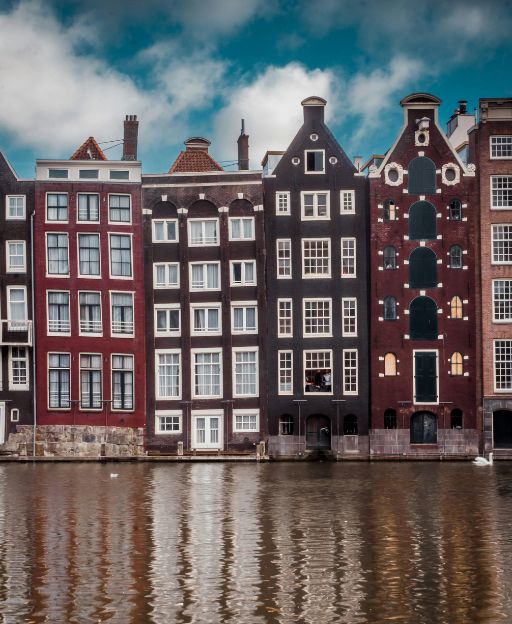
Fly into Amsterdam Schiphol. Before you head anywhere else, spend two days in the capital. Walk the canal ring that looks almost unchanged since the 17th century. Your ancestors would have recognised this city. The narrow gabled houses, the merchant warehouses, the smell of the IJ waterway — this was the world they left.
Visit the Rijksmuseum and stand before Vermeer’s paintings. These are images of the Dutch Golden Age — the world your ancestors lived in. Stand at Dam Square, where the original dam on the Amstel River gave the city its name. Walk to the Westerkerk, where Rembrandt is buried.
Spend an evening in the Jordaan neighbourhood. In the 17th century, this was a working-class district of weavers and artisans — the kind of people who emigrated to New Amsterdam. Today it is full of brown cafes, canal-side restaurants, and the quiet hum of a city that has always been home to people who came from somewhere else.
Day 3: North Holland — The New Amsterdam Coast
Take a day trip north into North Holland. The Dutch surnames of North Holland reveal a landscape of fishing villages and tulip fields. Drive or take the train to Hoorn or Enkhuizen — these were the great VOC trading ports. Ships left from these harbours to New Amsterdam, to Batavia, to the Cape of Good Hope.
Stand at the harbour in Hoorn and look out at the Markermeer. Somewhere across the Atlantic, a city called New York grew from a colony that Dutch ships built. The distance between these two worlds is smaller than you think.
Days 4–5: South Holland — Rotterdam and the Great Ports
Travel south to Rotterdam. For millions of Dutch emigrants in the 19th and 20th centuries, Rotterdam was the last Dutch city they ever saw. The Wilhelminakade, where the great emigrant ships docked, still stands. The Holland America Line — the shipping company that carried Dutch emigrants to New York for over a century — was born here.
Visit the Dutch Emigrants Museum, which tells the story of the millions who left. Then drive into the Hoeksche Waard — the polder landscape south of Rotterdam where many 19th-century emigrants came from. This flat, quiet land of dykes and farmhouses was what Dutch-Americans missed most. It is why they built towns called Holland and Zeeland in Michigan.
If you know your ancestral gemeente, visit it now. Find the municipal archive. Ask to see the birth registers. Your family is in there.
Days 6–7: Zeeland — The Island Province That Built Michigan
Drive south-west to Zeeland. This province of islands and causeways sent an extraordinary number of emigrants to western Michigan in the mid-19th century. The Reverend Albertus Van Raalte, who founded Holland, Michigan, in 1847, was from Wanneperveen. Many of his followers came from Goes, Middelburg, and the villages of Walcheren island.
Middelburg is the provincial capital — a beautifully preserved medieval town with a Gothic town hall and a long memory of the sea. Walk its streets and think of the families who decided, in the hard years of the 1840s, to leave this behind. They were not running from ugliness. They were running toward hope.
Spend a second day exploring the smaller villages. Veere, with its preserved merchant buildings, was once one of the wealthiest wool ports in Europe. Domburg is a quiet beach resort. These were the landscapes that Dutch-Americans carried in their hearts for generations.
Days 8–9: Friesland — The Northern Province
Travel north to Friesland. This province has its own language, its own culture, and its own proud identity. Many Dutch-Iowans trace their roots here. Frisian farmers settled in the Midwest in large numbers, bringing with them the stubbornness and independence that made them good pioneers.
The city of Leeuwarden is the Frisian capital — a handsome market town built on terpen, the artificial mounds that Frisians built to stay above the floodwaters. The provincial archives here hold some of the oldest church records in the Netherlands. If your family is Frisian, this is where your story is.
Spend a second day cycling through the Frisian countryside. The landscape here is different from the rest of the Netherlands — wider, wilder, more open. Frisian farmhouses sit at the end of long, straight farm tracks. The sky is enormous. It is easy to understand why Frisian emigrants, landing in Iowa, felt they had found familiar land.
Day 10: Back to Amsterdam — Closing the Circle
Return to Amsterdam for your last night. Find a canal-side cafe and sit with a beer. Think about what the journey has given you. You have walked the streets your ancestors walked. You have seen the farmhouses they left behind. You have stood at the harbours where their ships sailed out of sight.
Your great-great-grandmother took that Dutch Bible to America. She never came back. You have come back for her. That is what a homecoming is.
Practical Tips for the Dutch-American Heritage Trip
Getting around: The Netherlands has one of the best train networks in Europe. Travelling the Netherlands by train is easy, affordable, and covers almost every destination in this itinerary. Hire a bicycle for exploring Friesland and the Zeeland islands.
Research before you go: Use the step-by-step Dutch ancestry guide to identify your ancestral gemeente before booking. Knowing where you are going makes the journey far more meaningful.
Archive visits: Municipal archives (Gemeentearchief) in Dutch cities are open to the public. Many staff speak English. Bring a list of family names and approximate birth years. Even a one-hour archive visit can yield extraordinary discoveries.
Heritage tours: For a longer or more structured experience, read our full guide to planning a Dutch heritage trip. It covers everything from contacting Dutch genealogy societies to finding family graves.
When to go: April and May bring tulips and long days. June and July are warm and ideal for cycling. September is quieter and beautiful. Avoid school summer holidays (July–August) for cheaper prices and fewer crowds.
The Netherlands Is Waiting for You
Dutch-Americans are not tourists in the Netherlands. They are returners. The country remembers its emigrants — in the village records, in the parish registers, in the names still carved on gravestones in small Zeeland churchyards. Your family left a trace here that time has not erased.
The homecoming journey is not about grief for what was lost. It is about understanding who you are. When you stand in the village where your great-grandmother was born, when you see the church where she was baptised, something settles. A long story finds its beginning.
For more heritage itinerary inspiration, read our 5-Day Dutch Heritage Itinerary. It is a good starting point if you have less time but still want to trace your roots.
Frequently Asked Questions
How many Americans have Dutch ancestry?
Around 3.6 million Americans claim Dutch ancestry. The largest concentrations are in Michigan, New York, New Jersey, Iowa, Illinois, and California. Many more have partial Dutch ancestry that was absorbed into the broader American melting pot over generations.
Which parts of the Netherlands did most Dutch-American families come from?
The majority of 19th-century Dutch emigrants came from South Holland, North Holland, Zeeland, Friesland, and Groningen. The Michigan Dutch communities trace their roots mainly to Zeeland and South Holland. The Iowa Dutch came largely from Friesland and Groningen.
Can I find my Dutch ancestors in online records?
Yes. The WieWasWie.nl database contains millions of Dutch civil records from 1811 onwards, all free to search. For church records before 1811, Delpher.nl and the website of the CBG Centre for Family History are excellent starting points. Many Dutch municipalities have also digitised their archives.
Is it worth visiting the Netherlands on a heritage trip?
Absolutely. Dutch records are among the best-preserved in Europe. Municipal archives are accessible and welcoming to heritage researchers. Many Dutch archivists speak English. Even a single archive visit can produce birth certificates, marriage records, and family group sheets that bring your family history to life.
What Dutch cities are most associated with emigration to America?
Rotterdam was the main departure port for emigrants heading to New York in the 19th and early 20th centuries. Many Dutch emigrants also departed from Amsterdam. The Holland America Line, which operated from Rotterdam for over a century, was the primary carrier for Dutch emigrants to North America.
You Might Also Enjoy
How to Trace Your Dutch Ancestry: A Step-by-Step Guide — Start here before you book your flights. This comprehensive guide covers every free resource available to Dutch-American genealogy researchers.
How to Plan a Dutch Heritage Trip to Your Ancestral Town — From finding your gemeente to visiting the local church archive, this guide covers the practical side of heritage travel in the Netherlands.
5-Day Dutch Heritage Itinerary: Trace Your Roots Across the Netherlands — A shorter heritage journey for those with less time. Covers Amsterdam, South Holland, and Zeeland in five focused days.
Join Netherlands Lovers
Every week, discover the Netherlands beyond the tourist trail — hidden villages, local recipes, cycling routes, and travel insights you won’t find in any guidebook.
Subscribe free — enter your email:
Already subscribed? Explore our archives for more hidden Dutch gems.
Love more? Join 64,000 Ireland lovers → · Join 43,000 Scotland lovers → · Join 30,000 Italy lovers →
Free forever · One email per week · Unsubscribe anytime
Plan Your Netherlands Trip: Not sure where to start? Visit our Start Here page for a complete guide to planning your Netherlands trip — from first-time visitors to heritage travellers returning to their roots.
Tours & experiences you might love


Powered by Viator. Some links are affiliate links — we may earn a small commission at no extra cost to you.