

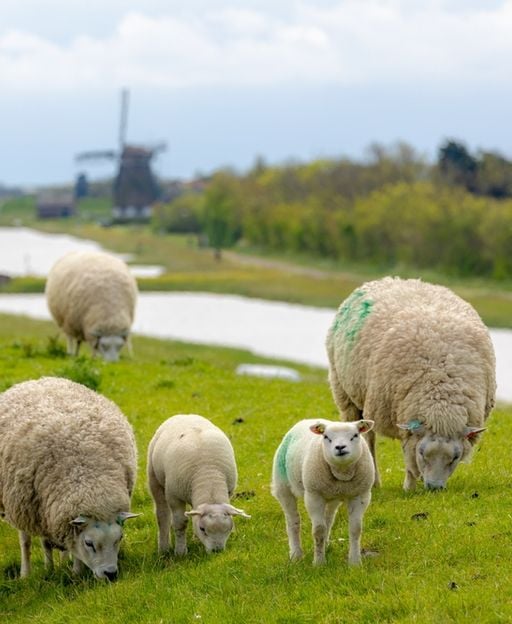
The ferry leaves the mainland and something shifts. The noise drops. The horizon opens. Twenty minutes later, you step onto Texel — and the Netherlands you thought you knew is gone.
The Island That Lives by Its Own Rules
Texel is the largest of the West Frisian Islands. About 13,000 people live here. Roughly 100,000 sheep share the island with them. That ratio tells you everything.
There are no motorways on Texel. No shopping centres. No rush hours. The island runs on farming rhythms, North Sea weather, and a quiet belief that a slower life is a better one.
The main village is Den Burg. It sits at the heart of the island — a small market town with a bakery, a church, and the kind of café where locals spend an entire afternoon over one coffee.
The Sheep That Built a Reputation
Texel sheep are not just a local curiosity. Farmers and butchers across Europe and Australia seek out Texel lamb for its lean, flavourful meat. The breed is exported to over 60 countries worldwide.
Islanders developed the breed over centuries. They crossbred native stock with animals brought in during the 18th and 19th centuries. The result is a hardy, muscular sheep perfectly suited to the island’s damp, windswept fields.
In spring, the lambs arrive. White clusters of wool dot every field. Cycling past them on a quiet morning is one of those simple pleasures that stays with you for years.
What the Light Does to This Place
Texel has a quality of light that photographers chase.
The North Sea surrounds the island on three sides. The sky is enormous here. Light bounces off the water and rolls across the flat polder fields, shifting constantly — from pale silver in the morning to deep amber at dusk.
Artists have noticed this for generations. The same light that drew painters to the fishing towns of Noord Holland also falls on Texel. It makes the landscape feel bigger than it is — more cinematic.
You don’t need a camera to feel it. Just face west in the late afternoon and stand still for a moment.
Enjoying this? Get stories like this every week from Love Netherlands — Subscribe free →
The Wild Edge of the Island
The western coast of Texel is a national park. Duinen van Texel covers almost a quarter of the island — a sweep of sand dunes, heathland, and forest that feels nothing like the Netherlands most people imagine.
In the dunes, rare orchids bloom each spring. In the coastal marshes, bird species that migrate thousands of miles nest here every year. The island sits at the edge of the Wadden Sea — a UNESCO World Heritage site and one of Europe’s great wildlife corridors.
If you’ve ever wondered about mudflat walking, Texel is where the Wadden experience begins. Read our full guide to wadlopen — the Dutch tradition of walking the seabed before you visit.
Getting Around and Slowing Down
Most visitors hire a bike. The island has a network of well-marked cycling routes that link every village, beach, and farm. You can cycle the entire perimeter of Texel in a long single day.
The beaches along the western coast are long, clean, and rarely crowded. Paal 17 and Paal 28 are local favourites. The North Sea is cold, even in summer — but Dutch families swim in it anyway.
If this is your first trip to the Netherlands and you want to explore beyond Amsterdam, our start here guide will help you plan a route that includes places like Texel.
Frequently Asked Questions About Texel
What is the best time to visit Texel in the Netherlands?
Late April through June is ideal. Lambs are out in the fields, wildflowers bloom across the dunes, and visitor numbers stay lower than in peak summer. September is also excellent — quieter, with warm light and empty beaches.
How do you get to Texel from Amsterdam?
Take the train from Amsterdam Central to Den Helder (about 75 minutes), then board the TESO ferry to Texel. The crossing takes 20 minutes and ferries run throughout the day, year-round. You can take your bike on board.
What is Texel famous for?
Texel is famous for its Texel sheep breed, exported worldwide for its quality meat. The island is also known for its long beaches, the Duinen van Texel national park, and the Wadden Sea — a UNESCO World Heritage site that borders its eastern shore.
Can you take a car to Texel?
Yes. The TESO ferry carries vehicles as well as foot passengers and cyclists. On the island itself, cycling or the local bus network covers most of what you’ll want to see — a car is useful but not essential.
The ferry back to the mainland takes twenty minutes. Texel disappears behind you into the grey. You arrive in Den Helder feeling, strangely, like you’ve been somewhere much further away than that.
Love Netherlands — Free Every Week
Canal towns, hidden villages, Dutch stories. A free letter about the Netherlands — written slowly, delivered weekly.
Love more? Join 65,000 Ireland lovers → · Join 43,000 Scotland lovers → · Join 30,000 Italy lovers →
Free forever · One email per week · Unsubscribe anytime
Tours & experiences you might love


Powered by Viator. Some links are affiliate links — we may earn a small commission at no extra cost to you.