
Stand on any Dutch street in late November and you will smell it before you see it. Hot oil, warm dough, and a cloud of icing sugar drifting across the cold air. Somewhere nearby, a white caravan with a hand-painted sign is frying oliebollen — and there is always a queue.
This is one of the oldest food traditions in the Netherlands. And it shows no sign of going anywhere.
What Is an Oliebol?
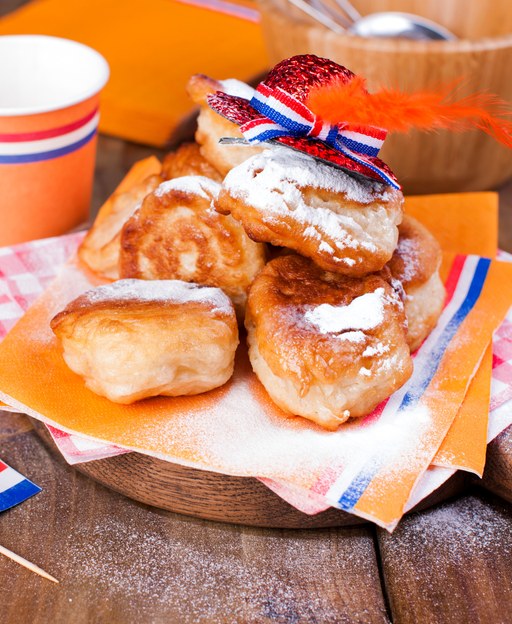
An oliebol (plural: oliebollen) is a round ball of deep-fried dough. Think doughnut, but rounder. Denser. Less sweet. The dough contains raisins or currants, and the finished ball gets a generous dusting of icing sugar before it lands in your paper bag.
The name means “oil ball” — which is exactly what it is. No pretence, no fancy branding. Just dough in hot oil, served hot, eaten fast.
Some bakers add apple chunks. Others use candied peel or dried cranberries. But the classic version — raisins, deep-fried, powdered sugar — is the one every Dutch person grew up with.
A Tradition That Goes Back 700 Years
Oliebollen are not a modern invention. Written references to them appear as far back as the 1600s, and food historians trace fried dough traditions in the Low Countries to medieval times. One early account describes them as eaten on New Year’s Eve so that the fat would deflect evil spirits. The oil, it was believed, made sinful thoughts slide right off.
The specific New Year’s Eve connection stuck. Over centuries, oliebollen became inseparable from the Dutch transition from one year to the next.
By the 19th century, street vendors were selling them from carts across Amsterdam. Today those carts have become caravans — but the queue is just as long.
The Season: November to January
From mid-November, oliebollen kramen (stalls) appear across the Netherlands. They set up in market squares, outside supermarkets, near railway stations. You will find them in the smallest villages and the biggest city centres.
Each stall has its loyal customers. People drive across town for the oliebollen at their favourite kraam. Some families have been going to the same stall for three generations. Reviews are debated at work, at family dinners, at the school gate.
The season peaks on 31 December. On New Year’s Eve, most Dutch families eat oliebollen at home — bought fresh from a stall, or made from scratch in the kitchen. The smell of hot oil fills houses across the country.
If you are planning a winter trip to the Netherlands, our start-here guide covers all the seasonal highlights worth knowing before you go.
Enjoying this? Get stories like this every week from Love Netherlands — Subscribe free →
The Home-Made Version
Buying oliebollen from a stall is tradition. Making them at home is a deeper tradition.
Dutch families gather in kitchens on the afternoon of New Year’s Eve and mix the batter together. The recipe is simple — flour, yeast, eggs, milk, salt, raisins — but the frying takes practice. Too cool and the dough absorbs oil. Too hot and the outside burns before the inside cooks. The perfect oliebol is golden-brown all the way round and light inside.
Grandmothers guard their recipes. Children are given the job of shaking the icing sugar over the finished balls. The counter gets covered in white powder. Nobody minds.
Dutch food is full of these moments where a simple recipe carries enormous meaning. The Dutch winter tradition of erwtensoep (thick pea soup) follows the same logic — humble ingredients, specific season, ritual preparation.
What Happens at Midnight
At midnight on New Year’s Eve, the fireworks start. The Dutch set off an enormous quantity of fireworks — a level that surprises most visitors. The sky above every neighbourhood lights up for an hour or more.
In between the bangs, families pass round the oliebollen. They drink champagne or Dutch apple cider. They wish each other “Gelukkig Nieuwjaar” — Happy New Year. The icing sugar gets everywhere. Someone’s dog hides under the table.
It is not a refined celebration. That is rather the point. The Dutch are not a people who go in for excessive formality. They prefer warmth, shared food, and honesty over ceremony. Oliebollen are the perfect expression of that. For more on that directness, read about the Gouda baker whose accidental creation became the world’s favourite coffee biscuit — another story of Dutch practicality turned into something beloved.
Where to Find the Best Oliebollen
Every year, the Dutch food press runs rankings. Newspapers name their favourite stalls. Radio programmes debate the results. It is taken seriously.
In Amsterdam, the stalls around the Albert Cuyp Market and the Dappermarkt are consistently praised. In smaller towns, the best stall is usually the one with the longest queue — a reliable indicator everywhere in the Netherlands.
Ask a Dutch person where to get the best oliebollen and you will get a very definite answer. They will probably also tell you exactly why every other stall is inferior.
Frequently Asked Questions
When can you buy oliebollen in the Netherlands?
Oliebollen stalls open in mid-November and trade through to early January. The busiest period is the final week of December, when queues at popular stalls can stretch around the corner. New Year’s Eve is the peak day — many stalls sell out by mid-afternoon.
Are oliebollen the same as doughnuts?
They are similar but distinct. Oliebollen are rounder, denser, and less sweet than ring doughnuts. They contain raisins or dried fruit and are always served with icing sugar. They are eaten fresh, hot from the oil — they do not keep well and are not meant to.
Can you make oliebollen at home?
Yes, and many Dutch families do exactly that on New Year’s Eve. The basic batter uses flour, yeast, milk, eggs, salt, and raisins. A deep-fat fryer or a large saucepan of oil works fine. Drop spoonfuls of batter into the hot oil and turn them until golden all over — about four to five minutes.
What is the Dutch word for icing sugar?
Poedersuiker — literally “powder sugar.” You will see it mentioned on every oliebollen stall. It is also the word that will be dusted liberally across your coat, your scarf, and anything else within range when you eat them standing up in the wind.
Love Netherlands — Free Every Week
Canal towns, hidden villages, Dutch stories. A free letter about the Netherlands — written slowly, delivered weekly.
Love more? Join 64,000 Ireland lovers → · Join 43,000 Scotland lovers → · Join 30,000 Italy lovers →
Free forever · One email per week · Unsubscribe anytime
Tours & experiences you might love


Powered by Viator. Some links are affiliate links — we may earn a small commission at no extra cost to you.