

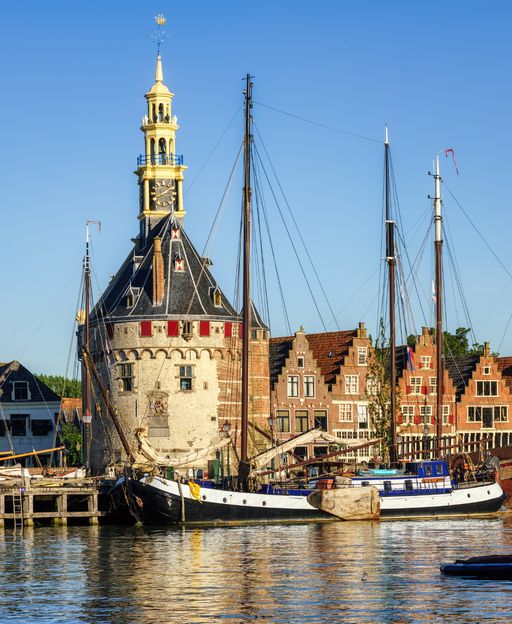
Stand at the edge of Hoorn’s harbour on a still morning and you feel something shift. Tall ships rock gently against the quay. A centuries-old tower keeps watch over the water. And somewhere in the back of your mind, you wonder: how did a place this beautiful get left out of every Dutch travel guide?
The short answer is that Hoorn was once too important to ignore — and then the world moved on without it.
The Town That Built a Global Empire
In the 17th century, Hoorn was one of the most powerful cities in the world. The Dutch East India Company — the VOC — controlled global trade in spices, silk, and porcelain. Hoorn held one of its six chambers, the regional offices that ran the whole extraordinary enterprise.
Ships departed from this harbour bound for Java, Japan, Ceylon, and the Cape of Good Hope. The captains who sailed them were celebrated figures. Abel Tasman, who mapped Tasmania and became the first European to sight New Zealand, sailed under the VOC flag. Jan Pieterszoon Coen, the governor-general who expanded Dutch power across Asia, was born in Hoorn’s streets.
At its height, the VOC was the world’s first multinational company — and Hoorn helped build it. The same wealth funded the grand canal houses in Amsterdam that spice merchants constructed to display their fortunes.
Why the Money Flowed Here
Hoorn’s position on the Zuiderzee — the great inland sea connecting the North Sea to the heart of Holland — made it a natural trading hub. Merchant vessels sailed in from the Baltic and beyond, unloaded their cargo, and reloaded with Dutch goods heading east.
The wealth this created is still visible today. Walk along the Veermanskade waterfront and you pass gabled merchant houses that have stood since the 1600s. The Rode Steen — Hoorn’s central square — was once where the town’s magistrates administered justice. The carved stonework above the old government building still shows shields, figures, and the pride of a city that expected to last forever.
It did last. Just not in the way the merchants imagined.
How Hoorn Lost Its Edge
The Zuiderzee began to silt up. Larger ships found it harder to reach Hoorn’s harbour. Amsterdam, with deeper water and better canal access, pulled trade away — slowly, then completely.
When the VOC collapsed in 1799, Hoorn’s last major industry went with it. No factories replaced the merchant houses. No wide roads cut through the old centre. The poverty that followed the Golden Age actually saved the architecture that the Golden Age built.
For anyone who loves Dutch history, this is what makes Hoorn remarkable. It isn’t a recreation. It’s the thing itself.
Enjoying this? Get stories like this every week from Love Netherlands — Subscribe free →
What You Find When You Arrive
The train from Amsterdam Central takes 35 minutes. Walk out of the station and you reach the old town in under ten minutes on foot.
The Hoofdtoren — the Main Tower — is the landmark that defines Hoorn. Builders completed it in 1532 to guard the harbour entrance, and it has barely changed since. The VOC chamber building on the Nieuwendam still carries the company’s coat of arms.
The Westfries Museum fills the old government hall with paintings, maps, and objects from the Golden Age. It is the best regional museum in North Holland outside Amsterdam — and far less crowded. On Wednesday mornings, a market fills the Rode Steen with cheese, vegetables, and bread. The square looks almost exactly as it does in 17th-century paintings of the same spot.
That continuity is what makes Hoorn feel different from anywhere else in the country.
A Day in the Harbour
The waterfront walk from the Hoofdtoren to the Oostereiland takes about twenty minutes. Along the way you pass the old harbour master’s house, traditional brown-sailed vessels moored against wooden jetties, and views across the IJsselmeer that haven’t changed since the fleet set sail for the East.
Hoorn’s surrounding region rewards slow travel. The Alkmaar cheese market sits just 30 kilometres south — the most theatrical Dutch tradition still running. And if you want to understand what makes the Netherlands tick before you travel, start with our guide to the Netherlands.
What is Hoorn in the Netherlands known for?
Hoorn is known as one of the six VOC cities that built the Dutch trading empire in the 17th century. Ships departed from its harbour for Asia and the Americas. Today, the historic centre, Hoofdtoren tower, Westfries Museum, and weekly market survive almost untouched from the Golden Age.
How far is Hoorn from Amsterdam?
Hoorn is 35 minutes from Amsterdam Central by direct train. The historic town centre is a ten-minute walk from the station, making it a very easy day trip from Amsterdam.
What is the best time to visit Hoorn?
Spring and early summer offer the best weather and longest days. Plan your visit on a Wednesday morning to catch the market on the Rode Steen. Autumn is quieter, but the harbour light in October and November is exceptional.
Is one day enough time to see Hoorn?
Yes. The historic centre is compact — you can walk the waterfront, visit the Westfries Museum, browse the old harbour, and eat lunch in the Rode Steen all in a single day. Hoorn rewards slow walking far more than any rush.
Love Netherlands — Free Every Week
Canal towns, hidden villages, Dutch stories. A free letter about the Netherlands — written slowly, delivered weekly.
Love more? Join 64,000 Ireland lovers → · Join 43,000 Scotland lovers → · Join 30,000 Italy lovers →
Free forever · One email per week · Unsubscribe anytime
Standing at the Hoofdtoren as the sun drops behind the rooftops, watching the light turn the harbour gold, you feel what Hoorn actually is. Not a museum. Not a ruin. Just a town that was too proud to change — and ended up preserving everything worth keeping.
Tours & experiences you might love


Powered by Viator. Some links are affiliate links — we may earn a small commission at no extra cost to you.