
Most visitors to the Netherlands plan their trips around Amsterdam, Keukenhof, or the windmills at Kinderdijk. They plan well. But ask any Dutch family where they spent the best summer of their childhood, and most will point north — to the water, to Friesland, to a network of lakes that almost no foreign visitor ever finds.
A Lake District Hidden in Plain Sight
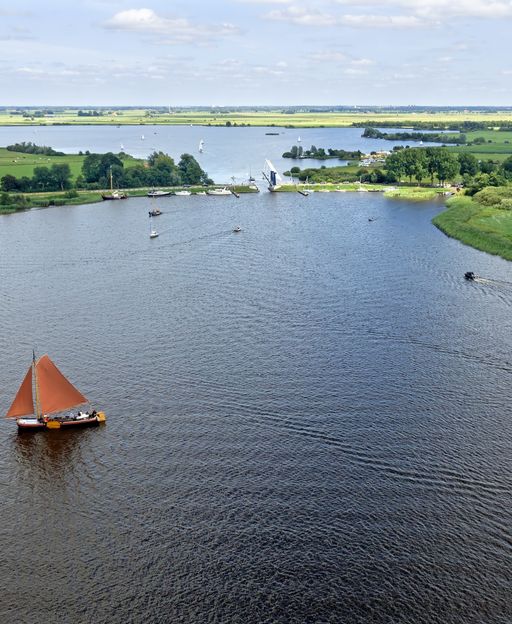
The Frisian Lakes spread across the province of Friesland in the north of the Netherlands. Together, they form one of Europe’s largest connected inland waterway systems — more than 40 lakes linked by narrow canals, rivers, and polders.
Most lakes here are shallow, calm, and edged by flat green meadows. Cows graze on polders just centimetres above water level. The light over open water in the evening is extraordinary.
You won’t find these lakes in many international travel guides. Dutch families prefer it that way. They return every summer, rent traditional wooden boats, and follow the same quiet routes their grandparents once did.
Brown Sails and Summer Mornings
Sailing on the Frisian Lakes is unlike anything you’d find in the Mediterranean. These aren’t sleek white yachts. Most vessels have flat hulls, shallow draughts, and the broad brown sails of the traditional skûtsje — the cargo barge that once carried goods between Frisian towns.
Every August, the SKS Skûtsjesilen race takes over the lakes. Eleven traditional Frisian cargo boats compete across a different lake each day, cheered on by their home towns with a passion that feels closer to football than sailing.
Outside race season, the lakes fill with Dutch families on holiday. Long weekends stretch into two-week stays. Children learn to sail before they learn to drive. Barbecues smoke on stern decks as the summer sun stays up past ten.
The Towns That Sit on the Water
Several Frisian towns are inseparable from the lakes around them.
Sneek is the unofficial sailing capital of the Netherlands. Its 16th-century water gate — the Waterpoort — frames the harbour with a grandeur out of all proportion to the town’s modest size. Every café in Sneek has a jetty.
Sloten is the smallest walled city in the Netherlands, with star-shaped fortifications dating from the 17th century. You can walk the full perimeter in ten minutes. Most visitors come to moor a boat, not to rush.
Terhorne sits on a narrow strip of land between two lakes, reachable by water or a single winding road. By Friday evening in summer, every mooring is taken.
Enjoying this? Get stories like this every week from Love Netherlands — Subscribe free →
The Race That Grips a Nation
Every winter, when temperatures fall, the Netherlands watches the same weather forecast with the same quiet intensity. The question is always identical: will the lakes freeze hard enough?
The Elfstedentocht — the Eleven Cities Tour — is a 200-kilometre skating race through eleven Frisian towns, mostly over the frozen lakes and canals of this very landscape. It hasn’t been held since 1997. The Dutch still wait for it each year.
The race has taken place only fifteen times since 1909. When conditions allow, it becomes the largest spontaneous national event in the country. Schools close. People leave work. Millions gather along the route before dawn.
The lakes in winter are the same waters that sailors cross in summer. The Dutch connection to this landscape runs through every season.
How to Experience the Frisian Lakes
Rent a boat and move slowly. Several operators in Sneek offer week-long rentals of traditional boeier vessels or modern motorboats. Dutch law requires no licence for recreational boats under 15 metres in length.
You don’t need to cover much ground. Spend a morning on the Sneekermeer, moor at Terhorne for lunch, and explore Sloten before sunset. Stop when something interests you. Move on when you’re ready.
If you’d rather stay on land, the flat Frisian countryside makes for easy cycling. Lakes appear between meadows without warning. Small bridges connect islands that barely rise above the water’s surface.
To understand Friesland’s deeper character — its language, its quiet pride, its long history of independence — this story about the province that doesn’t feel Dutch tells the full picture. And for the bigger story of how the Dutch shaped this watery landscape over centuries, this piece on the Delta Works is worth reading. New to the site? Start at the Start Here page.
What are the Frisian Lakes in the Netherlands?
The Frisian Lakes (Friese Meren) are a network of more than 40 interconnected lakes and waterways in the province of Friesland. They form one of Europe’s largest inland sailing areas and are one of the Netherlands’ most popular domestic holiday destinations.
When is the best time to visit the Frisian Lakes?
Late spring through early autumn — May to September — offers the best conditions. August is peak season, when the SKS Skûtsjesilen race draws large crowds. Visiting in May or June means quieter lakes and lower boat rental prices.
Do you need a boat licence to sail in Friesland?
No. Dutch law requires no licence for recreational vessels under 15 metres in length and below 20 km/h. Most rental boats on the Frisian Lakes fall within these limits, making the area accessible even to first-time sailors.
What is the Elfstedentocht and how does it connect to the Frisian Lakes?
The Elfstedentocht is a legendary 200-kilometre skating tour through eleven Frisian towns, held on the frozen lakes and canals of Friesland when winters are cold enough. It has taken place only fifteen times since 1909. The last edition was in 1997, and the Dutch have waited for the next one ever since.
The Frisian Lakes don’t demand anything from you. They offer open water, flat light, and the quiet pleasure of going somewhere with no fixed agenda. The Dutch have understood that for centuries. You’ll understand it the moment you untie the ropes and let the current carry you out onto the lake.
Love Netherlands — Free Every Week
Canal towns, hidden villages, Dutch stories. A free letter about the Netherlands — written slowly, delivered weekly.
Love more? Join 64,000 Ireland lovers → · Join 43,000 Scotland lovers → · Join 30,000 Italy lovers →
Free forever · One email per week · Unsubscribe anytime
Tours & experiences you might love


Powered by Viator. Some links are affiliate links — we may earn a small commission at no extra cost to you.