Jun 21, 2026
|
Groningen’s Hidden Name Stories
Uncover the fascinating origins of Dutch surnames and trace your family’s journey across continents.
|
|
Love Netherlands
|
|
Dear Netherlands,
Amsterdam in April has a particular kind of quiet. The tulips are out in the park. The café terraces are full by ten. Somewhere in the Jordaan a church bell is telling the hour, and a barge is gliding past, and a child is learning to cycle without training wheels. This is the version of the Netherlands you came for.
|
|
Was this forwarded to you? Subscribe free and never miss an edition →
|
|
If the daily newsletter brings you closer to the Netherlands, our Sunday Premium Edition takes you deeper into it. Every Sunday you’ll receive travel deep dives, curated itineraries, regional stories, and hidden gems you won’t find anywhere else.
Upgrade for less than the price of a pint and see the Netherlands in a completely new way.
|
Photo via Love Netherlands
|
In today’s email:
- Dutch Surnames of Groningen: Origins and Meanings
- At The Café — Café Karpershoek — Amsterdam’s Oldest Café, Right by the Station
- Around The Web — Dutch Surnames of Zeeland: Origins and Meanings, Maastricht Day Trip from Amsterdam: The Complete Guide, Dutch Surnames of Limburg: Origins and Meanings + more
- From Love Netherlands — Best Beaches in the Netherlands: A Complete Guide for Visitors
- Dutch Food You Will Love — Poffertjes — The Tiny Pancakes Sold From Copper Pans
|
Dutch Surnames of Groningen: Origins and Meanings
👉 Read the full story
If your family name ends in -ma , -sma , or -ema , there is a good chance your roots trace to Groningen. This northern Dutch province has given the world some of its most distinctive Dutch surnames . Groningen names reflect its flat, open landscape, its Frisian past, and its centuries as a Hanseatic trading centre. This guide explores the origins and meanings of the most common Dutch surnames from Groningen — and where these families ended up across the world. Why Groningen Surnames Are Distinctive Groningen sits at the northeastern corner of the Netherlands. It borders Germany to the east and the Wadden Sea to the north. For centuries, Groningen city was a major grain-trading hub and a member of the Hanseatic League. These facts shaped its surnames. You will find names built on words for land, water, farming, and trade. You will also find names with Frisian roots and Old Saxon suffixes…
👉 Read the full story
Have you been there? Do you have a memory of this corner of the Netherlands? Hit reply and tell us — we’d love to hear your story.
|
|
“Want deep dives into the Netherlands every Sunday? Our Premium readers already have their next edition waiting.”
|
At The Café
Café Karpershoek — Amsterdam’s Oldest Café, Right by the Station
Café Karpershoek opened in 1606 — older than Café Hoppe, older than the Westerkerk, older than most things in Amsterdam that are still standing. It’s a small brown café two minutes from Centraal Station, easy to miss in the rush of arriving travellers. The floor is sand, scattered fresh every morning the way every Dutch tavern used to do it. The walls are nicotine-stained from before the smoking ban and lined with antique tin signs. It’s where you go for your first beer in Amsterdam if you want to start the way the city started.
👉 Visit the café
|
Around The Web
|
From Love Netherlands
The best beaches in the Netherlands stretch for more than 280 kilometres along the North Sea coast, offering golden sand, vast dunes, and bracing sea air within easy reach of Amsterdam, The Hague, and Rotterdam. If you imagine the Netherlands as a country of canals and cycling, the coastline tends to come as a welcome surprise — and in summer, the Dutch make the most of every sunny day they get. Love the Netherlands? Join our free newsletter for…
👉 Read the full story
|
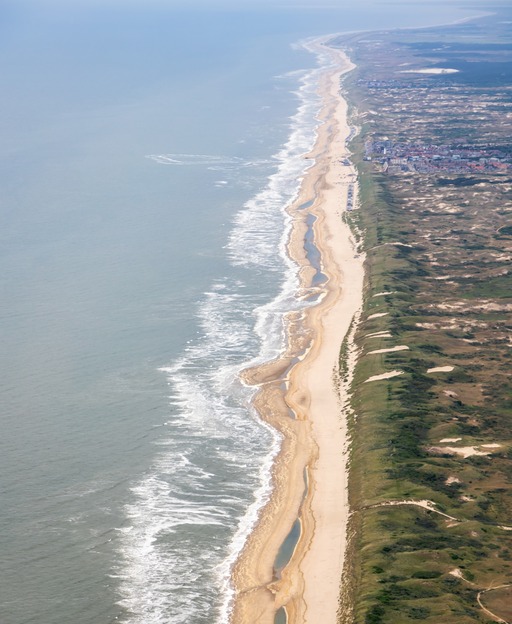
Photo via Love Netherlands
|
Dutch Food You Will Love
Poffertjes — The Tiny Pancakes Sold From Copper Pans
Poffertjes are small, fluffy yeasted pancakes made on cast-iron pans with little round dimples, dusted with icing sugar and topped with a knob of butter. You eat them with a wooden fork from a paper plate, ten or twelve at a time, while standing at a stall on the street or sitting in a market square. They appear at every Dutch outdoor festival from spring to Christmas markets, and the smell of butter and sugar drifting across a town square is one of the most reliable cues that you’ve found a real local event rather than a tourist set-piece. A poffertjes pan can hold over forty at once — it takes about three minutes to fill a plate.
👉 Read the full story
|
|
Know Someone Who Loves the Netherlands?
If you’re enjoying this letter, the best thing you could do is forward it to one friend who’d love the Netherlands too. This newsletter grows by word of mouth alone — every single subscriber came from someone sending it to someone else. Thank you for being one of the first.
|
|
Our daily newsletter is free and always will be. But for less than the price of a pint, you can upgrade to our Sunday Premium Edition, which gives you access to our travel deep dives, curated itineraries, and regional stories. Consider buying us a stroopwafel — it’s the Dutch way to say thank you.
|
Also From Our Family
Love Ireland too? Over 64,000 readers wake up each morning to the Love Ireland newsletter — loveireland.substack.com
Or Scotland? Join 43,000 Scotland lovers — lovescotland.substack.com
|
|
You’re reading Love Netherlands — a free letter about canal towns, hidden villages, and Dutch stories, delivered Monday to Friday.
inlovewithnetherlands.com ·
Unsubscribe
© 2026 Love Netherlands · Part of the Love To Visit LLC family
|