
On the Egelantiersgracht in the Jordaan, a bicycle leans against a 17th-century gable, the afternoon light sits on the water, and the café terraces fill up one table at a time. This is what most visitors picture when they think of Amsterdam, but it is not the whole city. The Amsterdam beyond the postcard lives in its neighbourhoods, each one a small world of its own.
Where you stay matters. Not because some areas are off-limits, but because Amsterdam’s character changes block by block. A visitor who wants museums needs different streets from someone who wants markets, beer or a quiet park. This guide covers seven neighbourhoods: what to do there, and who each one suits best.
De Jordaan: Small Canals and Brown Cafés
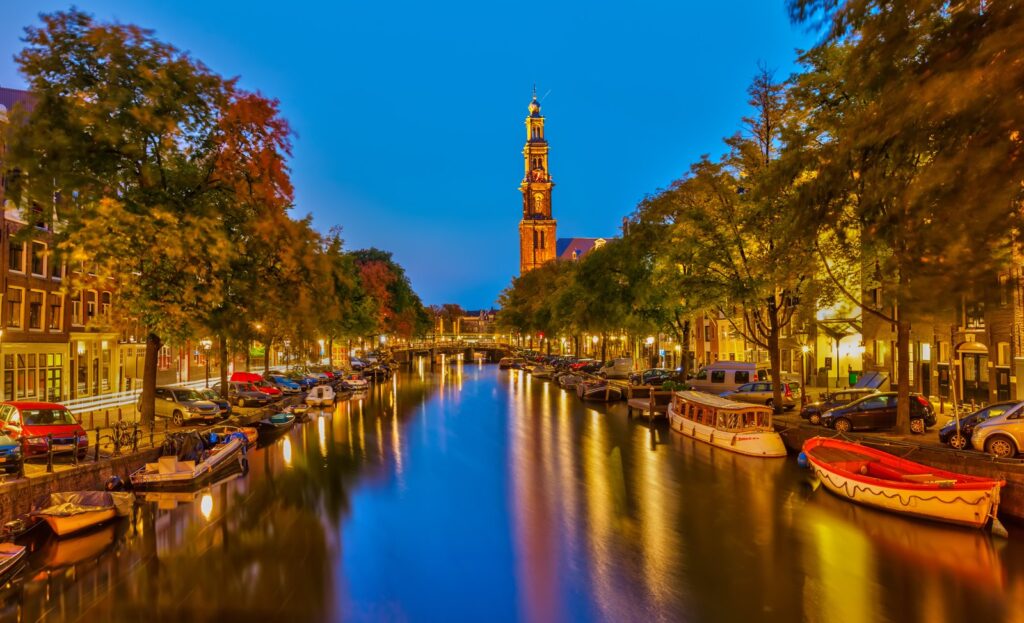
The Jordaan, just west of the Prinsengracht, is the neighbourhood most travellers have imagined before they arrive. Its streets and canals are named after flowers and trees (the Rozengracht, Bloemgracht, Lauriergracht and Egelantiersgracht), and they thread between narrow townhouses and low bruine kroegen: brown cafés, the Dutch institution of dim, wood-panelled pubs that serve coffee by day and beer by night.
Café ‘t Smalle on the Egelantiersgracht has a small terrace right on the water, and Café ‘t Papeneiland on the corner of the Prinsengracht and Brouwersgracht dates from 1642. The tower of the Westerkerk, where Rembrandt is buried, rises over the eastern edge of the neighbourhood, and the Anne Frank House is next door on the Prinsengracht; tickets are sold online only, for a set time slot, so book before you arrive.
On Saturday mornings the Noordermarkt hosts a farmers’ market and flea market in one, with organic produce, cheese and cakes. On Mondays there is a second flea market with books, antiques and vintage clothes. For a full walking route, see our Jordaan neighbourhood guide.
Best for: first-time visitors who want the classic Amsterdam; anyone visiting the Anne Frank House or the Westerkerk; café-sitters; couples who like an evening canal walk. Downside: busy all year, and canal-side rooms book up early.
More on the neighbourhood: Things to do in the Jordaan (I amsterdam)
De Pijp: Markets and a Mix of Kitchens
Head south from the canal ring and you reach De Pijp, a 19th-century neighbourhood that the city’s own guide calls Amsterdam’s Latin Quarter. It is built for eating. The Albert Cuyp Market has filled the Albert Cuypstraat since 1905, and with around 260 stalls it is one of the biggest street markets in Europe: herring, stroopwafels, cheese, fresh flowers, fabrics and socks, with every stall spilling into the street.
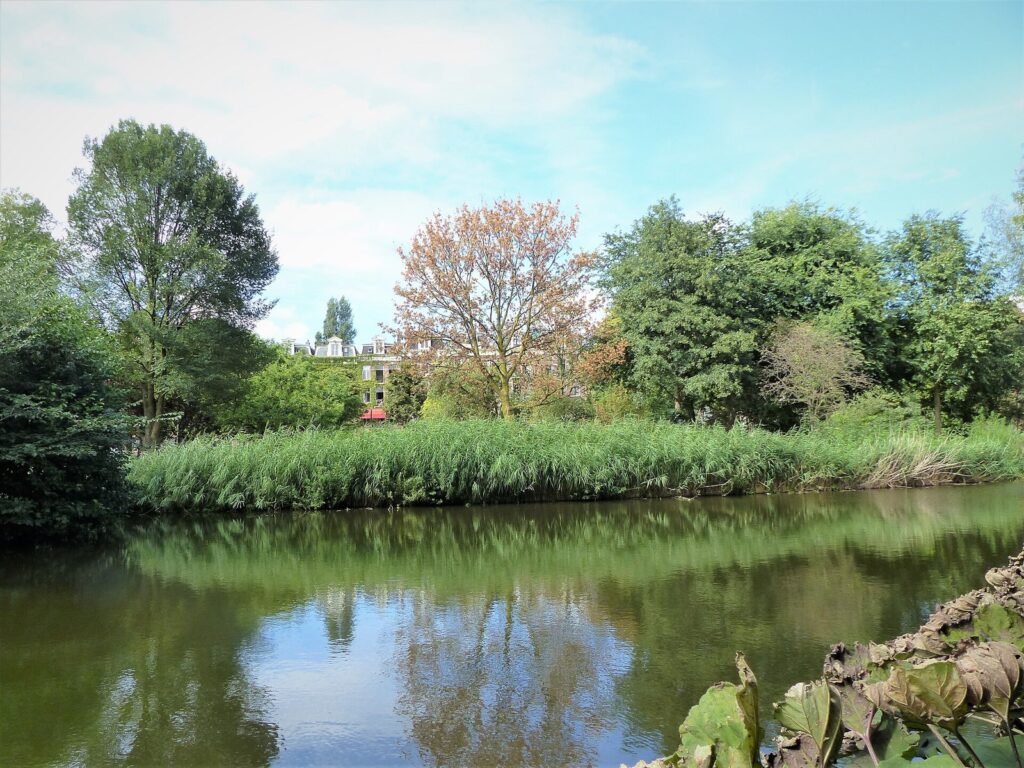
What gives De Pijp its energy is the mix. Kitchens from all over the world sit side by side on the side streets, café terraces fill up as soon as the sun appears, and Brouwerij Troost brews beer in the neighbourhood. When you need a break, the Sarphatipark, with its pond and its monument to the 19th-century city reformer Samuel Sarphati, is two streets from the market.
Best for: food lovers, market walkers, and anyone who wants everyday neighbourhood life. Downside: no major museums of its own, though the Museumplein is a short tram ride away.
More on the neighbourhood: De Pijp (I amsterdam)
Oost: Parks, Markets and a Windmill Brewery
Amsterdam Oost (East) has wide streets of 19th-century buildings, plenty of green, and fewer visitors than the centre. Start in the Oosterpark, then walk to the Dappermarkt, the neighbourhood’s street market. The Wereldmuseum Amsterdam, in a grand building beside the park, is the city’s museum of world cultures.
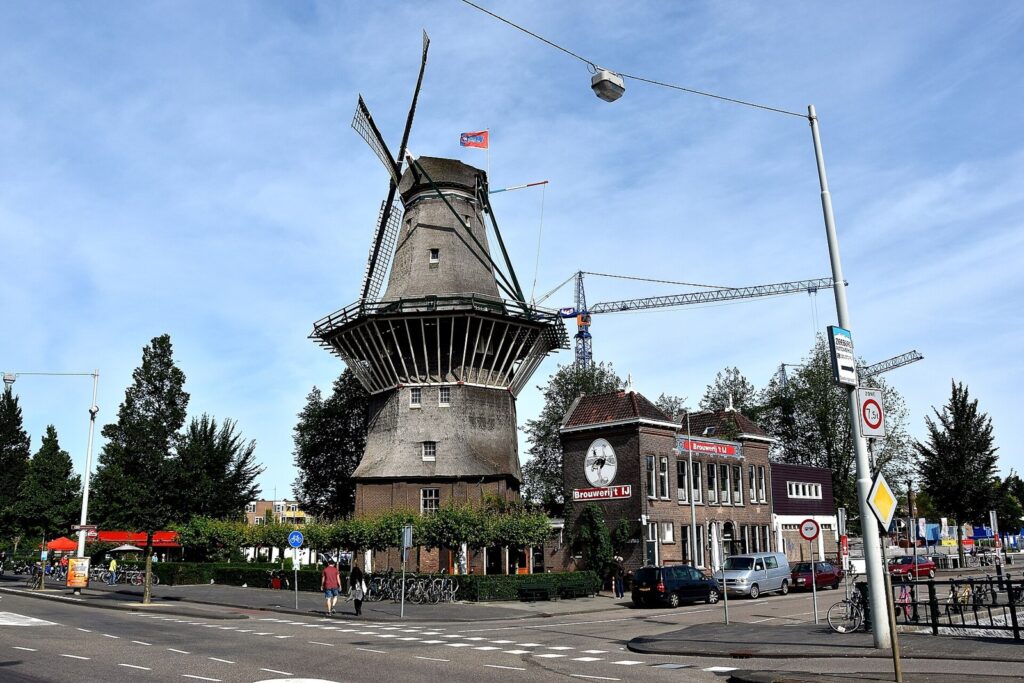
The landmark everyone remembers is De Gooyer, a tall windmill on the Funenkade. Brouwerij ‘t IJ runs a tasting room at the foot of the mill, so you can sit with a glass under turning sails. The neighbourhood is less set up for visitors than the Jordaan or De Pijp, which means quieter streets.
Best for: second-time visitors, beer lovers, and anyone who wants to feel like a local rather than a tourist. Downside: fewer big sights; you will want a bike or a tram pass.
More on the neighbourhood: Amsterdam Oost (I amsterdam)
Amsterdam-Noord: Film, Ferries and Former Shipyards
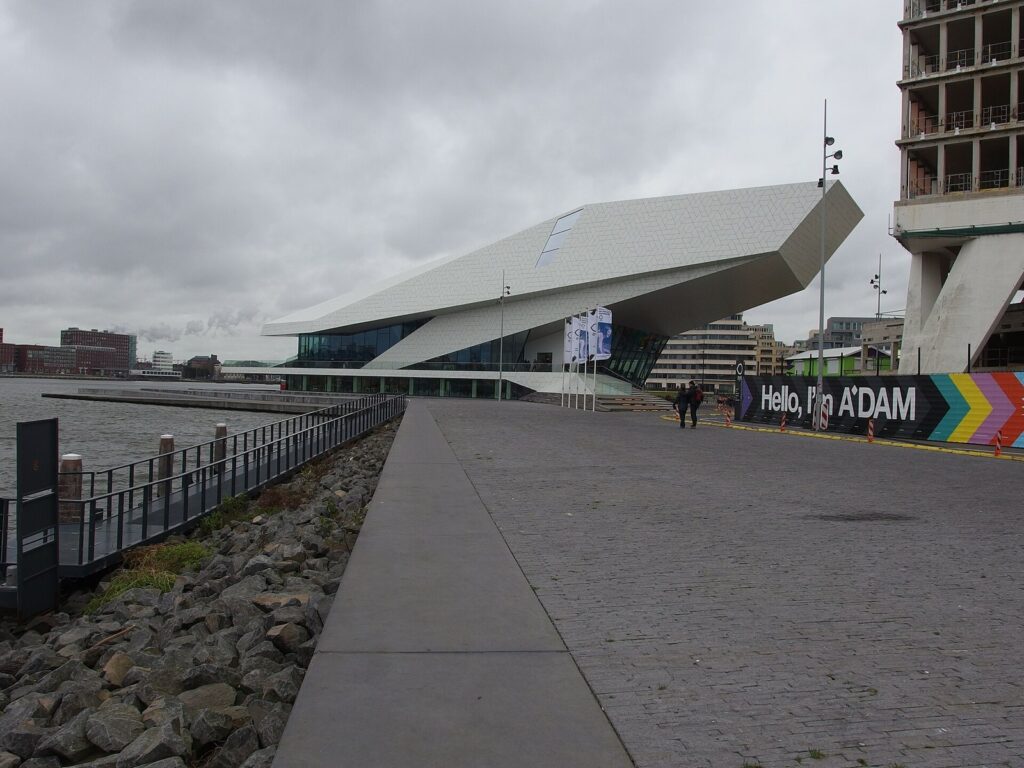
Cross the IJ and it feels as if you have left Amsterdam. The free ferries from behind Centraal Station take only a few minutes, and Amsterdam-Noord, once shipyards and warehouses, is now studios, festivals, young families and waterside terraces.
The Eye Filmmuseum is the landmark: a bright, angular white building on the north bank of the IJ, right opposite Centraal Station, with a cinema, film exhibitions and a café terrace over the water. Next door, the A’DAM Lookout tower has a viewing deck over the whole city, and the Tolhuistuin mixes concerts, events and a garden café. Further west, the NDSM wharf, a former shipyard of around ten hectares, is now a creative quarter of artists’ studios, street art and food spots, and De Ceuvel is a café and workspace built from old houseboats on a former shipyard plot.
Best for: film lovers, contemporary-art seekers, and visitors on their second or third trip. Downside: it takes a ferry to get there, and the big classic sights are on the other side of the water.
More on the neighbourhood: Amsterdam Noord (I amsterdam)
The Canal Belt: UNESCO, Central, Expensive
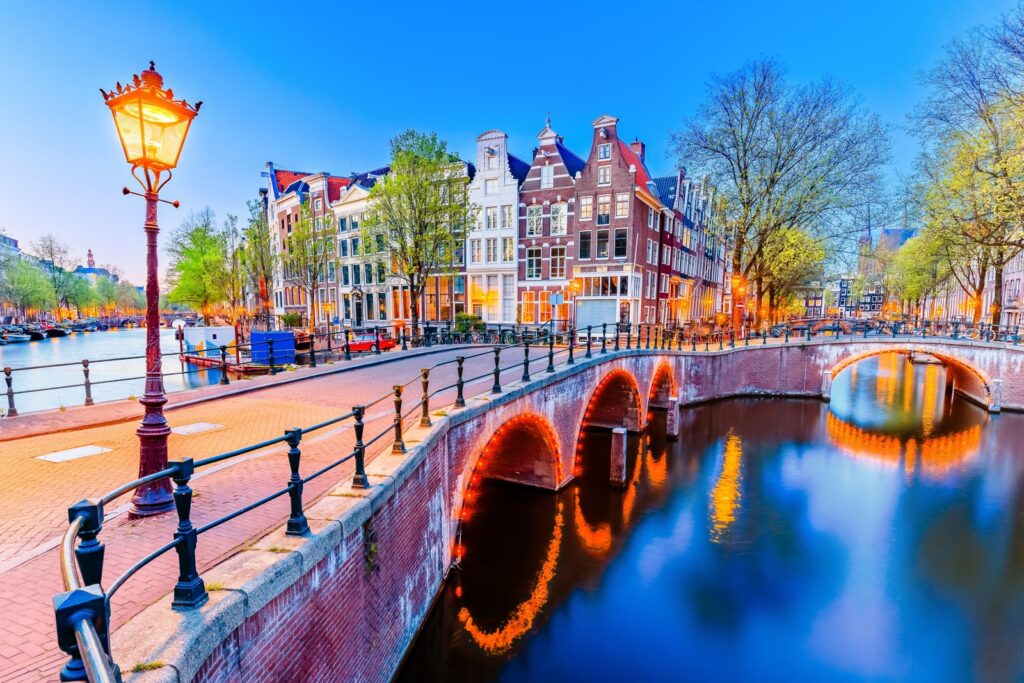
The three main canals of the ring, the Herengracht, Keizersgracht and Prinsengracht, form the heart of the 17th-century canal district, a UNESCO World Heritage site since 2010. The gabled houses along them were built for Golden Age merchants, and walking the quays at dusk feels like walking through a painting.
This is central Amsterdam, and you pay for it. In return you are a short walk or tram ride from almost everything, including the Museumplein with the Rijksmuseum and the Van Gogh Museum. Two canal-house museums show how the merchants lived: Museum Van Loon on the Keizersgracht, with its period rooms and garden, and the Museum of the Canals on the Herengracht, which explains how the ring was built. Our guide to Amsterdam’s canal houses tells you what to look for on the gables.
Expect crowds. The canals are beautiful and everyone knows it. If you stay here, your reward is being close to everything; the cost is peace and quiet.
Best for: first-time visitors, museum lovers, and travellers with a generous budget. Downside: pricey rooms, crowds all year, and less local everyday life.
More on the area: The Canal Ring and City Centre (I amsterdam)
Oud-West: Leafy Streets and a Food Hall in a Tram Depot
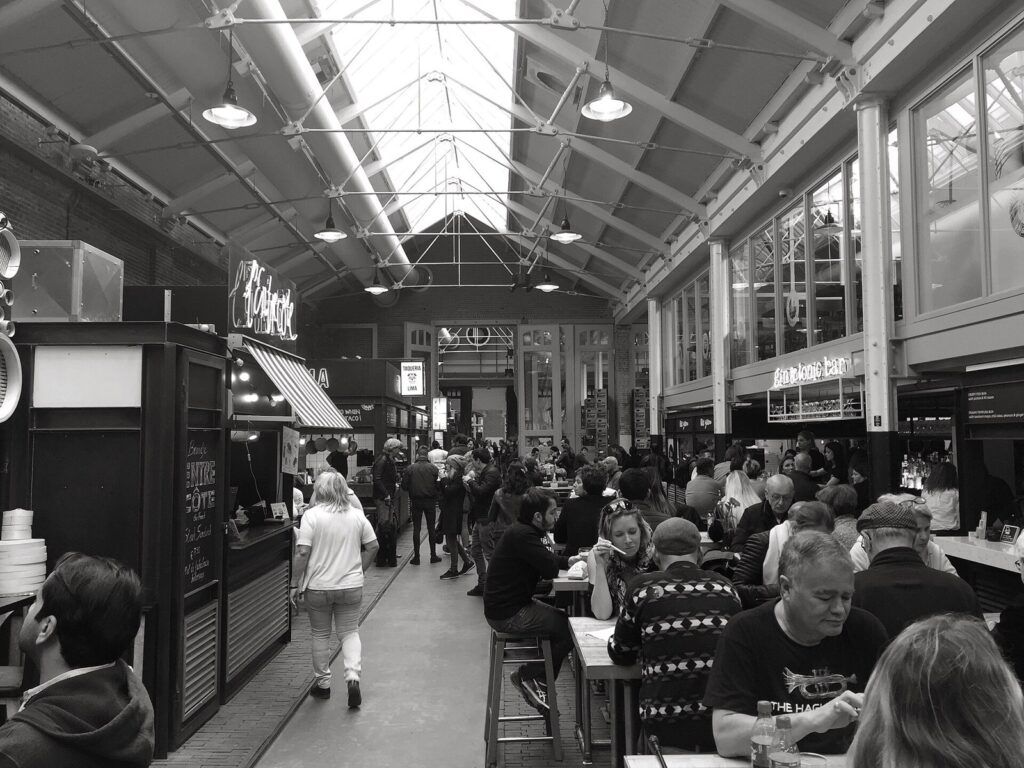
Oud-West, just west of the canal ring and bordered by the Vondelpark, is where many Amsterdammers actually live: tree-lined streets, small squares, families, students and creative types, and a growing number of good places to eat.
Its best-known address is De Hallen, a restored former tram depot that now holds the Foodhallen (a big indoor food hall with stalls and long shared tables), a cinema and a hotel. Around the corner, the Ten Katemarkt is a neighbourhood street market and a good spot for street food, and the Kinkerstraat is the main shopping street: cafés, independent shops and everyday life. The Vondelpark is a few minutes’ walk away.
Best for: repeat visitors, food lovers, and families who want a bit more space and quiet. Downside: few sights of its own; the museums are a tram ride or a walk through the park away.
More on the neighbourhood: Oud-West (I amsterdam)
Plantage: The Zoo, the Botanical Garden and the Museums
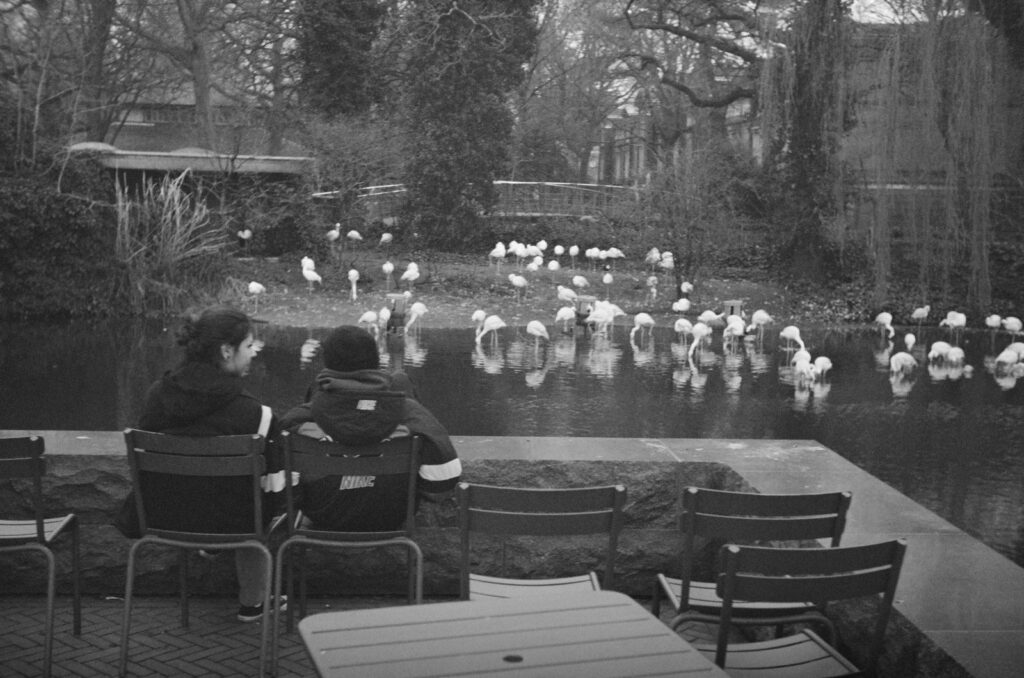
De Plantage, just east of the city centre, is green and spacious after the tight streets of the canal ring. Its centrepiece is ARTIS, Amsterdam’s royal zoo and one of the five oldest zoos in the world, set among old trees and listed buildings. A few minutes’ walk away, the Hortus Botanicus is one of the world’s oldest botanical gardens, with a palm house and greenhouses you can wander in an hour.
The neighbourhood is also home to the Jewish Museum and the Portuguese Synagogue, the National Holocaust Museum and the Dutch Resistance Museum, which together tell the story of Amsterdam’s Jewish community and the occupation years with great care.
The residential streets around the zoo have neighbourhood restaurants and cafés but less tourist bustle. Staying here is a deliberate choice: quieter, greener, and a little removed.
Best for: families with children, history lovers, and anyone who wants quiet and green space. Downside: a walk or tram ride from the main sights, and less nightlife.
More on the neighbourhood: De Plantage (I amsterdam)
How to Choose Your Neighbourhood
Each neighbourhood tells a different story about Amsterdam. The Canal Belt is the Amsterdam of postcards. The Jordaan is intimate and full of cafés. De Pijp runs on market energy. Oost is green and local. Amsterdam-Noord is creative and new. Oud-West is where locals live. Plantage is quiet and thoughtful.
If this is your first visit and you want the classic experience, stay in the Canal Belt or the Jordaan, accept the crowds and the prices, and don’t regret it. If you’re coming back, or you prefer neighbourhoods to sights, choose by your own rhythm: museums or markets, beer or boats, quiet or company?
Once you’ve chosen your neighbourhood, read our three days in Amsterdam itinerary for a plan that works from wherever you’re staying.
Checked October 2026.
Tours & experiences you might love


Powered by Viator. Some links are affiliate links — we may earn a small commission at no extra cost to you.