
Where the Netherlands Finally Gets Some Hills: The Complete Guide to South Limburg
Marl caves, a ruined medieval castle, vineyard-draped slopes and a hilltop where three countries shake hands — South Limburg is the Netherlands as you never expected it.
An introduction to South Limburg
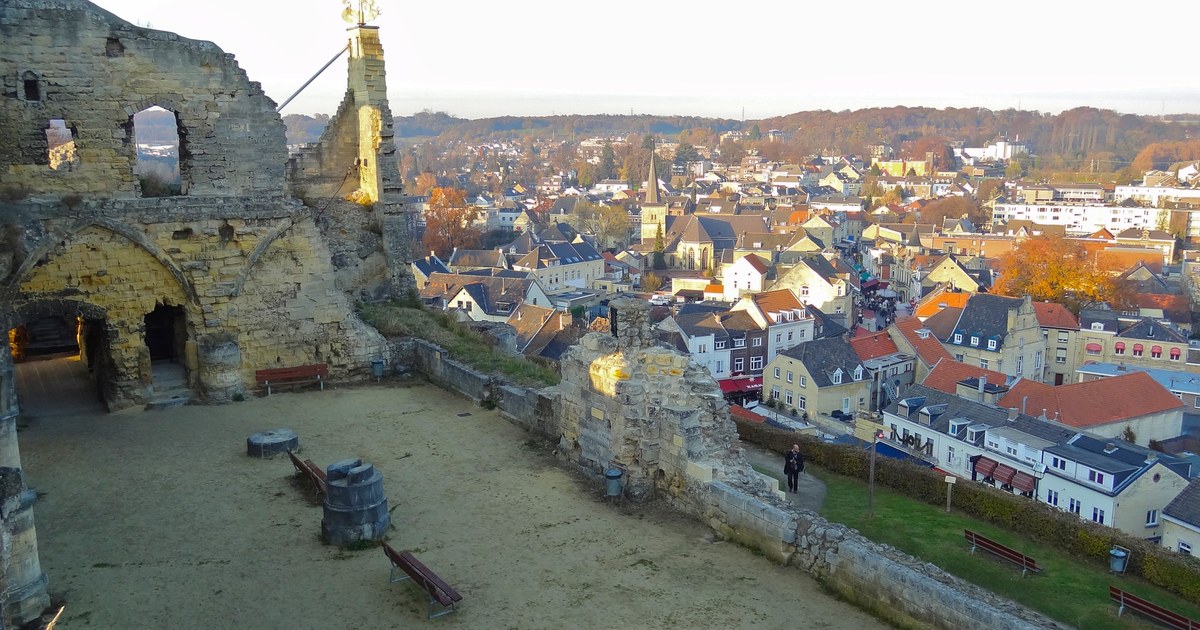
Pull up a map of the Netherlands and your eye is drawn north and west: the great delta cities, the tulip fields, the flat horizon stretching all the way to the sea. But trace your finger to the very bottom of the country, where it tapers to a narrow finger of land squeezed between Belgium and Germany, and you find something the rest of the Netherlands simply cannot offer. The land rises. Hedgerows line sunken lanes. Orchards cling to hillsides. A ruined castle sits on a wooded ridge above a valley carved by a proper, tumbling river. This is South Limburg — the Heuvelland, the hill country — and it occupies a world entirely its own.
The hills are not dramatic by Alpine standards. The highest point in the Netherlands proper, the Vaalserberg at 322.5 metres, would barely register as a hill in Scotland. But in a country where the land fights daily to stay above sea level, these gentle rises feel quietly extraordinary. The Geul river has spent millennia cutting through soft marl limestone, creating a valley of real beauty: wide-bottomed, orchard-fringed, dotted with half-timbered farmhouses and villages that could have stepped sideways out of rural Belgium or the German Eifel. Which, in a sense, they have — the borders here have always been porous, the culture a wonderful blending of Flemish, German and something stubbornly, warmly Limburgian all at once.
South Limburg rewards the curious traveller generously. The caves beneath Valkenburg have been carved from marl for centuries and now host some of Europe’s more unusual attractions, including a Christmas market held entirely underground. Vineyards produce wines that would surprise those who think the Netherlands means only beer and jenever. And at Rolduc, a Romanesque abbey founded in 1104 stands in such untroubled serenity that a morning in its cloister feels like a small act of time travel. The region asks you to slow down, to walk its waymarked paths, to sit with a Limburgse vlaai and a glass of something local, and to notice just how different the Netherlands can be when it puts its mind to it.
There is a particular pleasure in discovering a corner of a well-travelled country that most visitors never reach. While day-trippers stream through Amsterdam, South Limburg gets on quietly with being one of the most rewarding short-break destinations in north-west Europe. Come in summer for the walking and the wine; come in advent for the cave markets; come in spring when the fruit trees froth white along the valley floors. Whenever you come, come prepared to be surprised.
In this email
- Valkenburg: caves, a ruined castle and all that character
- Walking the Geuldal valley
- On the vine: South Limburg’s wine country
- Rolduc Abbey: a thousand years in stone
- Drielandenpunt: standing in three countries at once
- Your South Limburg itinerary, where to stay, and how to get there
Best time to visit: South Limburg earns a visit in any season, but late spring (May–June) and early autumn (September–October) offer the finest combination of mild walking weather, orchard colour and open valley views. The winter cave markets at Valkenburg, running late November through December, are an experience in a category of their own.
Travel logistics: Maastricht is the natural gateway, reached in roughly two and a half hours by direct train from Amsterdam Centraal. Valkenburg has its own station on the Maastricht–Heerlen line, making it easy to base yourself there without a car. That said, a car unlocks the valley villages, vineyard lanes and the walk up to Drielandenpunt — and South Limburg’s country roads are genuinely pleasurable to drive.
Continue reading with a Premium subscription
This is a Love Netherlands Sunday Premium guide. Premium subscribers receive the full article in their inbox every Sunday and unlock the full archive of past editions.
Become a Premium subscriber →Tours & experiences you might love


Powered by Viator. Some links are affiliate links — we may earn a small commission at no extra cost to you.