
An Arnhem day trip from Amsterdam delivers three of the Netherlands’ most rewarding experiences in a single journey: the sweeping heathland and ancient forest of Hoge Veluwe National Park, one of the world’s finest collections of Van Gogh paintings, and one of the most poignant WW2 battlefields in Europe. The train from Amsterdam Centraal takes just over an hour, yet Arnhem and its surroundings feel like a completely different Netherlands — no canals, no houseboats, no crowds. Just open sky, red deer moving through the trees, and a city that carries its wartime memory with quiet dignity.
Love the Netherlands? Join our free newsletter for hidden Dutch gems → inlovewithnetherlands.com/subscribe
Getting to Arnhem from Amsterdam
Direct intercity trains run from Amsterdam Centraal to Arnhem Centraal every 30 minutes throughout the day. The journey takes approximately 1 hour and 5 minutes, and no reservation is needed — a standard OV-chipkaart or a single ticket purchased at the station will get you there. Return tickets typically cost around €30–35 depending on the time of day.
From Arnhem station, bus connections reach Hoge Veluwe National Park in roughly 30 minutes, and the city centre is a short walk or tram ride away. If you plan to spend most of the day in the national park, it is worth buying a combination ticket that covers park entry and bus transport in advance. For the full guide to getting around the Netherlands by rail, see Travelling the Netherlands by Train.
Hoge Veluwe National Park: The Arnhem Day Trip Centrepiece
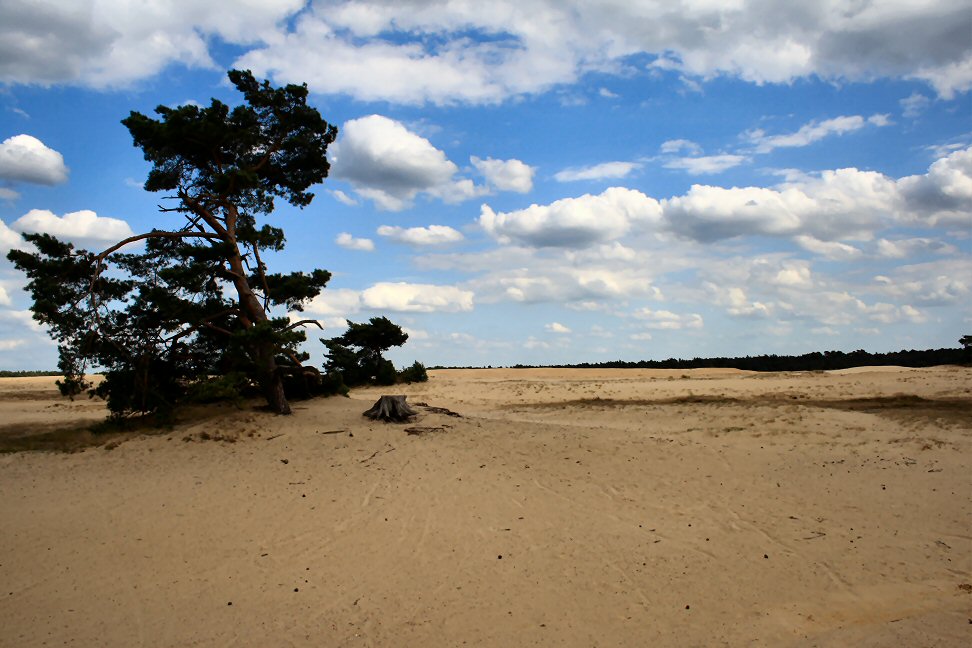
Hoge Veluwe is the largest national park in the Netherlands, covering more than 5,400 hectares of heathland, sand dunes, forest and marsh. It was created in the early 20th century by the art collectors Anton and Helene Kröller-Müller, who bought up vast tracts of the Veluwe landscape to protect it from development — and to house their extraordinary art collection. Today it is one of the few places in the Netherlands where you feel genuinely removed from the country’s famously dense population.
Red deer roam freely through the park. Wild boar root through the undergrowth at dawn. Roe deer pick their way across the sandy clearings. There are no barriers between visitors and wildlife — just marked trails and the understanding that you are moving through their territory. If you want to understand more about what makes Hoge Veluwe so unusual for the Netherlands, the article The Dutch National Park With Wild Boar, Free Bikes and No Tourist Queues goes deeper into the park’s character and wildlife.
The White Bicycles
One of the most delightful features of Hoge Veluwe is its fleet of roughly 1,800 white bicycles, available free to all park visitors. You simply pick one up at any of the three entrances or the dedicated bike racks inside the park, ride wherever you like, and leave it at any rack when you are done. No locks, no hire fees, no paperwork. The bicycle network covers the entire park, with well-maintained paths winding through forest and heathland. Given that the park is too large to cover comfortably on foot in a single day, the white bikes make this an unusually accessible experience. See our Cycling in the Netherlands guide for more on cycling culture and routes across the country.
Walking Trails and the Open Landscape
There are over 40 kilometres of walking trails in Hoge Veluwe. The shorter loop trails near the Kröller-Müller Museum take between one and two hours and pass through contrasting landscapes — dense pine forest giving way to open heathland, and heathland opening onto the park’s famous inland sand dunes, known as the Kootwijkerzand. These shifting dunes, entirely enclosed within the park, are one of the stranger sights in a country not known for desert scenery. Purple heather covers much of the open ground in late summer, making August and September a particularly rewarding time to visit.
Kröller-Müller Museum: Van Gogh in the Forest
The Kröller-Müller Museum sits at the heart of Hoge Veluwe and holds the second-largest collection of Van Gogh works in the world, after the Van Gogh Museum in Amsterdam. Helene Kröller-Müller assembled 91 paintings and 180 drawings by Van Gogh over several decades, including major works such as Café Terrace at Night and The Potato Eaters. The collection covers his entire career, from the dark, earthy Dutch palette of his early Nuenen period through to the blazing colour of his years in Arles.
Beyond Van Gogh, the museum holds significant works by Seurat, Mondrian, Picasso and Fernand Léger. The sculpture garden outside — one of the largest in Europe — contains pieces by Auguste Rodin, Barbara Hepworth and Jean Dubuffet, placed among the trees and heathland rather than on a manicured lawn. Entry to the museum is included in the park entrance fee, making it exceptional value. Allow at least two to three hours here.
Arnhem City Centre
Most day-trippers spend the bulk of their time in the national park and museum, but Arnhem city centre has two compelling reasons to linger on the way back to the station.
The Airborne Museum and Operation Market Garden
In September 1944, the Allied Operation Market Garden attempted to seize the Rhine crossing at Arnhem and open a route into Germany. The plan failed at this final bridge, and Arnhem became the site of one of the most intense battles of the western campaign. The Airborne Museum Hartenstein in the nearby suburb of Oosterbeek is housed in the building that served as British 1st Airborne Division headquarters during the battle. The exhibitions are thoughtful and deeply human, drawing on personal testimonies from British paratroopers and Dutch civilians who sheltered from the fighting. The museum is approximately 5 kilometres from Arnhem city centre — reached by bus — and is open daily.
John Frost Bridge
The original bridge that Allied forces tried to hold during Operation Market Garden was destroyed after the battle, but its modern replacement carries the name of Lieutenant Colonel John Frost, whose battalion held the northern end against overwhelming odds for four days. A small monument near the bridge marks the action. From the riverbank you get a clear sense of the tactical problem the Allies faced: the Rhine here is wide, fast-moving and fully exposed. Standing on the bridge is a quiet moment of historical weight in a city that has otherwise moved on entirely.
Dutch Open Air Museum
The Openluchtmuseum — the Dutch Open Air Museum — is located on the northern edge of Arnhem and is one of the most engaging open-air museums in Europe. More than 80 original Dutch buildings, farmsteads, windmills, workshops and homes have been relocated here from across the Netherlands and reassembled on an 82-hectare park. Each structure comes from a different era and region, allowing you to walk through several centuries of Dutch rural and small-town life in a single afternoon. Costumed interpreters work the farmsteads and demonstrate traditional crafts. It is a particularly good choice if you are travelling with children or if you want to understand the regional variation in Dutch vernacular architecture before exploring the country more widely.
When to Visit Arnhem
Hoge Veluwe is open year-round, but the best seasons for a day trip are spring and autumn. In late April and May, the heathland and woodland come into flower and migratory birds return. In August and September, the heather turns purple across the open moorland. Autumn brings red and gold through the forest canopy, and the deer rut takes place in October — the park is especially atmospheric at this time. Winter visits are quieter and the white bicycles are still available, but days are short. Summer is busiest; try to arrive early in the morning to avoid the peak crowds at the museum entrance.
Practical Tips for Your Arnhem Day Trip
- Park entry: Book Hoge Veluwe tickets online in advance, particularly on summer weekends. Entry includes the white bicycles and access to the Kröller-Müller Museum.
- Getting around the park: The park is large. Cycling is strongly recommended over walking if you want to see both the museum and the open heathland in one visit.
- Timing: Allow a full day for Hoge Veluwe plus the Kröller-Müller Museum. If you want to add the Airborne Museum, plan for an early start.
- Food: There is a restaurant and café inside the park near the visitor centre. Pack a lunch if you plan to spend most of the day cycling and walking.
- Arnhem city: The city centre is pleasant but compact. A couple of hours are sufficient to see the Airborne Museum and John Frost Bridge area.
For ideas on combining Arnhem with other destinations, see our full guide to Day Trips from Amsterdam.
You Might Also Enjoy
- Travelling the Netherlands by Train: The Complete Guide — everything you need to navigate the Dutch rail network with ease.
- Cycling in the Netherlands: A Complete Guide for Visitors — routes, bike hire, safety rules and why the Dutch cycle in the rain.
- The Dutch National Park With Wild Boar, Free Bikes and No Tourist Queues — a deeper look at what makes Hoge Veluwe so remarkable.
Plan Your Netherlands Trip
Ready to plan your visit? Head to our Start Here page for itinerary ideas, practical tips and inspiration for every corner of the Netherlands.
How long does it take to get from Amsterdam to Arnhem?
The direct intercity train from Amsterdam Centraal to Arnhem Centraal takes approximately 1 hour and 5 minutes. Trains run every 30 minutes throughout the day and no advance reservation is required.
Is Hoge Veluwe National Park worth visiting on a day trip from Amsterdam?
Yes — Hoge Veluwe is one of the most rewarding day trips from Amsterdam. The park is large enough to feel genuinely wild, the Kröller-Müller Museum is world-class, and the free white bicycles make exploring easy. Allow a full day to do it justice.
What is the best time of year to visit Arnhem?
Late August to October is particularly rewarding: the heather blooms purple across Hoge Veluwe in August and September, and the deer rut takes place in October. Spring (April–May) is also excellent for flowers and migratory birds. Summer weekends are the busiest and it is worth booking park entry in advance.
Is the Kröller-Müller Museum included in the Hoge Veluwe park ticket?
Yes. Entry to the Kröller-Müller Museum is included in the standard Hoge Veluwe National Park entrance ticket, along with access to the free white bicycles. This makes the combination exceptionally good value for the quality of the collection.
Join Netherlands Lovers
Every week, discover the Netherlands beyond the tourist trail — hidden villages, local recipes, cycling routes, and travel insights you won’t find in any guidebook.
Subscribe free — enter your email:
Love more? Join 64,000 Ireland lovers → · Join 43,000 Scotland lovers → · Join 30,000 Italy lovers →
Free forever · One email per week · Unsubscribe anytime
Tours & experiences you might love


Powered by Viator. Some links are affiliate links — we may earn a small commission at no extra cost to you.