

Every spring, Dutch families start checking farm stalls on the drive home from work. Restaurant menus change overnight. And then, on one specific date in June, it all stops. The reason is a vegetable — and the Dutch are completely serious about it.
The White Spear That Rules the Season
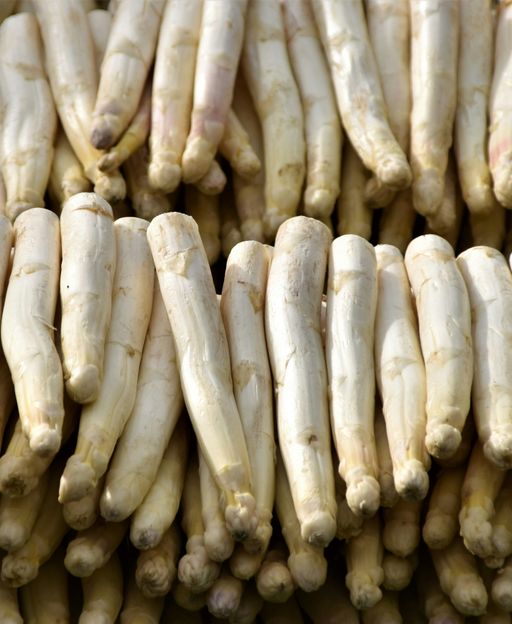
White asparagus — witte asperges in Dutch — appears in markets from late April. By May, it dominates grocery displays, roadside stalls, and restaurant specials across the country.
The Dutch do not treat this as ordinary food. Families track which farm has the best crop this year. Some make weekend trips south specifically for fresh bundles. White asparagus has its own season, its own rituals, and its own end date.
That date is 24 June. Saint John’s Day. It does not move.
Why White, Not Green?
Green asparagus grows above ground. Sunlight turns it that familiar deep colour. White asparagus is different.
Farmers mound sandy soil over the emerging shoots, burying them in complete darkness. No light means no chlorophyll. The result: pale, tender spears that are mildly sweet and far less bitter than the green variety.
Each spear needs individual hand-harvesting below the soil surface. That extra labour explains the premium price — and why the Dutch value it so highly. They call it witte goud: white gold.
Limburg and North Brabant — The Heartland
White asparagus needs sandy, well-drained soil. In the Netherlands, the best soils sit in the southern provinces of Limburg and North Brabant.
Drive through this region in May and you pass farm stalls every few kilometres — bundles of white asparagus in brown paper, a handwritten price board, an honesty box on the table. Locals stop on the way home. Visitors plan whole weekends around the farms near Horst aan de Maas.
Limburg has far more than asparagus. The Dutch Province That Forgot to Be Flat explores its hills, castles, and the culture that makes it unlike anywhere else in the Netherlands.
How the Dutch Eat It
There is a correct way to eat white asparagus in the Netherlands. Most Dutch families follow it without question.
Peel the spears, boil until just tender — never mushy — and serve with melted butter, sliced hard-boiled egg, chopped ham, and a pinch of nutmeg. Some families add hollandaise. Limburg households often include smoked eel alongside.
What you do not do: use a jar sauce, rush the cooking, or treat the asparagus as a side dish. White asparagus is the main event.
Enjoying this? Get stories like this every week from Love Netherlands â Subscribe free →
The End Date That No One Questions
The season closes on 24 June, and the Dutch observe this without debate. The feast day of Saint John has marked the cutoff for generations.
The reason is agricultural. The plant needs recovery time after harvest. Push past June 24 and you risk weakening the roots, which reduces the following year’s crop. So the date holds. Farmers stop cutting. Stalls pack up.
On the final day, restaurants serve one last asparagus menu. It sells out early. Then the country waits eleven months for the next one.
The Feeling That Goes With the Season
White asparagus season marks something bigger than food. It signals the start of the Dutch outdoor season — tables on the pavement, dinner in the garden, the national belief that summer is finally here.
The Dutch have a word for it: voorpret — the pleasure of anticipating something good before it arrives. The days when the first farm stalls appear at the edges of Limburg roads are voorpret in its purest form.
The season is short. The Dutch know this. That is part of why they treat it with such care. If you want to plan a visit around it, our Netherlands travel guide covers the best times and regions to explore.
When is white asparagus season in the Netherlands?
The season runs from late April to 24 June each year. The end date is fixed — Saint John’s Day — after which farmers stop harvesting to protect the following year’s crop. Miss it by a week and you wait until next spring.
Where do you find the best white asparagus in the Netherlands?
Limburg and North Brabant produce most of the country’s white asparagus. Roadside farm stalls near Horst aan de Maas, Venlo, and Breda offer the freshest bundles. Arrive in the morning for the best selection.
How do the Dutch traditionally cook white asparagus?
The classic Dutch method: peel, boil until just tender, and serve with melted butter, sliced hard-boiled egg, chopped ham, and nutmeg. Limburg families often add smoked eel on the side. The dish resists shortcuts — and the Dutch would not have it any other way.
There is a quiet pleasure in eating something that has a deadline. White asparagus does not wait. It comes, fills the markets and the family tables, and then it goes. That discipline — the fixed cutoff, the right way to cook it, the annual anticipation — is perhaps the most Dutch thing about the whole tradition.
Love Netherlands — Free Every Week
Canal towns, hidden villages, Dutch stories. A free letter about the Netherlands — written slowly, delivered weekly.
Love more? Join 64,000 Ireland lovers → · Join 43,000 Scotland lovers → · Join 30,000 Italy lovers →
Free forever · One email per week · Unsubscribe anytime
Tours & experiences you might love


Powered by Viator. Some links are affiliate links — we may earn a small commission at no extra cost to you.